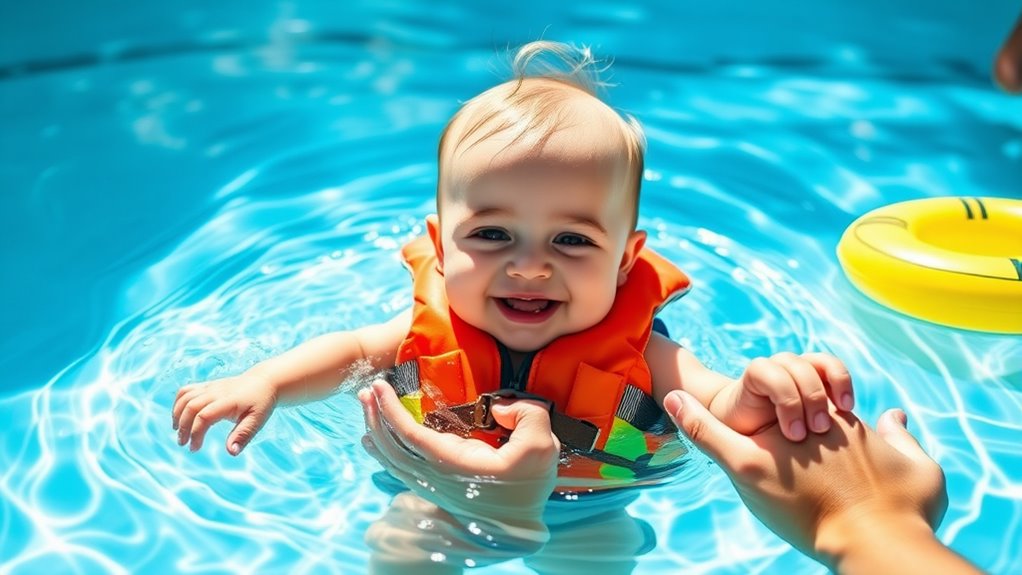

To keep your baby safe around pools and water, always supervise them closely and avoid distractions. Install a sturdy, four-foot fence with self-closing gates around the pool area, including steps and shallow zones. Enroll your little one in age-appropriate swimming lessons to build water confidence. Learn CPR and educate caregivers to prepare for emergencies. Combining supervision, physical barriers, and safety skills helps reduce risks—discover more ways to protect your child around water.
Key Takeaways
- Always supervise babies closely and never leave them unattended near water, even shallow pools.
- Install four-foot-high, self-closing, self-latching pool fences around the entire pool area.
- Enroll babies in age-appropriate swimming lessons to build water confidence and safety skills.
- Learn CPR and emergency procedures to respond effectively in water-related incidents.
- Use floating devices as supplementary safety tools, not substitutes for active supervision.
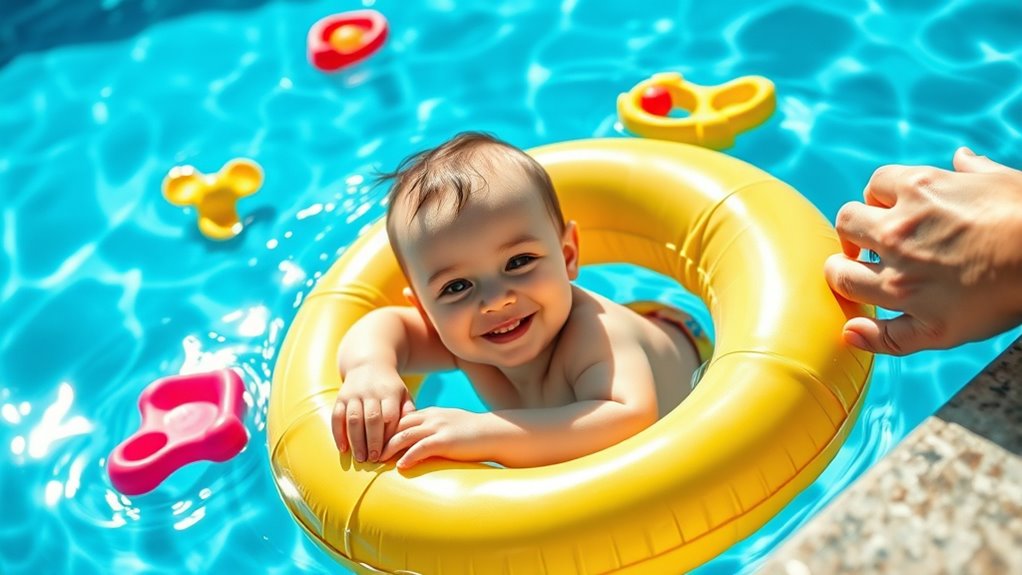
Water safety is essential for protecting your baby from drowning and other water-related accidents. As a parent or caregiver, it’s crucial to understand that even the shallowest water can pose a danger to little ones. Taking proactive steps, like enrolling your baby in swimming lessons early on, can help teach them vital water skills and build confidence around water. These lessons are designed to be age-appropriate, focusing on water comfort, floating, and basic safety, which can significantly reduce the risk of panic or accidents if your baby ever finds themselves near water unexpectedly. However, swimming lessons shouldn’t replace physical safety measures; they supplement your supervision and precautions.
Enrolling your baby in age-appropriate swimming lessons enhances water safety and confidence.
One of the most effective safety measures you can implement is installing pool fencing around any swimming pool or water feature on your property. Pool fencing acts as a physical barrier, preventing your baby from accessing the water unsupervised. Make sure the fence is at least four feet high, with a self-closing, self-latching gate that remains securely closed. The fence should completely surround the pool area, including any steps or shallow areas, and be durable enough to withstand weather and tampering. Remember, no matter how attentive you are, young children are quick and curious, so a sturdy fence provides an essential layer of protection against accidental access.
Supervision remains the most critical element of water safety. Always watch your baby closely when they’re near water, whether it’s in the pool, bathtub, or even a bucket. Never leave your child unattended, even for a moment. Babies can slip or fall into water unexpectedly, and swift action is often required to prevent tragedy. Keep your eyes on them at all times and avoid distractions like phones or conversations when they’re near water. When hosting pool parties or gatherings, designate a responsible adult to supervise children at all times. Never rely solely on floating devices or floaties as safety measures; they’re meant to be supplementary, not substitutes for supervision. Additionally, understanding that water safety involves not only physical precautions but also behavioral awareness can further enhance your child’s safety around water.
In addition to physical barriers and supervision, educate yourself about water safety rules and emergency procedures. Learn CPR and first aid so you’re prepared to respond quickly if an incident occurs. Make sure anyone who cares for your baby, such as babysitters or family members, understands these safety practices. Combining swimming lessons, secure pool fencing, vigilant supervision, and safety education creates a comprehensive safety net that considerably reduces the risk of drowning or water-related injuries. Ultimately, your active involvement and consistent precautions give your baby the best chance to enjoy water safely and confidently.
Top picks for "water safety keep"
Open Amazon search results for this keyword.
As an affiliate, we earn on qualifying purchases.
Conclusion
Remember, keeping your baby safe around water is like guarding the crown jewels—nothing less! With constant supervision, barriers, and quick reflexes, you can turn water from a danger into a safe, fun adventure. Don’t let even a splash slip by without your watchful eye. By taking these precautions, you’re not just protecting your little one—you’re creating a fortress of safety around them, making water hazards vanish into thin air!