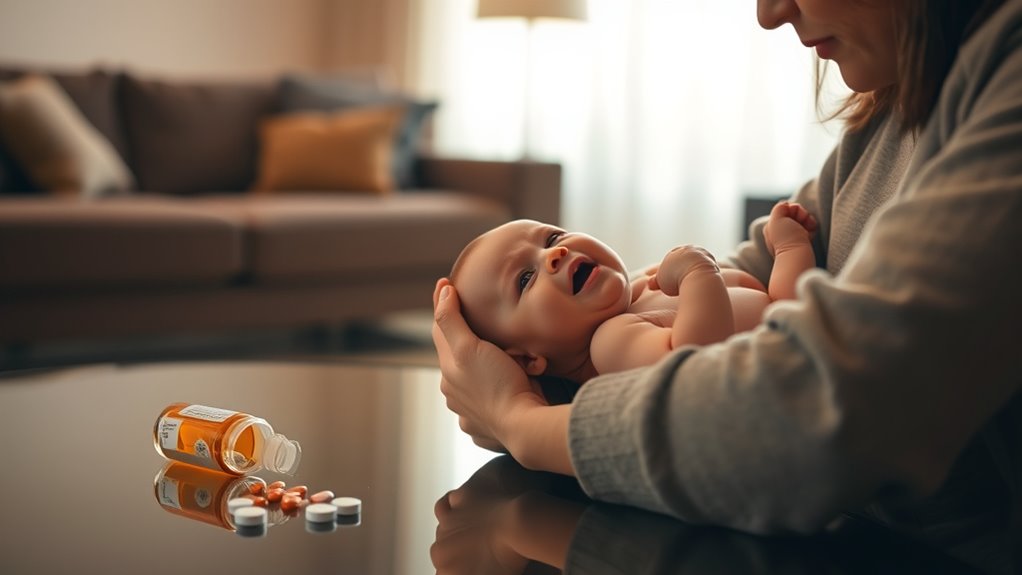

If your baby eats something dangerous, stay calm and act quickly. Check what they swallowed, and bring the container or plant for reference. Call poison control immediately and follow their instructions—do not try to make your baby vomit unless told to do so. Remove any remaining substance from their mouth and rinse if possible. Staying prepared and informed can make a difference; discover more ways to keep your little one safe.
Key Takeaways
- Call poison control immediately and provide details about the substance, amount ingested, and time of ingestion.
- Keep the container or plant nearby to help poison control identify the toxin accurately.
- Do not induce vomiting unless instructed by poison control or healthcare professionals.
- Remove any remaining substance from the baby’s mouth and rinse with water or milk if possible.
- Follow all instructions from poison control promptly to ensure the safest response.
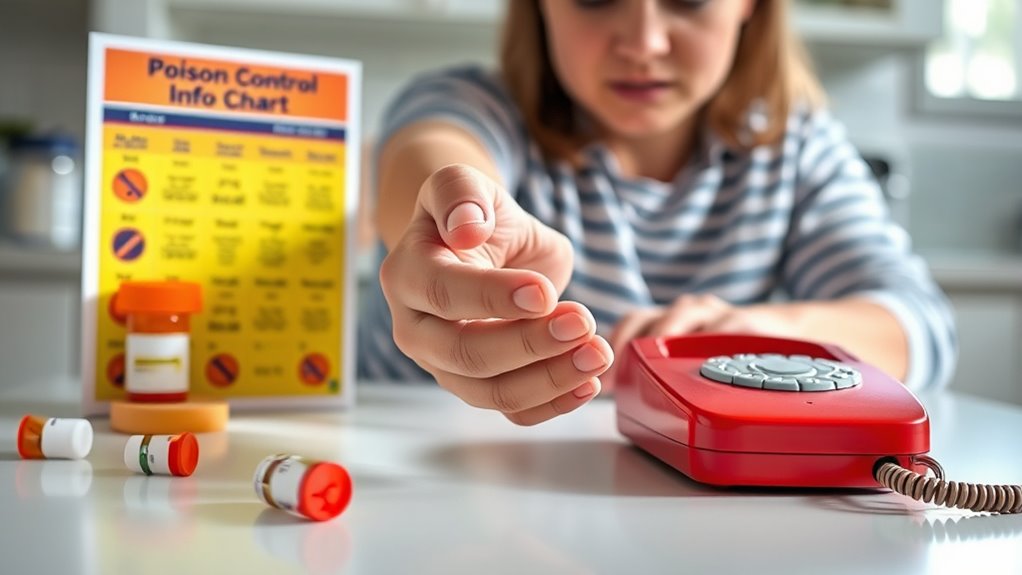
Accidents happen quickly, especially when it comes to babies exploring their surroundings. One moment, they’re happily reaching for a toy, and the next, they’re putting something in their mouth that shouldn’t be there. It’s every parent’s nightmare, but knowing what to do can make all the difference. If your baby accidentally ingests a household chemical or a plant that may be toxic, stay calm and act immediately. First, try to determine exactly what your baby swallowed. Check the container for labels, and if possible, bring the substance or the plant to your phone. This information will be vital when you call poison control.
Accidents happen fast—know what to do if your baby ingests something harmful.
Household chemicals are common hazards in any home. These include cleaning products, disinfectants, adhesives, and even certain air fresheners. Many of these substances are highly toxic if ingested, causing symptoms like vomiting, diarrhea, difficulty breathing, or even more severe reactions. If you suspect your baby has swallowed household chemicals, do not induce vomiting unless instructed by poison control or a healthcare professional. Instead, carefully remove any remaining substance from your baby’s mouth and rinse their mouth with water if possible. Keep the container nearby to provide details to poison control.
Plant toxicity is another common concern. Many household plants and garden varieties can be toxic to babies if eaten. Plants like dieffenbachia, philodendron, and certain lilies contain compounds that can irritate the mouth, cause swelling, or lead to more serious health issues. If your baby has ingested part of a plant, try to identify the plant, but avoid handling it unnecessarily. Do not try to make your baby vomit unless advised by poison control. Instead, gently wipe their mouth and give them water or milk to help dilute the toxin, but only if they are conscious and able to swallow.
In all cases, prompt action is essential. Call poison control immediately—have the number saved in your phone or posted nearby. Be prepared to give details about what your baby ingested, how much, and when. Do not wait for symptoms to appear; early intervention can prevent severe health complications. Remember, your quick response can save your baby from a potentially dangerous situation. Keep household chemicals and plants out of reach, and regularly check your home for hazards. Staying vigilant and prepared is the best way to protect your little one from accidental poisoning. Knowing the importance of projector technology in home safety can also help parents understand how to create a secure environment for their children.
Conclusion
So, next time your tiny tornado finds Grandma’s pills or Dad’s mysterious bottle, remember: poison control is your superhero sidekick. No need to panic — just stay calm, call for help, and maybe hide the snacks better. Because nothing says “parenting win” like turning a potential disaster into a story of quick thinking and a little bit of luck. Stay vigilant, stay prepared, and keep those dangerous treasures out of reach — your future self will thank you.