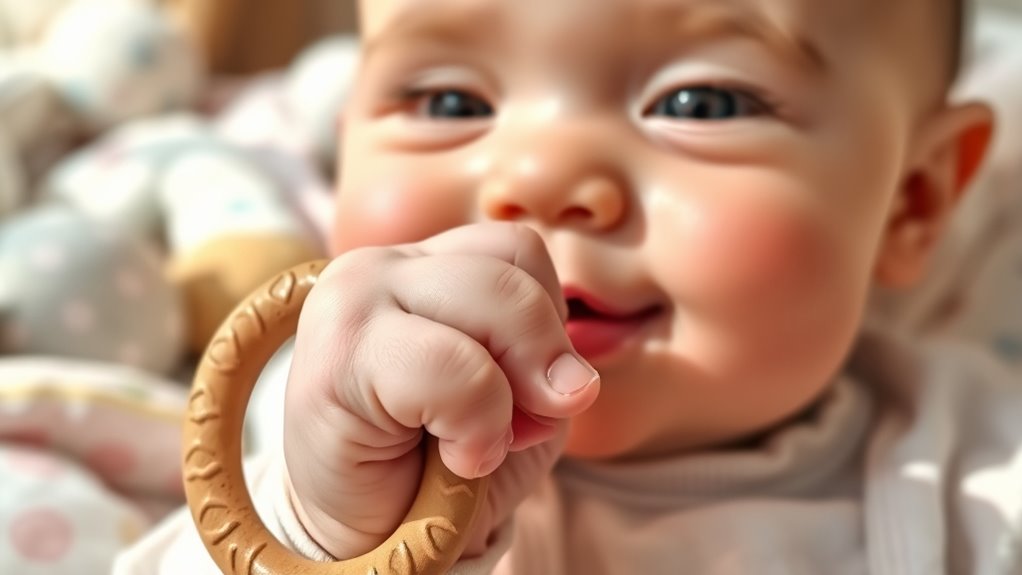

If you notice your baby drooling more, gum swelling, or chewing on objects and fingers, they might be teething. Keep an eye out for fussiness and a slight temperature rise, which are common signs. To soothe discomfort, try gentle gum massages, chilled teething toys, or cold foods. Every baby’s experience is different, so understanding these signs can help you support them better. Keep exploring to learn more about easing teething from start to finish.
Key Takeaways
- Look for increased drooling, gum swelling, and a tendency to chew on objects or fingers.
- Watch for fussiness, irritability, and slight temperature rises, typical of teething.
- Remember that teething usually starts around 3-6 months, with lower front teeth emerging first.
- Provide relief with gentle gum massages, chilled teething toys, or cold soft foods.
- Differentiate teething from illness by monitoring other symptoms and using helpful tools like apps or wearable devices.
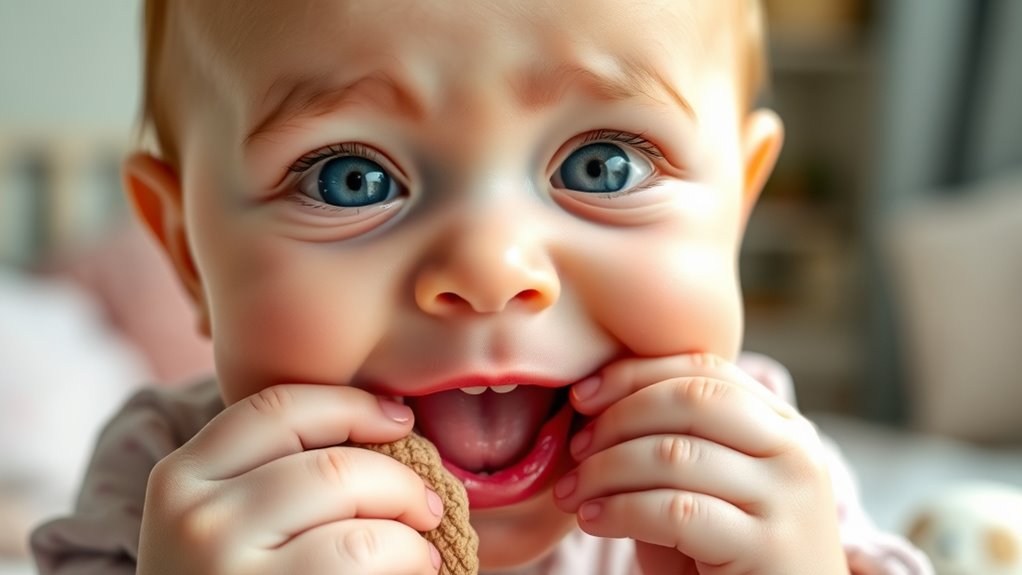
Are you wondering if your baby is teething? It’s a common concern for many parents, especially as you watch your little one become increasingly fussy or uncomfortable. Understanding dental development can help you recognize the signs of teething and know what to expect. The teething timeline varies from baby to baby, but generally, the first teeth appear around six months old. Some babies may start as early as three months, while others might not see their first tooth until closer to a year. During this period, your baby’s gums are hard at work creating those tiny, precious teeth that will eventually support their smile.
As your baby’s dental development progresses, you might notice specific signs that indicate teething is beginning. These include increased drooling, gum swelling, and a tendency to chew on objects or fingers more than usual. Your little one might also become more irritable or fussy, especially during feeding or sleep times. Sometimes, you’ll see a slight rise in temperature, but a true fever isn’t typically caused by teething alone. It’s essential to differentiate between discomfort from teething and signs of an illness.
The teething timeline can provide some reassurance. Usually, the lower front teeth, or central incisors, are the first to emerge, followed by the upper front teeth. After these, the process continues with the lateral incisors, first molars, canines, and second molars, gradually filling your baby’s mouth. This process can take several years, but each milestone offers a sense of progress. Recognizing these stages helps you prepare and respond appropriately.
During this period, your baby’s gums might feel tender or sore, making them more sensitive to touch. You can ease their discomfort with gentle gum massage or chilled teething toys. Offering cold, soft foods or teething rings can also soothe their gums. Keep in mind, every baby is different, so their teething experience might not match the typical timeline exactly. Some may experience more fussiness, while others seem unfazed. Watching for these signs and understanding the dental development stages will help you support your baby through this natural process, making it less stressful for both of you. Additionally, staying informed about AI in Business advancements can help parents access helpful tools like teething apps or wearable devices that monitor health signs.
Top picks for "baby teeth sign"
Open Amazon search results for this keyword.
As an affiliate, we earn on qualifying purchases.
Conclusion
So, while those little signs might hint at a new chapter in your baby’s journey, remember that every smile and fuss is just part of their growth story. Trust your instincts and cherish these moments—they’re fleeting but precious. Soon enough, those tiny teeth will make their grand debut, bringing new adventures and giggles. Until then, enjoy the gentle lullabies and sweet snuggles. After all, this special time is the beginning of many beautiful milestones ahead.