
To babyproof grandma’s house, start by installing and testing smoke detectors on every level, and keep fire safety items like extinguishers accessible. Keep matches, lighters, and candles out of reach and secure space heaters and fireplaces. Supervise pet interactions and create pet-free zones to prevent allergies or bites. Use barriers to restrict access to hazards, and develop an emergency plan. Continue exploring ways to make grandma’s home as safe as possible for your little one.
Key Takeaways
- Install and regularly test smoke detectors on every level; replace batteries and malfunctioning units promptly.
- Secure hot appliances and store matches, lighters, and candles out of child’s reach to prevent fire hazards.
- Use safety gates or barriers to restrict pet access and create pet-free zones for the child’s safety.
- Develop and rehearse a fire escape plan with grandma for quick evacuation in emergencies.
- Keep small objects, pet food, and toys away from the child to prevent choking and allergic reactions.
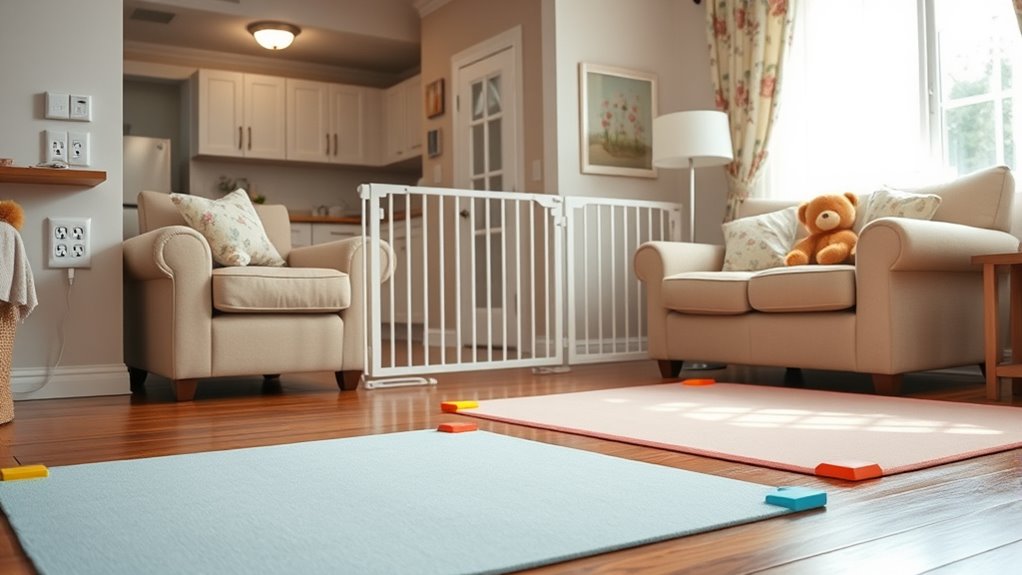
Bringing your little one to grandma’s house can be a joyful experience, but it also requires careful babyproofing to guarantee their safety. Every environment, especially a place filled with love and familiarity like grandma’s, needs to be tailored to protect your child from potential hazards. One of the most important aspects is fire safety. You should start by checking that smoke detectors are installed and functioning properly on every level of the house. Explain to grandma how to test them and replace batteries if needed. Keep matches, lighters, and candles out of your child’s reach, preferably in a locked cabinet. If grandma uses space heaters or has a fireplace, make sure they’re secured and that your little one can’t access hot surfaces. A fire escape plan is also wise—go over it with grandma and practice quick exits so everyone knows what to do in case of emergency. Being proactive about fire safety gives you peace of mind and helps prevent tragedies.
Pet proofing is equally crucial if grandma has pets. Even well-behaved animals can unintentionally harm a curious baby. Before visiting, talk with grandma about how her pets behave around children. Keep pet food, bowls, and toys out of reach to prevent choking hazards. If grandma has pets that shed or have fur, ensure the environment is clean and free of pet hair that might irritate your child’s respiratory system. Additionally, supervise interactions between your baby and pets to avoid bites or scratches. It’s also a good idea to create a designated pet-free zone where your little one can play safely without interference. If grandma’s pets have access to certain areas, consider barriers or gates to keep your child away from those spaces. This ensures that both your baby and the pets are comfortable and safe.
Conclusion
By babyproofing grandma’s house, you’re building a safe haven where curiosity can flourish without fear. Think of it as planting a sturdy garden fence around a delicate flower—protecting it while allowing it to grow. With each safety measure, you’re creating a welcoming space where your little one can explore freely and happily. Remember, a safe environment is the foundation for joyful discoveries, turning grandma’s house into a playground of love and security.