
TL;DR
Thanksgiving kids’ tableware works best when it suits the children and the meal: check age guidance, dimensions, material, and care instructions before you buy. Pair one or two seasonal pieces with reusable basics, and follow product labels for heat and cleaning so the table stays cheerful and practical.
A tiny hand reaches for a cup, a roll bounces across the table, and somewhere a plate full of mashed potatoes takes a slow, wobbly turn. Thanksgiving with kids can be lively. A few well-chosen pieces of Thanksgiving-themed kids’ tableware add autumn color without making the meal harder to manage.

Turn the school run and nap time into listening time
- Thousands of audiobooks, podcasts and originals
- Listen on your phone, tablet or Echo — also offline
- Cancel anytime
This guide helps you choose plates, cups, bowls, and utensils that suit your guests’ ages and your menu. You’ll learn what to check on product labels, how to balance seasonal style with easy cleanup, and how to build a festive place setting on a budget. The angle is how to make the children’s table feel special while keeping it sturdy and easy to use.
Use one or two seasonal items with plain basics to create a festive setting that can be reused.
Check each product’s material, age guidance, dimensions, and care directions before use.
Follow the label for microwave and dishwasher restrictions; melamine is generally not intended for microwave use.
Choose plates, cups, and utensils to suit the children and meal, and supervise young diners.
Count the guests and check what a set includes before buying; bowls and divided plates depend on your menu.
Make a festive table with just a few seasonal pieces
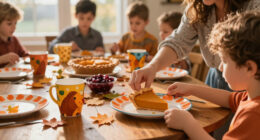
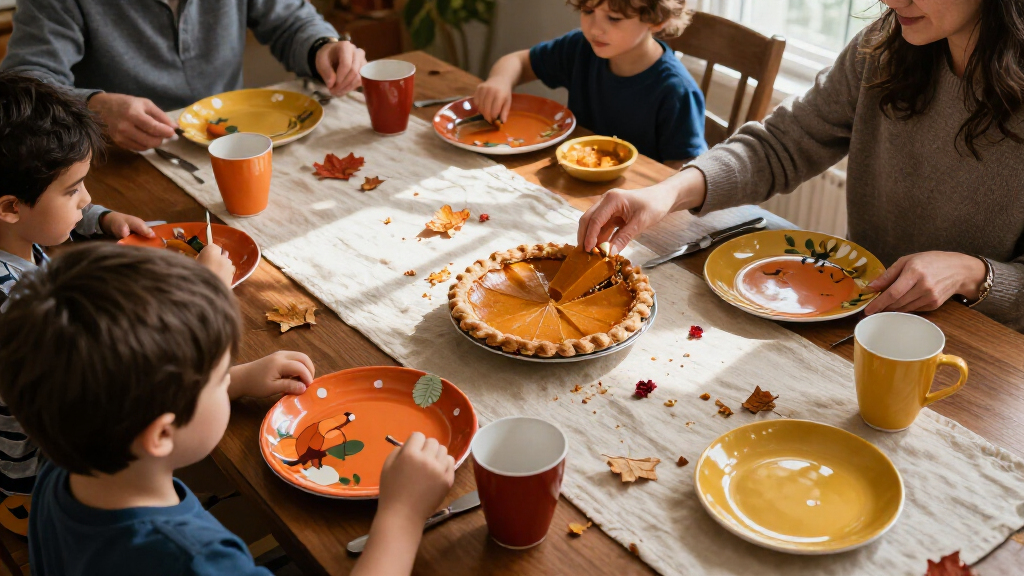
Thanksgiving-themed kids’ tableware can make a children’s place setting feel festive without turning the whole table into a matching display. Pick one clear seasonal detail, such as a pumpkin-print plate, a rust-colored cup, or a napkin with bright orange leaves, then pair it with plain pieces you already own. The table gets a warm, harvest feel, and your budget stretches further.
For instance, imagine four children sitting at the end of a long family table. A turkey plate at each seat and simple cream bowls can give the group its own playful corner, while the grown-up dishes stay as they are. The colors do some of the decorating: orange glows against white, and a little brown feather pattern gives the setting a cozy autumn look.
Think about whether the design has life after Thanksgiving. Harvest foods, leaves, and solid fall colors can return for weekend lunches through November, while a simple leaf pattern may work for years. If your family prefers a themed moment, one printed item is enough to set the scene. The tableware combines festive designs with practical features for family meals when the decoration does not crowd out a child’s room to eat.
A small seasonal detail can make an ordinary plate of turkey and carrots feel like a celebration.
Products Worth Considering

Doona Car Seat and Stroller Travel System, Nitro Black

LEGO DC Batman Arkham Asylum Building Set (76300)

Graco Grows4Me 4-in-1 Convertible Car Seat, West Point
As an affiliate, we earn on qualifying purchases.
Choose materials by checking labels and care directions
Thanksgiving kids’ tableware materials each bring different tradeoffs, so check the product label, age guidance, and care instructions before choosing. Plastic, melamine, bamboo-based products, and silicone all appear in children’s tableware, but the material name alone does not tell you whether a piece suits your child, your menu, or your dishwasher. A maker’s instructions should guide how you use it.
Melamine is generally not intended for microwave use; use a microwave-safe dish for reheating and follow the specific product label. Bamboo-based tableware can be made in different ways, so check whether the item is solid bamboo or a composite and whether the maker allows dishwasher or microwave use. If a plate has a glossy printed turkey, high heat or abrasive washing may damage the design, depending on its instructions.
Picture lunch the next day: you reach for yesterday’s pumpkin plate to warm up a serving of stuffing. A quick label check can prevent a material-care mismatch. Look for the care directions before buying, since a product that needs hand-washing may not fit a busy host’s cleanup routine. If environmental claims matter to you, check what “compostable” means for that product and whether local disposal facilities accept it; home composting may not be suitable.
- Check use instructions for heat, dishwasher care, and food contact.
- Inspect the material and any composite ingredients described by the maker.
- Skip damaged pieces with chips, cracks, or loose parts.
Match plates and utensils to the child at the table
Age-appropriate tableware is sized and shaped for the child who will use it, and the manufacturer’s age guidance helps you judge that fit. A smaller plate, easy-grip cup, or child-sized utensil can feel more manageable for a young diner than a full-size place setting. For toddlers, stay nearby during meals and follow product and pediatric guidance for age-specific needs.
Consider a three-year-old facing turkey, peas, and sweet potato casserole. A divided plate can keep the peas from touching the casserole if that helps the child settle into the meal; a cup that is comfortable to hold can reduce spills. Another child might prefer a plain plate with room to arrange small tastes. You know the children and their habits, so think about what will make the meal workable for them.
Small utensils and breakable pieces call for attention around young children. Supervise them at the table, avoid damaged items, and check that there are no loose or detachable parts that could come away during use. The best fit can depend on the child: one preschooler may manage a regular cup, while another does better with a grip-friendly shape. Product age guidance offers a starting point, not a substitute for your judgment or pediatric guidance when infant feeding questions arise.
Start with the child, then the motif. A charming fox pattern cannot make an awkward cup easier to hold.
Use this quick checklist before buying a set
Before buying a kids’ tableware set, check the piece count, dimensions, age guidance, and cleaning instructions against your guest list and menu. A coordinated box may look like a bargain until you discover it includes plates but no cups, or only enough forks for two children. A quick count can save a last-minute dash through the kitchen drawer.
- Count your diners. If six children are coming, confirm the set includes enough plates and cups, or add basics you already own.
- Check what is included. A useful starter place setting has a plate, a cup, and child-sized eating utensils; bowls or divided plates depend on the meal and the children.
- Read the care directions. Confirm dishwasher guidance and any restrictions on microwaves, high heat, or abrasive cleaning.
- Compare the size and age guidance. Make sure pieces suit the children who will use them, and supervise young diners.
- Look over every piece. Avoid chips, cracks, and detachable parts that do not fit your child’s age and needs.
For example, if four cousins are coming and two are toddlers, a set with six dinner plates but only two cups may need topping up. You could use the printed plates for all four, then bring out plain, familiar cups for the younger guests. That small bit of planning keeps the table looking coordinated and gives each child something they can use comfortably.
When the meal includes soup or pumpkin custard, a bowl may matter more than a second plate. Choose based on the food and the people at your table, not just the picture on the package.
Keep cleanup easy without creating extra waste
Reusable tableware can reduce reliance on single-use plates when your family uses and cares for it repeatedly; disposable pieces can spare you dishwashing but create more waste and may be less sturdy. There is no one right answer for every Thanksgiving. Your choice depends on how many guests you’re hosting, what cleanup help you have, and whether the children will use the pieces again.
Suppose you’re hosting a small dinner and already own washable plastic plates. Add seasonal cups or printed napkins, and you can get a festive look without buying a full set. If you’re serving a large crowd and your kitchen sink is already stacked with roasting pans, sturdy disposable plates may feel like a practical option. Check their strength against your menu; a thin paper plate may sag under a generous scoop of stuffing and gravy.
Care instructions matter for reusable pieces, too. A plate that needs hand-washing may sit in a basin while dishwasher-safe basics are ready for lunch the next day. Follow the manufacturer’s cleaning directions, and don’t assume every material or printed design tolerates high heat. If a package calls an item eco-friendly or compostable, check the disposal guidance and local facilities before relying on that claim. The word alone does not tell you how the item should be handled after dinner.
Practicality includes the after-meal moment. Choose a setup you can clean, store, and bring out again without turning the holiday into a second job.
Stretch your budget with mix-and-match pieces
A budget-friendly kids’ table does not need a complete matching set. Buy or reuse the pieces that will carry the most visual weight, then fill in with simple basics: a printed plate beside a plain bowl, or an autumn-orange cup beside a familiar fork. Guests notice the festive colors and cheerful pattern, not whether every spoon came from the same box.
For instance, you might have five children and only three turkey-print plates. Place those at the center of the children’s section and use solid-color plates at the end seats. A few paper leaves scattered between place settings can tie the colors together. If you already own sturdy plates that fit the children, one pack of seasonal napkins may be all you need.
Before you buy, check the set count and whether it includes bowls, cups, and utensils. Coordinated sets can save shopping time, while mix-and-match pieces can be easier to replace if one plate gets lost or damaged. Keep a note of the product name or size if you expect to add more pieces later, but remember that seasonal designs may not return the next year. Simple designs and warm harvest colors tend to work beyond a single holiday meal.
Let the menu guide your spending. If the children will mostly eat sandwiches and fruit, a plate and cup may do the job. If pumpkin soup is on the menu, bowls should move higher on the list.
Frequently Asked Questions
What material is safest for kids’ Thanksgiving plates and cups?
No single material suits every family or child. Compare the product’s age guidance, material, durability, and care instructions, avoid chipped or cracked items, and follow any heat restrictions on the label.
Can melamine plates go in the microwave?
Melamine tableware is generally not intended for microwave use. Check the specific product label and reheat food in a dish marked microwave-safe.
Are bamboo plates really eco-friendly?
It depends on the product’s materials, manufacture, durability, and disposal route. Check whether it is solid bamboo or a composite, what binders it contains, and whether its composting directions match facilities where you live.
What should a kids’ tableware set include?
A useful starting place is a plate, a cup, and child-sized eating utensils. Add bowls or divided plates if they suit the children and the Thanksgiving menu, and check the set count against your guest list.
How can I set up a festive kids’ table on a budget?
Use one seasonal item, such as printed plates or autumn-colored cups, with reusable basics you already own. Count the children and check the set size before buying so you don’t pay for pieces you do not need.
How do I choose tableware for toddlers?
Look for stable, easy-to-hold pieces sized for small hands and follow the maker’s age recommendations. Supervise toddlers at meals, avoid damaged items and loose parts, and follow pediatric guidance for infant feeding questions.
Conclusion
Choose tableware that fits the children first, then add the pumpkins, turkeys, or bright leaf colors that make the meal feel like Thanksgiving. A well-sized plate, a cup a child can hold, and clear care instructions will serve you better than a picture-perfect set that stays in the cupboard.
Pick one cheerful detail, check the labels, and set the table. The warm glow of autumn colors can do the decorating while you get back to the people gathered around it.