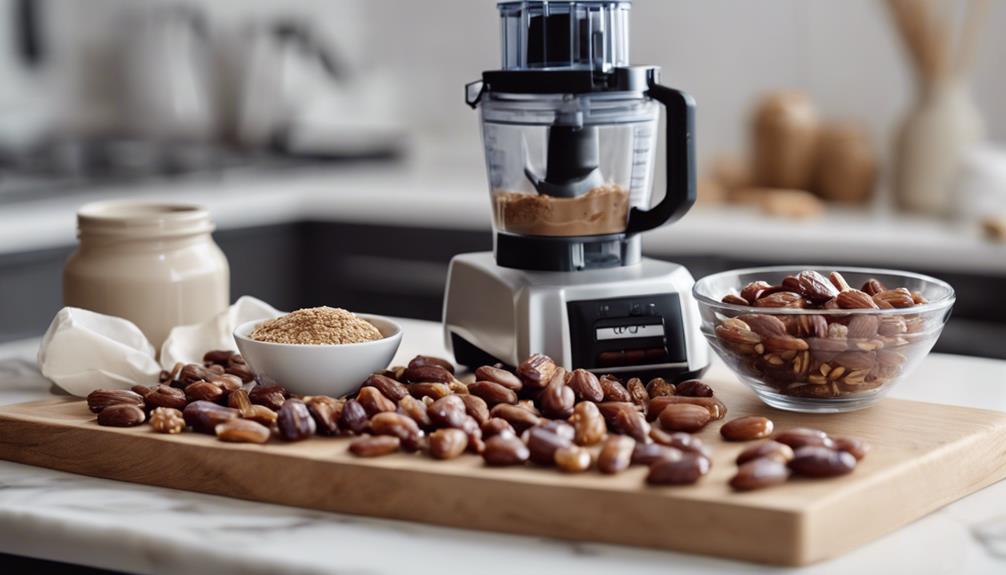
Introducing meats and beans into your baby’s purees is a great way to boost their protein intake and support healthy development. Start by cooking tender, lean meats like chicken or fish until soft, then blend them into smooth textures. Similarly, soak and cook beans until very soft, blending with water or broth for easy digestion. Combining these proteins adds variety and nutrients to your little one’s diet. Keep exploring for tips to make these purees delicious and baby-friendly.
Key Takeaways
- Use tender, thoroughly cooked meats like chicken, beef, or fish, blended into smooth purees suitable for babies.
- Soak and cook beans until soft, then blend with water or broth to create easily digestible, protein-rich purees.
- Incorporate a variety of meats and beans to introduce diverse flavors and nutrients to your baby’s diet.
- Enhance purees with mild herbs or spices to improve flavor without overwhelming sensitive taste buds.
- Ensure purees are smooth, free of lumps, and served at appropriate temperatures for safe, easy consumption.
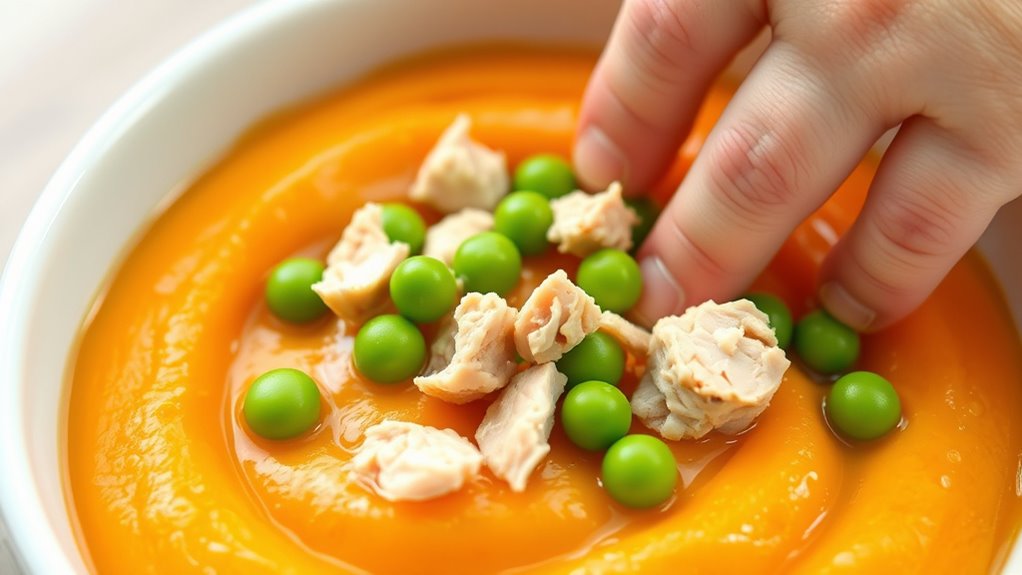
Protein-packed purees are a convenient and nutritious way to boost your daily intake of essential nutrients. When it comes to introducing meats and beans into your diet, purees can make the process simple, tasty, and accessible. They provide an excellent source of protein, which is crucial for muscle repair, immune function, and overall health. Plus, purees make it easier to incorporate these ingredients into your meals, especially if you’re seeking a smooth, easy-to-digest texture.
Protein-rich purees make nutritious, easy-to-digest meals with versatile flavors from meats and beans.
Meat textures vary widely, from tender chicken to flaky fish, and each can be cooked until soft and then blended into a smooth puree. When preparing meat purees, it’s best to opt for lean cuts to keep the fat content in check. Cooking the meat thoroughly ensures safety and enhances flavor, making it easier to blend into a silky consistency. You might find that different meats lend unique flavors to your purees—chicken offers a mild taste, while beef provides a richer, heartier flavor. Fish like salmon or cod can add healthy omega-3 fats and a delicate taste. The key is to cook the meat until it’s tender enough to blend smoothly, avoiding any stringy or coarse textures that could be difficult to swallow.
Bean varieties also make fantastic protein sources for purees. Popular options include black beans, chickpeas, lentils, and kidney beans. Each variety has its own flavor profile and nutritional benefits, making it easy to diversify your meals. When preparing bean purees, soaking them beforehand helps reduce cooking time and improves digestibility. Cook the beans until they’re soft, then blend with a bit of water or broth to achieve a smooth, creamy consistency. Some beans, like chickpeas, create a thicker puree, while lentils tend to break down easily, forming a smoother texture. You can also add spices or herbs to enhance flavor without overwhelming the natural taste of the beans. Combining bean varieties can introduce different textures and flavors, keeping your meals interesting and satisfying. Incorporating natural materials into your purees can also boost sensory experiences and nutritional value, similar to how Waldorf toys promote holistic development.
Using a variety of meat textures and bean types not only keeps your meals diverse but also ensures you get a broad spectrum of nutrients. The versatility of purees makes it easy to experiment with flavors and textures, so you can find what works best for your palate and dietary needs. Whether you prefer a silky chicken puree, a hearty beef blend, or a smooth lentil mash, these options provide a convenient way to enjoy high-quality protein in your diet. Incorporating these purees into your daily routine can support your health goals while making mealtime more enjoyable.
Conclusion
So, next time you’re blending up those simple fruit purees, remember—you’re missing out on the protein-packed magic of meats and beans. Who knew that turning your baby’s diet into a culinary adventure could be so overlooked? Ironically, the most “plain” purees might be the least nutritious. So don’t settle for boring—add a little protein punch and watch your little one thrive, all while secretly sneaking in a bit of culinary sophistication.