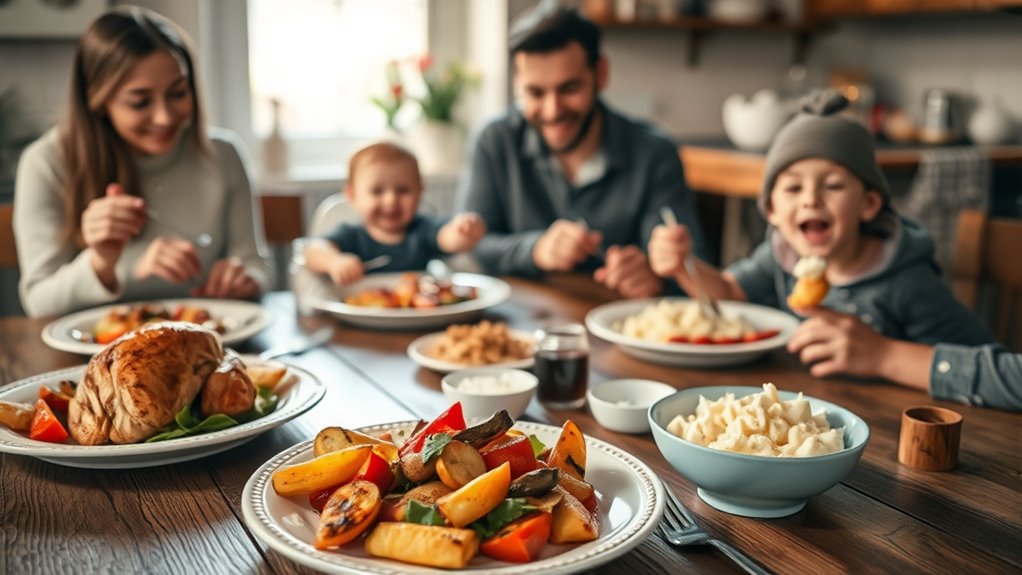

To create dinner recipes your baby can share, focus on versatile dishes like vegetable stews, soft grains, and tender casseroles that can be pureed or mashed for little ones. Involve the whole family in prep and dining routines to promote bonding and good manners. Keep flavors simple and seasoning minimal for your baby, while adding herbs or toppings for older family members. Explore simple, nutritious recipes that make mealtime easier and more enjoyable for everyone.
Key Takeaways
- Prepare large, family-style casseroles or stews with pureed vegetables and soft grains suitable for babies.
- Serve shared dishes, setting aside baby portions before adding seasonings or salt for infants.
- Involve children in setting the table, serving, and simple food prep to foster independence and bonding.
- Use mild, whole-food ingredients and avoid added salt or sugar to promote healthy eating habits for all ages.
- Create a relaxed mealtime environment focused on connection, manners, and positive family interaction.

Are you looking for meal ideas that everyone in the family will enjoy? Creating dishes that can be shared across different ages not only simplifies mealtime routines but also encourages family bonding. When planning meals for the whole family, it’s essential to contemplate family dining etiquette, ensuring that everyone feels comfortable and involved. Establishing a consistent mealtime routine helps set expectations, making it easier for kids to develop good table manners and for adults to enjoy a peaceful dining experience. Incorporate dishes that are nutritious, appealing, and easy to serve in portions suitable for both babies and older family members.
Create shared, nutritious meals that suit all ages and promote family bonding and good mealtime routines.
A great way to start is by preparing versatile meals that can be easily adapted. Think about pureed vegetables or soft grains that babies can enjoy, while older children and adults can have their portions with added seasonings or toppings. For example, a gentle vegetable risotto can be pureed for the baby and served as a hearty dish for the grown-ups. When you’re mindful of family dining etiquette, you teach children to use utensils properly, chew with their mouths closed, and participate in polite conversation. These routines create a positive mealtime environment where everyone feels valued and respected.
Meal planning that includes shared dishes promotes a sense of togetherness. You can make large, family-style casseroles or stews that are easy to serve and customize. For the baby, you simply set aside a portion before adding any seasonings or salt. This way, you avoid multiple cooking sessions and cut down on cleanup time. During mealtime routines, encourage your children to help set the table, serve themselves, or even help with simple food prep. These actions reinforce family dining etiquette, such as waiting for everyone to be served before starting to eat, and foster independence.
It’s also important to create a relaxed atmosphere during meals, minimizing distractions like screens, and focusing on conversation and connection. As you develop these mealtime routines, you’ll notice your children becoming more comfortable with family dining etiquette, like saying “please” and “thank you” or asking to pass the salt. Sharing meals that everyone can enjoy, from baby to adult, makes the entire experience more enjoyable and manageable. Plus, it reinforces healthy eating habits and helps your family develop positive associations with mealtime. With some planning and patience, you can turn family dinners into a cherished tradition where everyone, regardless of age, feels included, respected, and well-fed.
Top picks for "meal whole family"
Open Amazon search results for this keyword.
As an affiliate, we earn on qualifying purchases.
Conclusion
Think of these meals as a shared story, each ingredient a chapter that brings your family closer. As you serve these dishes, you’re weaving a tapestry of love and connection, where every bite symbolizes unity and care. Let dinner be more than just food—let it be a rhythm, a heartbeat that echoes warmth and togetherness. With each shared plate, you nurture not only hungry bellies but also lifelong bonds that grow stronger with every meal.