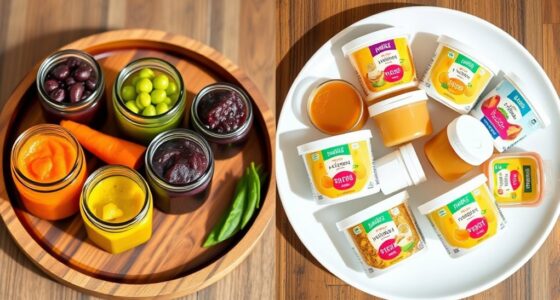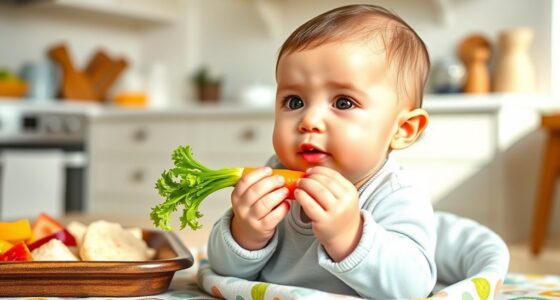

Choosing organic baby food can effectively reduce your child’s exposure to synthetic pesticides and chemical residues, which many parents worry about for long-term health and safety. Organic farming practices avoid harmful chemicals and promote sustainability, which aligns with your values. While organic options might cost more, many find the benefits worth it for peace of mind and potentially better nutrition. To discover how these choices impact your little one’s health and environment, explore the details further.
Key Takeaways
- Organic baby foods typically have lower pesticide residues, reducing infants’ chemical exposure.
- They are produced using sustainable, eco-friendly farming practices that benefit environmental health.
- Some studies suggest organic produce may be richer in certain nutrients, but evidence is still evolving.
- Many parents prefer organic options to avoid synthetic chemicals and promote safer, natural feeding.
- The higher cost of organic baby foods may be justified by health, safety, and ecological benefits.
Are you wondering why more parents are choosing organic baby food for their little ones? The answer often comes down to concerns about pesticide exposure and the desire to provide the safest, most natural nutrition possible. Conventional farming methods frequently rely on synthetic pesticides to protect crops from pests and diseases, but these chemicals can linger on fruits and vegetables. When you feed your baby foods contaminated with pesticides, you’re exposing them to substances that might have long-term health effects. Many parents feel uneasy about giving their infants foods that could contain residues of these chemicals, especially since young children are more vulnerable to toxins due to their developing bodies. Additionally, organic farming practices, on the other hand, prioritize the use of natural methods over synthetic chemicals. Organic farmers avoid synthetic pesticides and fertilizers, instead relying on crop rotation, composting, and biological pest control to maintain healthy soil and crops. This approach substantially reduces the risk of pesticide residues in the foods you serve your baby. When you opt for organic baby food, you’re choosing products that are more likely to be free from harmful chemicals, giving you peace of mind that you’re minimizing your child’s exposure to potentially dangerous substances.
Many parents worry about pesticide residues in baby foods and their potential long-term health effects.
Moreover, organic farming is often associated with sustainable practices that protect the environment and promote soil health. These methods contribute to healthier ecosystems and can result in produce that is richer in certain nutrients. While the scientific community continues to research whether organic foods are consistently more nutritious than conventionally grown options, many parents see organic baby food as a way to avoid unnecessary chemical exposure. It’s not just about avoiding pesticides—it’s also about supporting farming practices that prioritize ecological balance and animal welfare. Farming practices that reduce chemical use can lead to better soil quality and overall sustainability.
Choosing organic baby food can also influence your child’s taste preferences and eating habits. Many parents notice that organic produce tends to have a fresher, more vibrant flavor, which can help your little one develop a palate for natural tastes early on. While cost can be a concern, many find that investing in organic options is a worthwhile step toward safeguarding their child’s health. Ultimately, the decision to feed your baby organic foods reflects a desire to give them the safest start in life, with fewer worries about chemical residues or environmental toxins. The evidence, combined with your personal values about health and sustainability, often guides parents toward organic options as a meaningful way to nurture their little ones.
organic baby food jars
As an affiliate, we earn on qualifying purchases.
As an affiliate, we earn on qualifying purchases.
Conclusion
So, when you consider organic baby food, remember that the evidence is mixed. It’s a coincidence that, despite higher costs, some parents find comfort in choosing organic for peace of mind. While it might not guarantee fewer pesticides, it often reflects better farming practices. Ultimately, your decision depends on what matters most to you—trust, quality, or budget. Sometimes, the simplest choice is just doing your best, and that’s what truly counts.
natural baby food pouches
As an affiliate, we earn on qualifying purchases.
As an affiliate, we earn on qualifying purchases.
baby food organic snack packs
As an affiliate, we earn on qualifying purchases.
As an affiliate, we earn on qualifying purchases.
chemical-free baby food
As an affiliate, we earn on qualifying purchases.
As an affiliate, we earn on qualifying purchases.