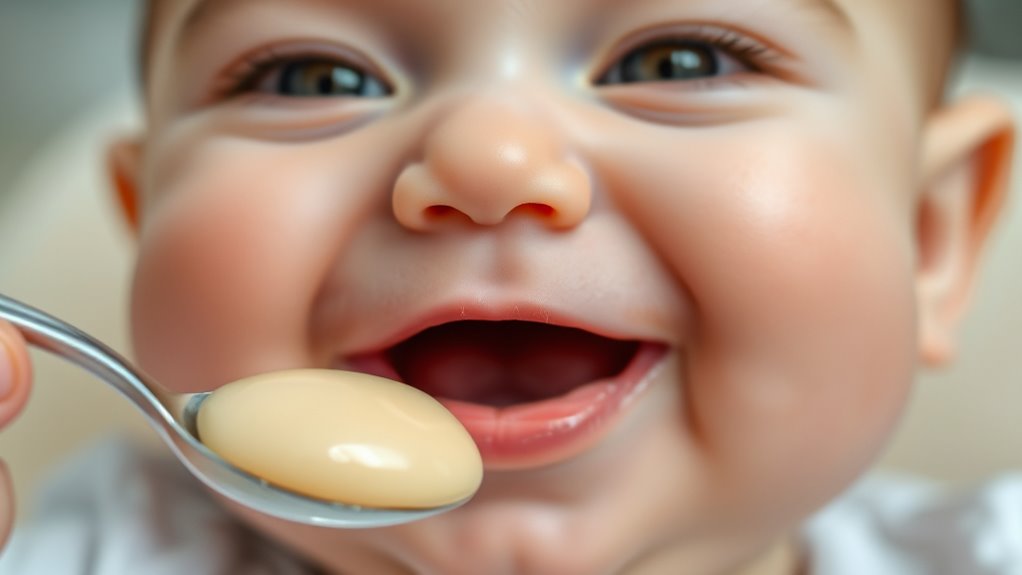

To make your baby’s first foods stress-free, create a calm, consistent mealtime routine and choose gentle, safe feeding accessories like soft-tipped spoons and non-slip bowls. Be patient, keep the atmosphere relaxed, and avoid rushing or forcing your baby to eat. Use positive encouragement and give your little one time to explore textures at their own pace. Want to discover more tips for smooth and joyful feeding? Keep exploring for helpful insights.

Turn the school run and nap time into listening time
- Thousands of audiobooks, podcasts and originals
- Listen on your phone, tablet or Echo — also offline
- Cancel anytime
Key Takeaways
- Establish consistent mealtime routines to create predictability and reduce anxiety during feeding sessions.
- Use appropriate, soft-tipped spoons and non-slip bowls to facilitate comfortable and safe self-feeding.
- Keep the environment calm and relaxed, encouraging exploration without pressure or rushing.
- Introduce small food amounts gradually, fostering positive associations and patience with textures and flavors.
- Prioritize hygiene and safety by maintaining clean accessories and practicing proper food handling practices.

Feeding your baby can be a joyful experience, but it often comes with stress and uncertainty. When you’re starting to introduce solid foods, it’s common to worry about making the process smooth and enjoyable for both of you. One way to reduce this stress is by preparing the right mealtime routines and having the appropriate feeding accessories on hand. These tools aren’t just helpful—they make the entire experience more comfortable, organized, and less chaotic.
Making mealtime joyful with routines and the right feeding accessories.
First, focus on creating consistent mealtime routines. Babies thrive on predictability, so establishing set times for spoon feeding can help your little one know what to expect. Keep the environment calm and free of distractions to help your baby focus on eating. Consistency in routine helps your baby develop healthy eating habits and reduces fussiness during mealtimes. Over time, your baby will become familiar with the sequence of events, making each feeding session smoother.
Next, invest in quality feeding accessories designed for babies just starting on solids. Small, soft-tipped spoons are gentle on their gums and easier for tiny hands to grip. Using the right bowls or plates with non-slip bases keeps their food within reach and minimizes messes. Sippy cups or training cups with spill-proof lids can also be useful once your baby is ready to transition from spoon feeding to self-feeding. Having these accessories readily available and in good condition helps prevent frustration—for both of you—during mealtimes.
As you begin spoon feeding, remember to start slowly. Offer small amounts of food, and let your baby explore the textures and flavors at their own pace. Using appropriate feeding accessories can make this exploration easier. For instance, using a small spoon that fits comfortably in their mouth encourages gentle bites, and a shallow bowl helps prevent spills. Keep the atmosphere relaxed; don’t rush or pressure your baby to eat. Instead, allow them to take their time, which fosters a positive association with mealtime.
Additionally, being aware of business regulations related to food safety and hygiene can help ensure your baby’s meals are prepared and stored properly, reducing health risks and making the process more stress-free. Remember, the goal is to make feeding a bonding experience, not a stressful chore. With consistent routines and the right feeding accessories, you’ll find that your baby’s first foods become an enjoyable milestone rather than a source of anxiety.
As an affiliate, we earn on qualifying purchases.
Frequently Asked Questions
When Should I Start Introducing Solid Foods to My Baby?
You should start introducing solid foods around 6 months, when your baby shows signs of readiness like sitting up and showing interest in your food. Establish a consistent feeding schedule and consider baby-led weaning as an approach to encourage independence. Remember, every baby is different, so watch for cues and consult your pediatrician to make certain your little one is ready for the exciting shift to solids.
How Do I Know if My Baby Is Ready for Solids?
You’ll know if your baby is ready for solids by watching for development milestones like good head control and sitting up with support. Pay attention to feeding cues such as increased interest in your food, opening their mouth when offered solids, and showing curiosity. These signs indicate your little one is prepared to start exploring new tastes and textures, making the progression smoother and more enjoyable.
What Are Safe First Foods for My Baby?
You should choose safe first foods that provide a good nutritional balance and support texture progression. Start with single-ingredient options like pureed fruits, vegetables, and iron-fortified cereals, guaranteeing they’re smooth and easy to swallow. As your baby gets used to solids, gradually introduce thicker textures and new flavors. Always watch for any allergic reactions and consult your pediatrician if you’re unsure about specific foods to ensure safety and proper development.
How Do I Handle Gagging or Choking During Feeding?
When your baby gags or chokes during feeding, stay calm and quickly assess the situation. Remember, gagging is a natural gag reflex and helps prevent choking. To reduce choking risks, offer small, manageable bites and ensure food is soft enough for your baby’s mouth. If gagging occurs, gently tilt their head forward to help clear the airway. Always supervise feeding and be prepared to act if necessary.
Can I Give My Baby Homemade Purees or Store-Bought Options?
Have you ever wondered if you should choose homemade purees or store-bought options for your baby’s first foods? The answer isn’t simple—both can be nutritious and safe if prepared properly. Homemade purees let you control ingredients, while store-bought options offer convenience. Consider your schedule, your baby’s preferences, and your comfort level. Either way, ensuring the food’s texture and quality helps make feeding a positive experience for both of you.
Conclusion
Remember, feeding your baby should feel like a joyful dance, not a overwhelming task. Stay patient, keep things relaxed, and trust your instincts—after all, isn’t the sweetest success the one that’s enjoyed with love and calm? By creating a positive environment, you’ll turn mealtime into a treasured bonding moment rather than a stressful chore. So, embrace the journey, and watch your little one develop a healthy relationship with food, one gentle spoonful at a time.
Cold & flu season Picks
humidifiers
As an affiliate, we earn on qualifying purchases.