

Toe walking can be normal in early childhood as children explore movement, but if it continues past age 2 or 3, it may need attention. Watch for other quirks or behaviors that persist, as they could signal sensory processing differences or developmental concerns. Most kids develop typical walking patterns within expected milestones, but if you’re unsure about what’s normal, further information can help you understand when to seek support for your child’s development.

Turn the school run and nap time into listening time
- Thousands of audiobooks, podcasts and originals
- Listen on your phone, tablet or Echo — also offline
- Cancel anytime
Key Takeaways
- Toe walking can be normal in early childhood but warrants attention if it persists beyond age 3-4.
- Most children transition to heel walking; delays may indicate developmental or sensory processing issues.
- Persistent toe walking may be linked to neurodevelopmental conditions or sensory regulation needs.
- Observation of movement patterns and developmental milestones helps determine if intervention is necessary.
- Early assessment by professionals can identify underlying causes and guide appropriate support or therapy.
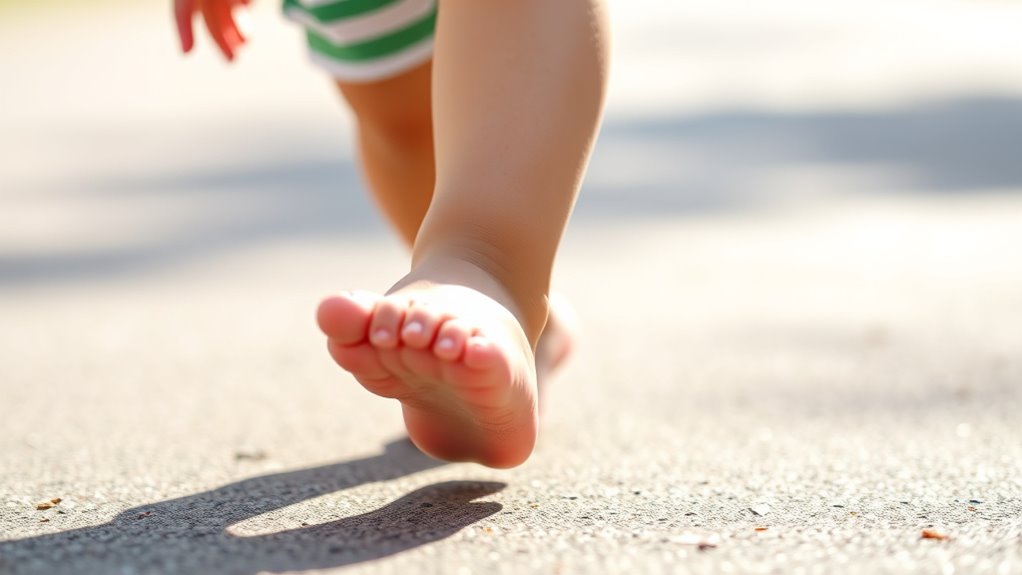
Many children experiment with different ways of moving, and toe walking can be a normal part of development in early childhood. However, when this habit persists beyond the age when most children have transitioned to heel walking, it may warrant further attention. Persistent toe walking can sometimes be associated with underlying conditions or neurodevelopmental issues, so understanding what’s typical and what might need assessment is important. For example, some children with developmental quirks or sensory processing differences may continue toe walking as a way to feel more comfortable or regulate their sensations.
children's toe walking correction exercises
As an affiliate, we earn on qualifying purchases.
As an affiliate, we earn on qualifying purchases.
Frequently Asked Questions
When Should I Be Concerned About My Child’s Toe Walking?
If you’re wondering when to be concerned about your child’s toe walking, pay attention to their developmental milestones. If toe walking persists beyond age 2 or affects their ability to run, jump, or balance, it’s time to seek early intervention. Addressing these concerns early can improve outcomes, so trust your instincts and consult a healthcare professional if you notice your child’s gait isn’t developing typically or if it continues past the expected age.
Are There Specific Exercises to Correct Toe Walking?
You can try specific exercises like heel stretches and toe lifts to help correct toe walking. Heel stretches loosen tight calf muscles, making it easier to walk flat. Toe lifts strengthen your foot muscles and improve balance. Perform these exercises consistently, gently pushing your limits without pain. If toe walking persists or causes discomfort, consult a healthcare professional for tailored guidance and possible further treatment options.
How Common Are Quirks Like Fidgeting or Nail-Biting?
Did you know that fidgeting occurs in about 70% of children and adults? Behavior patterns like nail-biting are quite common, with habit prevalence estimated at around 20-30%. You might notice these quirks in yourself or others, often as subconscious responses to stress or boredom. While usually harmless, paying attention to these habits can help identify underlying issues or stressors that might need addressing.
Can Toe Walking Be Related to Other Developmental Delays?
You might wonder if toe walking relates to developmental delays. It can sometimes be linked to sensory processing issues or delays in reaching developmental milestones. If your child consistently toe walks beyond age two or shows other challenges, it’s worth consulting a specialist. Early intervention helps address underlying concerns, ensuring your child develops motor skills and sensory processing abilities appropriately. Stay attentive and seek guidance if you notice persistent quirks like toe walking.
What Are Non-Medical Ways to Support a Child With Quirks?
You might wonder if non-medical strategies can help a child with quirks. Research suggests positive reinforcement encourages desired behaviors, boosting your child’s confidence. Incorporate sensory activities like playdough, textured toys, or swings to help them explore and regulate their senses. These approaches promote development naturally and support your child’s unique needs without medical intervention, fostering a supportive environment where they feel understood and empowered to grow at their own pace.
Conclusion
Remember, not every quirk signals a problem—some are just part of your child’s unique personality. However, if toe walking or other habits persist beyond age two or cause concern, it’s worth consulting a healthcare professional. Don’t dismiss these signs as mere quirks; early attention can make a big difference. Trust your instincts, stay informed, and seek guidance if something feels off. Your proactive approach helps ensure your child’s growth stays on the right track.
Halloween Picks
halloween
As an affiliate, we earn on qualifying purchases.