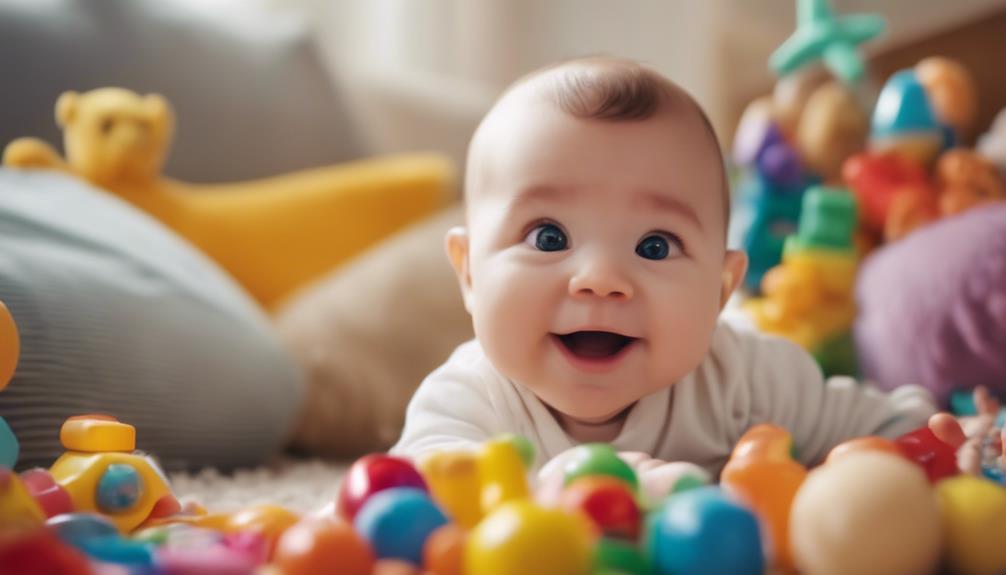

At 5 months old, your baby is beginning to participate in social interactions, recognize familiar faces, and express emotions through sounds and gestures. They follow adults with their eyes, establish eye contact, smile, and use noises as a form of communication. This stage is crucial for developing the ability to identify emotions and create social connections. Stranger anxiety typically appears around 6 months, indicating an awareness of their surroundings and attachment to their caregivers. Caregivers play a significant role in nurturing social skills through caring interactions, playing together, and providing emotional support. By recognizing and responding to your baby’s cues, you are contributing to their social and emotional growth.

Turn the school run and nap time into listening time
- Thousands of audiobooks, podcasts and originals
- Listen on your phone, tablet or Echo — also offline
- Cancel anytime
Key Takeaways
- Babies at 5 months engage in social interactions through sounds and gestures.
- They distinguish between familiar faces and strangers, showing early awareness.
- Eye contact and tracking adults display social cues and communication skills.
- Beginning to express emotions like smiling, babies show early social development.
- Caregivers play a crucial role in fostering social skills through nurturing interactions.
As an affiliate, we earn on qualifying purchases.
Social Cues and Responses
At 5 months old, babies actively engage in social interactions by responding to cues and making sounds to seek attention. They can distinguish between familiar faces and strangers, showing preferences for familiar people. These little ones track adults with their eyes, making eye contact and engaging in social interactions.
When it comes to emotions, 5-month-olds express themselves using sounds and gestures, displaying early social cues. Babies at this age start to make noises to interrupt conversations for attention. They even smile and make noises when they see their reflection in the mirror, showcasing their budding social skills.
It's fascinating to observe how these young ones already begin to understand the dynamics of social interactions, showing preferences for those they recognize and making efforts to engage with the people around them through eye contact and various noises.
Stranger Anxiety Development

Stranger anxiety typically emerges in babies around the age of 6 months, signaling an important developmental milestone in their social awareness. At this stage, babies may display signs of distress or clinginess when encountering unfamiliar faces. This behavior stems from a growing attachment to familiar caregivers and a newfound understanding of their surroundings. Parents play a significant role in easing stranger anxiety by providing comfort and reassurance to their little ones.
To further understand the development of stranger anxiety, let's take a look at the following table:
| Aspect | Description |
|---|---|
| Age of onset | Typically around 6 months of age |
| Signs displayed | Distress, clinginess towards strangers |
| Significance | Indicates awareness of surroundings and attachment to caregivers |
| Parental role | Providing ease, comfort, and gradual introduction to new individuals to alleviate anxiety |
| Long-term impact | Healthy attachment with caregivers can lead to increased confidence and social skills development |
Caregiver Role in Social Skills

During the early months of a baby's life, caregivers play a crucial role in fostering social skills development through nurturing interactions. As a caregiver to a 5-month-old baby, your role in promoting social skills is paramount.
Engaging in interactive activities such as peek-a-boo or singing not only provides enjoyment but also aids in social interaction and bonding with the baby. Responding promptly to the baby's cues and expressions creates a responsive environment that fosters trust and security in the caregiver-child relationship.
Encouraging mimicry of facial expressions and gestures can greatly contribute to the baby's social and emotional development. Additionally, offering comfort and support during moments of distress or fear helps the baby feel secure and builds resilience in social situations.
Interactive Play Engagement
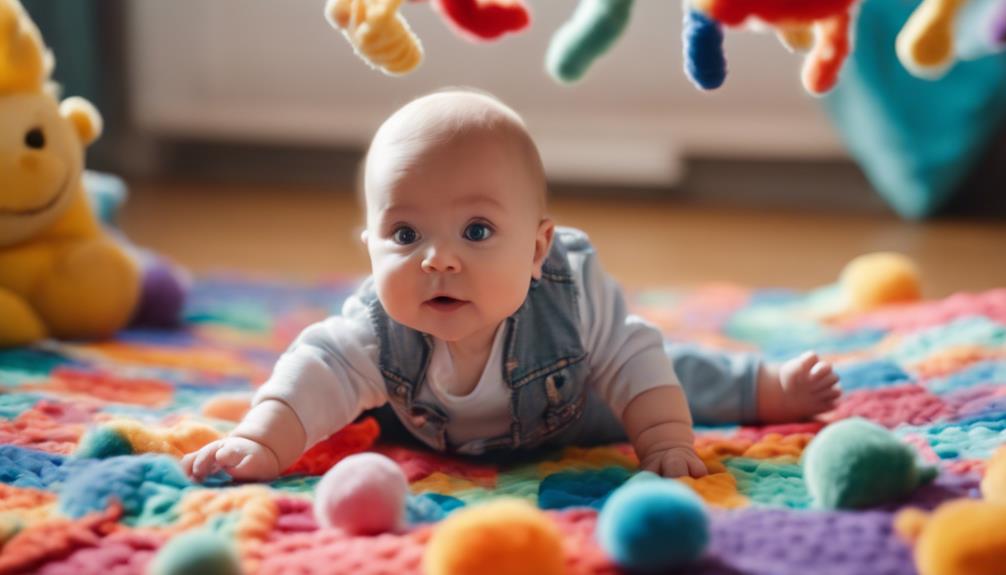
Engage your 5-month-old baby in interactive play activities to foster social interaction and developmental skills. Activities like peek-a-boo and pat-a-cake are great ways to promote social interaction at this age.
Encouraging your baby to reach out and grab toys during play can enhance their fine motor skills and hand-eye coordination greatly. Singing songs and nursery rhymes while making eye contact with your baby can strengthen your bond and promote language development.
Using sensory toys like rattles or textured balls during play can stimulate your baby's senses and contribute to cognitive development.
Furthermore, engaging in turn-taking activities like passing a toy back and forth can help your baby understand social cues and develop communication skills. These interactive play engagements not only provide enjoyable moments but also lay the foundation for essential social and cognitive skills.
Emotion Recognition and Response

Understanding your 5-month-old baby's emotional cues is essential for fostering their emotional development. At this stage, your baby starts showing clear signs of emotional recognition through various facial expressions and sounds.
They may exhibit early signs of emotions like sadness or anger when things don't go as expected, indicating an increasing awareness of their feelings. Additionally, babies of this age begin to anticipate events and may push away things they dislike.
When seeking comfort and security, your baby may cling to you, showcasing attachment and emotional response. As a parent, providing guidance and support is fundamental in helping your baby navigate these emotions.
Frequently Asked Questions
What Can a 5 Month Old Baby Do Socially?
You can observe a 5-month-old baby recognizing faces, making sounds, and showing interest in interacting. They enjoy social games like peek-a-boo, respond to emotions, and begin forming social bonds, displaying preferences for people or activities.
What Should 5 Month Old Babies Be Doing?
Engage enthusiastically in social settings. Seek smiles, show interest in faces, and make sounds to communicate. Display attachment behaviors by reaching out for comfort. Enjoy interactions, recognize familiar faces, and engage in turn-taking activities.
What Are the Cognitive Skills of a 5 Month Old?
At 5 months old, you are developing cognitive skills by exploring, responding to stimuli, and engaging in simple problem-solving tasks. Encourage interaction with toys, books, and sensory activities to support your cognitive development further.
What Is the Development of Baby in Month 5?
In month 5, you're showing social growth. Recognizing faces, making sounds, and smiling at loved ones. You're curious about reflections and forming bonds with family. Expressing joy through laughter, squeals, and smiles, you're developing beautifully.
What Are Examples of Social Development in Infants?
When thinking about social development in infants, you'll notice them recognizing familiar faces, tracking adults with their eyes, making sounds to express feelings, and showing attachment to family members. Babies express joy through laughter and smiles.
Conclusion
To sum up, the social development of a 5-month-old baby is a complex and fascinating process that involves social cues, caregiver interactions, and interactive play engagement.
It's important to recognize the significance of stranger anxiety development and the role of caregivers in fostering social skills.
Emotion recognition and response play a vital role in the baby's social development, highlighting the importance of early social interactions.
Overall, understanding these key aspects can help parents support their baby's social growth effectively.
Fall Picks
fall essentials
As an affiliate, we earn on qualifying purchases.