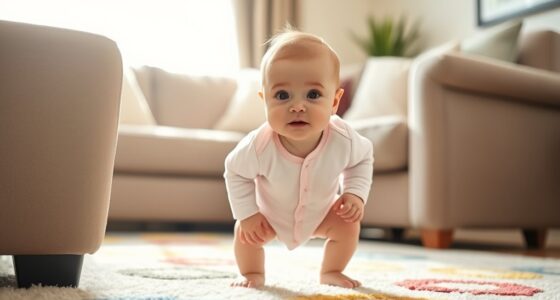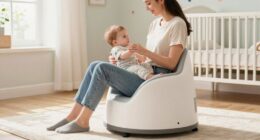
Look out for physical signs that show your toddler may be ready for potty training, typically between 18 to 24 months. Watch for them managing their pants, sitting steadily on the potty, and noticing when they’re wet or dirty. They might also follow simple instructions or show interest in using the toilet. Recognizing these cues can make the process easier; keep going, and you’ll find more helpful tips to support your child’s progress.
Key Takeaways
- Your toddler can sit comfortably on the potty for several minutes without fuss or discomfort.
- They demonstrate increased muscle control, allowing them to stay dry for longer periods.
- Signs include recognizing the physical sensations of needing to go and communicating this to caregivers.
- Physical readiness is indicated by improved coordination and the ability to manage toileting routines independently.
- Typically between 18-24 months, children show signs of bladder control and interest in toilet activities.
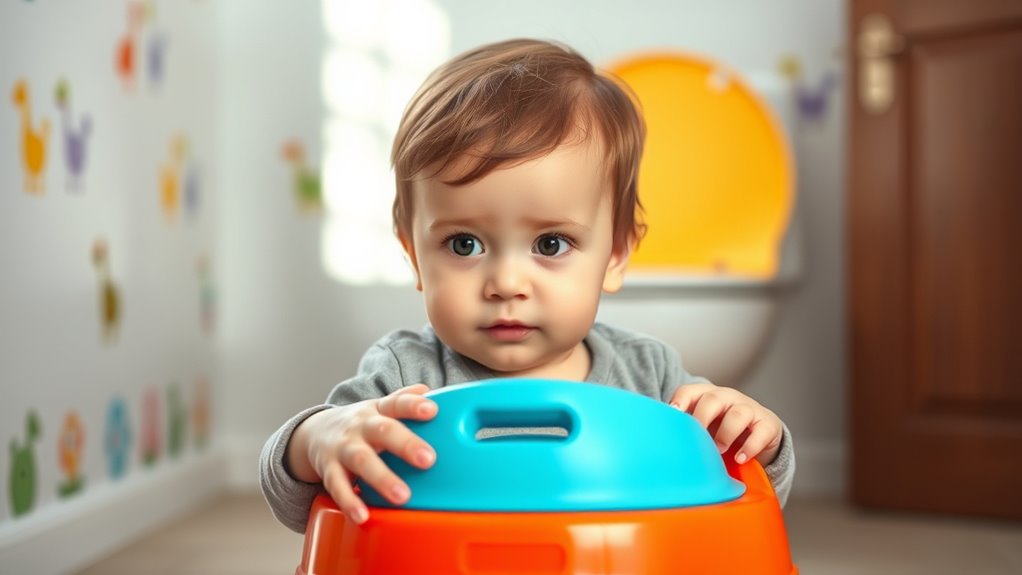
Deciding when your child is ready for potty training can feel overwhelming, but recognizing key signs can make the process smoother. One of the most important indicators is toilet independence, meaning your child begins to show signs they can manage using the toilet on their own, such as pulling their pants up and down or sitting steadily without fuss. When your toddler starts to stay dry for longer periods—perhaps an hour or two—and shows awareness of when they’ve peed or pooped, it’s a good sign they’re developing the physical skills necessary for potty training. These behavioral cues often include your child expressing discomfort with dirty or wet diapers or showing curiosity about the potty or toilet. They might ask questions like “What’s that?” or imitate adult behaviors related to toileting, which indicates mental readiness. Recognizing these signs and understanding their significance can help you better support your child’s development.
Physical signs of readiness include increased bladder capacity and better muscle control. If your toddler can wait a little longer between diaper changes without accidents, they’re likely gaining control over their bladder. Similarly, if they can sit on the potty comfortably for a few minutes and follow simple instructions, it shows they’re developing the coordination needed for successful toilet use. Keep an eye out for their ability to sit still and stay seated, which are key for establishing a routine. Your child’s ability to recognize the sensation of needing to go and communicate that need is also a vital step. When they start to tell you they “have to go” or “poop,” it shows they’re beginning to connect physical sensation with their behavior, an essential part of toilet independence. Additionally, understanding their physical development in relation to muscle control and coordination can provide insight into their readiness for potty training.
Parents often notice these signs around the age of 18 to 24 months, but every child develops at their own pace. It’s important to be patient and avoid rushing the process. If your child is showing these physical signs and behavioral cues, it’s a good time to start introducing the potty in a relaxed, pressure-free manner. Remember, consistency and patience are key. Celebrate small successes, like sitting on the potty or telling you when they need to go, to build their confidence and reinforce toilet independence. When your toddler demonstrates these signs, it’s a clear indication they’re ready to begin the journey toward becoming more independent with their toileting habits.

Munchkin® Sturdy™ Potty Training Seat, Grey
Portable toddler potty seat perfect for potty training boys and girls
As an affiliate, we earn on qualifying purchases.
As an affiliate, we earn on qualifying purchases.
Conclusion
Once you notice these signs, you’re like a gardener ready to plant new growth—patient and attentive. Trust your child’s cues, and remember that readiness varies for every toddler. When they start showing interest and control, you’re both prepared to set out on this new chapter. Keep encouraging and celebrating small wins, and soon, potty training will become a smooth, natural part of their development—like a gentle breeze guiding a sailboat on calm waters.

Ingenuity My Size Potty Pro 2-in-1 Potty Training Toilet, Floor Potty with Removable Potty Seat for Standard Toilets, Realistic Flushing Sound, For Toddlers Ages 18+ months, Up to 50 lb
The #1 Ingenuity My Size Potty Pro is a realistic, 2-in-1 training toilet and detachable potty ring that…
As an affiliate, we earn on qualifying purchases.
As an affiliate, we earn on qualifying purchases.

Potty Training Seat, SKYROKU Upgrade Toddler Toilet Seat for Kids Boys Girls, 2 in 1 Potty Training Toilet, Splash Guard Anti-Slip Pad Step Stool,New Sector-Shape Stabilized Base (8899+Grey)
Perfect Fit & Unshakable Stability – Engineered with 6 adjustable heights, our toddler potty training seat fits securely…
As an affiliate, we earn on qualifying purchases.
As an affiliate, we earn on qualifying purchases.

Dreambaby Step Stool for Kids – Non-Slip Base and Contoured Design for Toilet Potty Training and Sink Use
𝐀𝐧𝐭𝐢-𝐒𝐥𝐢𝐩 𝐃𝐞𝐬𝐢𝐠𝐧: This footstool was designed with growing toddlers in mind; Dreambaby Step Stool features 117 rubber dots…
As an affiliate, we earn on qualifying purchases.
As an affiliate, we earn on qualifying purchases.