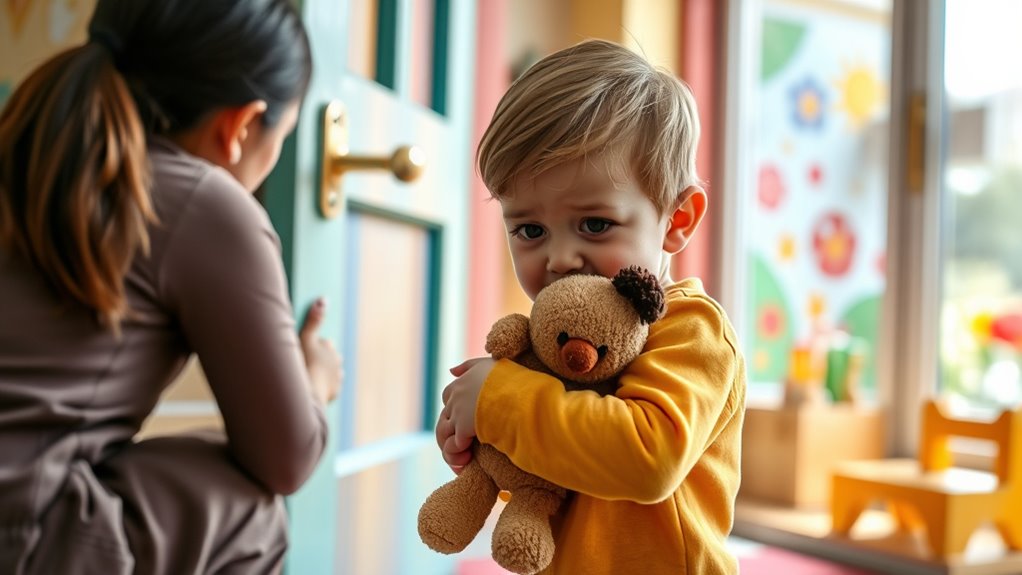

To manage separation anxiety at drop-off, establish consistent routines that your child can rely on, like a special hug or a favorite stuffed animal. Speak positively about their day and stay calm, using soothing gestures and a confident tone. Your reassurance and structured goodbye help your child feel secure and trust you. Creating a predictable, comforting environment reduces their worries over time. Keep exploring for more tips to make mornings smoother and easier for both of you.
Key Takeaways
- Establish consistent routines and familiar signals to create a sense of security during drop-offs.
- Use positive language to reassure your child about daycare activities and friends.
- Stay calm, confident, and cheerful to model trust and reduce your child’s anxiety.
- Offer quick, loving goodbyes and avoid lingering to prevent escalating separation fears.
- Reinforce trust through comforting rituals like special hugs or secret gestures each day.

Have you ever felt worried about your child’s reaction during daycare drop-off? It’s completely natural to feel concerned when your little one is hesitant or upset about saying goodbye. The good news is, you can ease their anxiety with some simple yet effective trust building strategies and comforting routines. When you focus on creating a sense of security, your child begins to feel more confident about separating, making mornings smoother for everyone.
One of the most important trust building strategies involves establishing predictable routines. Children thrive on consistency because it helps them understand what to expect. When you develop familiar routines for drop-off, like a special hug, a wave, or a quick story before leaving, your child learns that these goodbyes are part of a safe, caring process. Over time, these routines become comforting anchors that reassure them, reducing their fear of separation. Keep your goodbyes brief but warm, and avoid lingering too long, which can sometimes escalate their worries.
Consistent routines at drop-off create safe, comforting anchors that ease separation anxiety and build trust.
Incorporating comforting routines into your daily drop-off practice can make a significant difference. For example, you might have a special phrase or gesture that signals the start of your goodbye, like a secret handshake or a favorite stuffed animal that stays with them at daycare. These routines give your child something familiar to hold onto, providing reassurance amid the new environment. When you use the same routine consistently, it creates a sense of stability, helping your child associate the routine with feelings of safety and love.
It’s also helpful to speak positively about daycare before drop-off, emphasizing the fun activities and friends they’ll see. When your child hears that you’re confident and happy about their experience, it encourages them to feel the same. During the drop-off itself, stay calm and composed. Your tone of voice and body language send strong signals about how secure they should feel. If you’re anxious or uncertain, your child may pick up on that and become more distressed. Instead, offer a reassuring smile and a quick, loving goodbye, then leave confidently. Establishing predictable routines can further reinforce their sense of security and help reduce separation anxiety.
Conclusion
Remember, easing separation anxiety is like guiding a small boat through choppy waters—you’ll navigate the rough patches with patience and reassurance. Trust that your child feels your love and support, and over time, they’ll grow more confident at drop-off. Stay consistent, keep goodbyes brief, and celebrate small victories. With your gentle encouragement, your little one will soon feel like they’re sailing smoothly into their day, ready to explore and learn with joy.