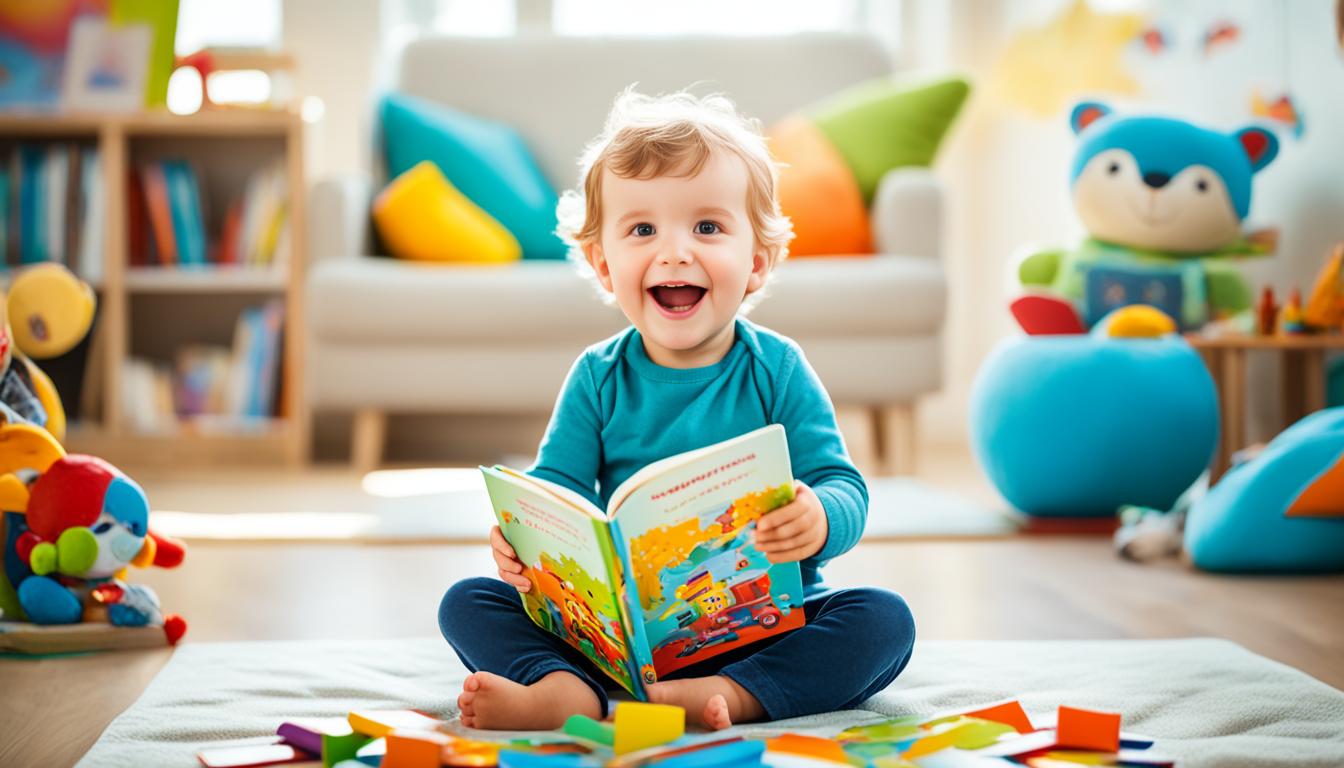

Talking to your baby throughout the day creates a rich language environment that helps them build vocabulary and understand words better. By describing your actions, pointing, and using gestures, you strengthen their connection between words and meanings. This ongoing dialogue also boosts emotional bonds, making your baby feel loved and secure. As they imitate your words and gestures, their speaking and social skills grow. Keep listening to discover simple ways to make this process even more effective.
Key Takeaways
- Narrating daily activities introduces children to a richer vocabulary and familiar language patterns.
- Describing actions and objects helps babies connect words with their meanings through gestures.
- Talking and gesturing foster emotional bonds, creating a sense of security and encouraging responsive communication.
- Constant narration exposes children to continuous language streams, supporting cognitive and social development.
- Imitating narrated actions enhances gesture recognition and reinforces language learning through repetition.

Have you ever wondered how talking to your baby can boost their development? One of the most effective ways to do this is by narrating your day in simple, everyday language. When you describe what you’re doing, seeing, or feeling, you give your baby a richer language environment that helps them learn words and understand their world. This practice encourages gesture recognition, as your baby begins to connect your spoken words with your actions and expressions. For example, when you say, “Look at the blue sky,” and point upward, your baby learns to associate the word “sky” with the visual cue. Over time, these gestures reinforce their understanding and help them recognize similar cues in their environment. It’s like giving them a map to navigate language, where gestures act as bridges between words and meaning. Consistent narration also provides predictable language patterns, which support early language acquisition and cognitive development. Talking to your baby isn’t just about vocabulary; it’s a powerful way to strengthen emotional bonding. When you narrate your day, you’re sharing your experiences and emotions, which helps your baby feel connected and secure. They pick up on your tone of voice, facial expressions, and gestures, which all communicate love, safety, and engagement. This ongoing emotional exchange makes your baby feel valued and understood, laying the foundation for healthy social and emotional skills later on. It’s a two-way street: your baby begins to respond to your voice and gestures, which deepens the bond and encourages them to communicate back. This interaction creates a rhythm of mutual understanding and trust that’s essential for their overall development. As you talk through your routines—whether you’re cooking, cleaning, or just walking around—you’re exposing your baby to a continuous stream of language. This constant exposure helps them recognize patterns and anticipate words, making it easier for them to imitate sounds and eventually form their own sentences. Narrating your day also makes everyday moments meaningful, transforming simple tasks into learning opportunities. When your baby sees you talking and gesturing, they start to imitate these actions, improving their gesture recognition skills. This imitation not only advances their language but also enhances their cognitive and social abilities.
Conclusion
By talking to your baby throughout the day, you’re giving them essential language practice. For example, imagine describing your morning routine—”Mommy is pouring juice”—and your baby starts to imitate those words. This simple habit builds their vocabulary and confidence. So, keep narrating your day, and watch your little one grow into a confident speaker. Your words today shape their bright, communicative future tomorrow.