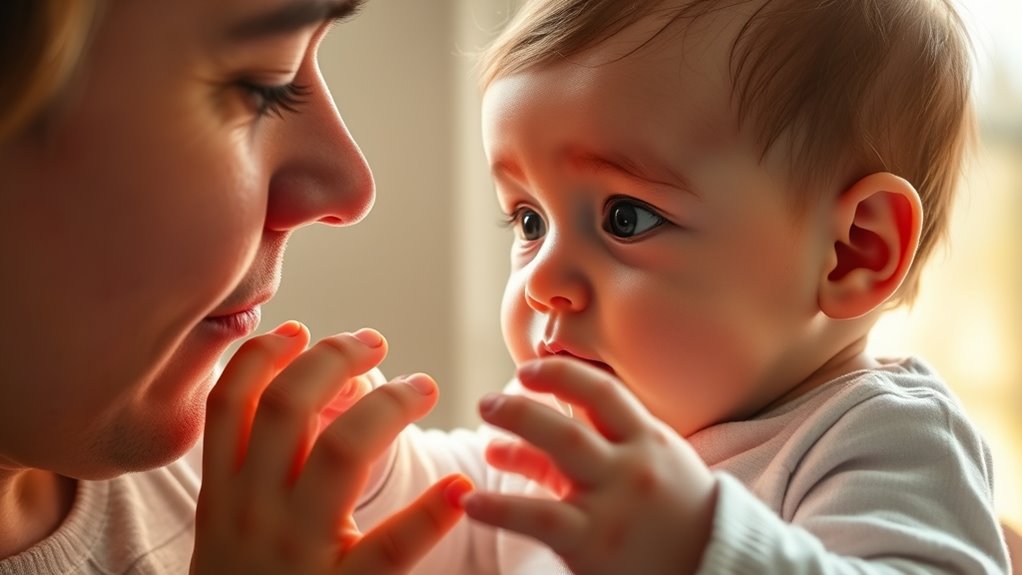

You can understand how your baby communicates before words by paying attention to their non-verbal cues, like turning away, crying, or reaching out. These signals show their needs, feelings, and discomforts. Watch for patterns and context to better interpret their behavior. Responding promptly builds trust and helps your baby feel secure. Keep observing, and as you do, you’ll discover more about what your little one is trying to tell you.
Key Takeaways
- Babies use a variety of non-verbal signals like facial expressions, gestures, and body movements to express their needs and feelings.
- Recognizing emotional cues such as smiling, frowning, or crying helps caregivers understand what the baby is experiencing.
- Context and consistent behaviors, like rubbing eyes or rooting, clarify whether a baby is hungry, tired, or overstimulated.
- Observing and responding promptly to cues builds trust, emotional security, and improves communication over time.
- Developing sensitivity to individual signals fosters stronger bonds and helps meet the baby’s needs before they can speak.
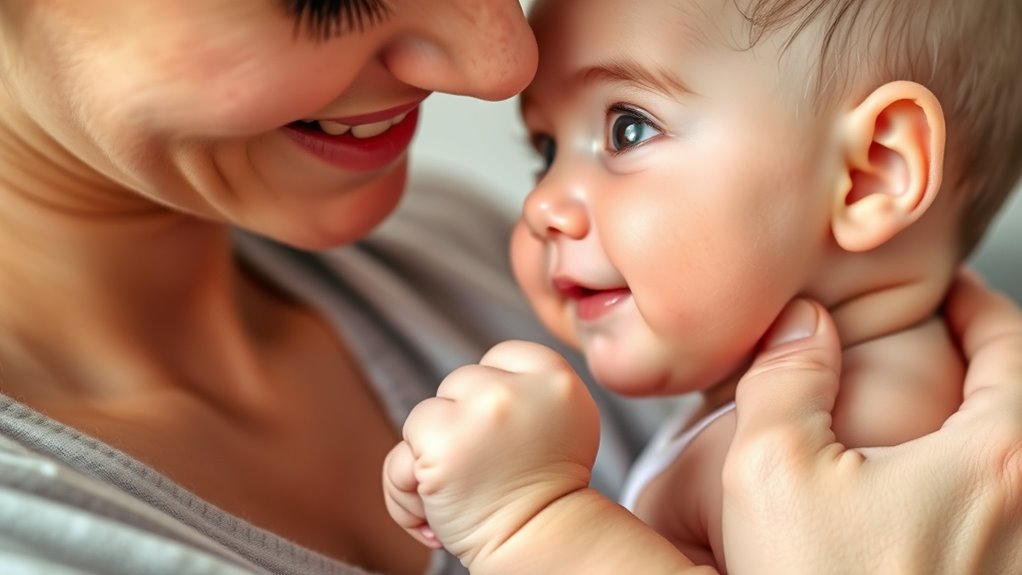
Have you ever wondered how your baby communicates beyond crying? Babies are surprisingly expressive, using a variety of non verbal signals and emotional expressions to tell you what they need or feel. Before they can speak, these cues are their main way of connecting with you, so paying close attention can make a huge difference in understanding and responding to them effectively.
Babies communicate their needs and feelings through expressive non verbal signals and emotions before they speak.
Non verbal signals include a wide range of behaviors that convey your baby’s mood or needs. For example, a baby turning their head away or closing their eyes might signal overstimulation or tiredness, while leaning in or reaching out can indicate curiosity or a desire for interaction. Your baby’s movements, such as arching their back or stiffening their limbs, often reveal discomfort or frustration. Even subtle gestures like a clenched fist or a fluttering eyelid carry meaning. Recognizing these signals requires you to be observant and sensitive to your baby’s unique ways of communicating.
Emotional expressions are another essential part of your baby’s language. Smiles, frowns, or a look of surprise tell you how they’re feeling emotionally. A big smile might mean your baby is happy or content, while a frown or furrowed brow could indicate confusion, displeasure, or discomfort. Crying, of course, is a primary emotional expression, but even within crying there are different tones and patterns that suggest whether your baby is hungry, tired, or seeking comfort. By tuning into these emotional cues, you can better gauge their needs without relying solely on words.
It’s important to understand that these non verbal signals and emotional expressions are often context-dependent. For example, a baby might cry because they’re hungry or because they’re tired, but their other cues—like rubbing their eyes or rooting—help clarify the message. The more you observe your baby, the more you’ll recognize these patterns over time. Responding promptly and appropriately to their cues not only helps satisfy their immediate needs but also builds trust and emotional security.
Getting to know your baby’s unique set of signals takes patience and practice. Watch for consistent behaviors and emotional expressions, and consider the situation they’re in. Do they often turn away when overstimulated? Do they smile when they see familiar faces? Over time, you’ll become more confident in interpreting their non verbal signals and emotional cues, strengthening your bond and making caregiving feel more intuitive. Remember, even before words, your baby is keen to tell you what they need and how they feel—if you’re willing to listen carefully.
Additionally, understanding these cues can be enhanced by appreciating the importance of color accuracy in your baby’s environment, as accurate visual perception helps them interpret their surroundings more effectively.

6Pcs Communication Board for Non Verbal Adults Picture Symbol Communication Cards Speech Therapy Tools for Autism Toddlers Kids Aphasia Stroke Patients Hospital Care Home Use Talking Placemats
Package includes: This set includes 6 communication boards, each designed with different themes to help individuals express their…
As an affiliate, we earn on qualifying purchases.
As an affiliate, we earn on qualifying purchases.
Conclusion
By learning to read your baby’s cues, you discover a secret language more powerful than words—an extraordinary connection that can turn your relationship into an unbreakable bond. When you tune into their cries, smiles, and gestures, you’re not just understanding your little one; you’re opening a universe of love and trust that grows stronger every day. Trust your intuition—you’re more capable than you think, and your baby’s world will become a brighter, more harmonious place because of it.

Constructive Playthings 6-Piece Expression Plush Baby Dolls Set for Social Emotional Learning, Plush Multicultural Sensory Cloth Babies Toy Set, Multicolor
EMOTIONAL LEARNING PLUSH DOLL TOYS: Set of 6 multicultural baby toys with different facial expressions representing identifiable emotions,…
As an affiliate, we earn on qualifying purchases.
As an affiliate, we earn on qualifying purchases.
baby sensory and cue recognition kit
As an affiliate, we earn on qualifying purchases.
As an affiliate, we earn on qualifying purchases.

Infant Massage–Revised Edition: A Handbook for Loving Parents
As an affiliate, we earn on qualifying purchases.
As an affiliate, we earn on qualifying purchases.