

Baby talk can be beneficial when used to engage and bond with your little one, helping them develop listening and emotional skills. However, overusing exaggerated or simplified speech may delay their understanding of adult language and limit vocabulary growth. Striking a balance between expressive interactions and clear, real-life conversations is key. If you want to discover how to promote ideal language development while nurturing your connection, continue exploring effective communication strategies for your child.
Key Takeaways
- Use expressive, playful speech to engage infants, but balance it with clear, real-world language.
- Incorporate a variety of vocabulary and sentence structures for richer language development.
- Gradually introduce more complex, adult-like conversations alongside baby talk.
- Be mindful of cultural norms to ensure communication supports emotional and cognitive growth.
- Create a supportive environment with both affectionate and clear speech for optimal learning.
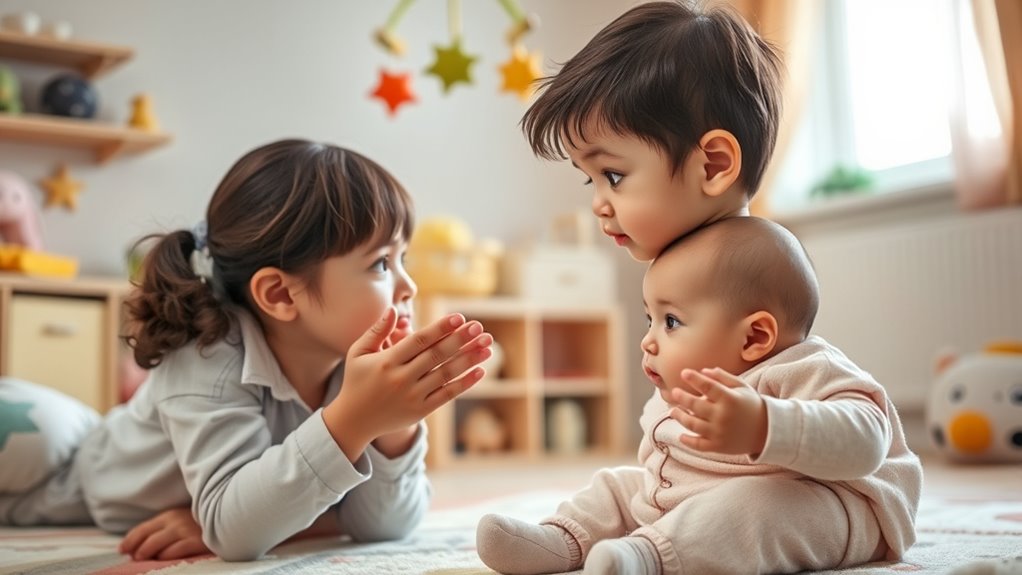
Many parents naturally speak in a high-pitched, exaggerated tone—often called “baby talk”—to engage their infants and foster bonding. You might notice yourself using sing-song voices, exaggerated facial expressions, or simplified words when talking to your baby. This style of communication is common across many cultures, but the way it’s used can differ greatly depending on cultural norms and practices. For example, some cultures emphasize direct, clear speech from the start, while others favor more expressive or melodic tones to connect with infants. These cultural differences influence not only how you speak to your baby but also how your child develops language skills over time. Understanding these variations can help you appreciate that baby talk isn’t inherently good or bad—it’s part of a broader context that shapes developmental impacts.
Baby talk varies across cultures, shaping how infants develop language and emotional bonds.
From a developmental perspective, baby talk can have both positive and negative effects. On the positive side, it captures your baby’s attention, making interactions more engaging and enjoyable. This heightened engagement encourages your infant to listen, observe, and eventually mimic sounds, which is essential for language development. When you use exaggerated intonation and facial expressions, you help your child distinguish different sounds and emotional cues, fostering early communication skills. Additionally, the warmth conveyed through baby talk can strengthen your emotional bond, providing a sense of safety and comfort that supports overall development.
However, some experts argue that overusing baby talk might delay a child’s ability to understand and produce adult language if it replaces more complex, real-world conversations. If you’re always speaking in a simplified or exaggerated manner, your child might not be exposed to the variety of vocabulary and sentence structures they need for advanced understanding. Furthermore, in cultures where direct, clear speech is valued, relying heavily on baby talk could be seen as unnecessary or even confusing, potentially impacting how your child perceives language norms. It’s important to strike a balance—using expressive, affectionate speech to build connection while also gradually introducing more complex language that mirrors real-life communication.
Ultimately, the key is being mindful of how you speak to your little one. Incorporating a mix of playful, expressive language along with regular, clear conversations helps your child learn effectively while still feeling loved and engaged. Recognize that cultural differences shape these interactions, and what works well in one context might vary in another. By understanding the developmental impacts and cultural nuances, you can tailor your approach to support your child’s language growth and emotional well-being, creating a rich environment for learning and bonding.
Frequently Asked Questions
Can Baby Talk Delay Language Development?
You might wonder if baby talk delays language development, but it generally doesn’t. In fact, it can support reaching linguistic milestones by engaging your little one and encouraging speech clarity. When you use responsive, varied language, you’re helping your baby understand sounds and words better. Just guarantee you’re also introducing clear, correct speech alongside playful sounds to promote healthy language skills and smooth progression toward more advanced communication skills.
Is Baby Talk Helpful for Emotional Bonding?
Think of baby talk as the secret sauce for emotional bonding. It creates a speech comfort zone, helping your little one feel safe and loved. When you speak gently and use exaggerated sounds, you strengthen that emotional connection, making them more receptive to learning. Baby talk isn’t just cute; it nurtures trust and security, laying a strong foundation for your child’s emotional well-being and future communication skills.
When Should I Start Using Adult Language?
You should start using adult language as your child begins to understand more words, typically around age one. This helps with vocabulary expansion and pronunciation clarity, which are vital for language development. By speaking clearly and using varied vocabulary, you encourage your little one to learn new words and improve pronunciation. This shift supports their growing language skills, making communication easier and fostering better understanding between you both.
Does Baby Talk Affect Social Skills Later?
Think of baby talk as the gentle ripples on a pond—initially soft, shaping future waves. While it fosters language imitation and boosts speech clarity, overusing it might slow social skill development later. You should balance playful, simple words with adult language, as this mix helps your little one navigate social waters confidently. Engaging in diverse conversations prepares them to communicate effectively and build meaningful relationships as they grow.
Are There Cultural Differences in Baby Talk Usage?
You’ll notice that cultural differences influence baby talk usage, as cultural expressions shape how caregivers communicate with infants. In some cultures, language norms encourage more direct, formal speech, while others favor playful, exaggerated tones. These variations can affect early language development and social interactions. Understanding and respecting these cultural expressions helps you adapt your communication style, fostering your child’s learning and ensuring you connect effectively within your cultural context.
Conclusion
Remember, actions speak louder than words. While baby talk isn’t necessarily bad, mixing in clear, meaningful conversations helps your little one learn best. Aim for a balance—use playful tones to engage, but don’t forget to speak in complete sentences too. Your active involvement and varied language set the foundation for their future communication skills. After all, a little patience and consistency go a long way in nurturing your child’s growth and love for learning.