
Using gestures through baby sign language can truly boost your baby’s early communication skills. It helps them express needs and feelings before they develop spoken words, reducing frustration and fostering confidence. Gestures also support motor coordination and cognitive growth, turning routines into teachable moments. By encouraging intentional communication, you’ll strengthen your bond and create a foundation for language development. Keep exploring, and you’ll discover even more ways signing benefits your baby’s growth.
Key Takeaways
- Baby sign language enhances early communication by allowing babies to express needs before verbal skills develop.
- Gestures support cognitive growth, helping babies understand and remember words through visual and physical cues.
- Consistent signing reduces frustration, encouraging babies to communicate effectively and confidently.
- Using signs fosters stronger bonds and engagement between parents and babies during routines.
- Sign language acts as a bridge to spoken language, promoting early vocabulary development and language skills.

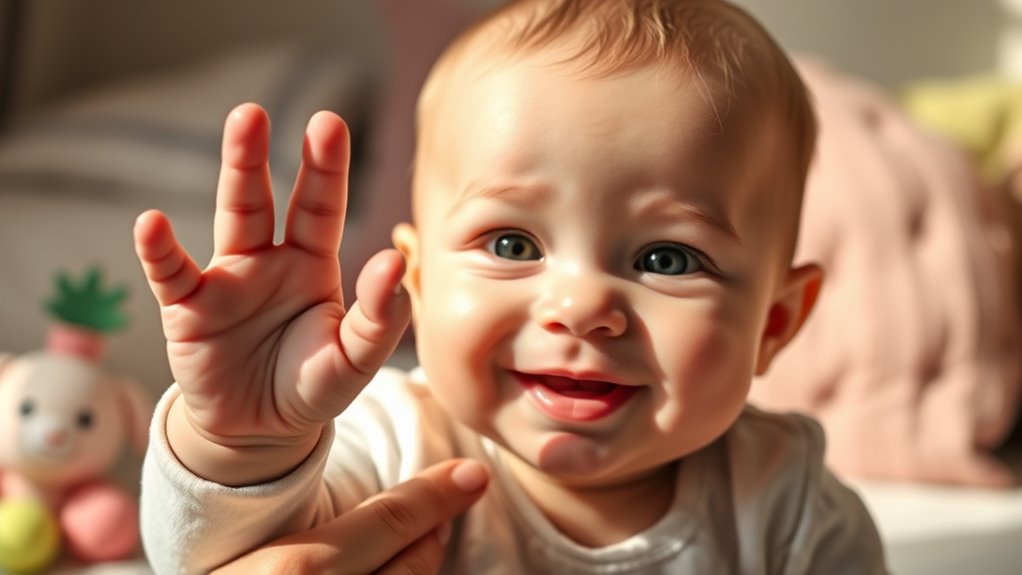
Baby sign language is a powerful tool that helps your little one communicate before they can speak. By introducing simple gestures early on, you’re giving your baby a way to express their needs, feelings, and discoveries, even before their verbal skills develop. One of the key benefits of using sign language with your baby is its positive impact on gesture development. When you consistently incorporate specific signs for common objects or feelings, your baby begins to understand the connection between gestures and meanings. Over time, they start to imitate these gestures, refining their fine motor skills and coordination. This process not only boosts their ability to communicate but also supports overall cognitive growth.
Baby sign language enhances gesture development, fine motor skills, and cognitive growth through simple, consistent gestures.
Using sign language benefits both you and your baby by reducing frustration. Babies often experience frustration when they can’t fully articulate what they want or need, which can lead to tantrums or crying. When you teach them signs like “more,” “milk,” or “all done,” they gain a sense of independence and control. They learn that their gestures can influence their environment, which encourages more intentional communication. As a result, you might notice fewer tears and more smiles as your baby feels understood and heard.
Moreover, sign language promotes early language development. Studies show that babies who are introduced to gestures tend to develop spoken words sooner than those who aren’t. The reason is that gestures serve as a bridge to verbal language, reinforcing understanding and memory of words. When your baby signs “eat,” they’re also learning the concept behind the word, which can help them connect spoken language to their experiences. This dual approach to communication nurtures their language skills in a natural, engaging way. Additionally, incorporating gestures can enhance their overall motor development, which is fundamental for physical coordination.
Another benefit lies in strengthening your bond. When you respond to your baby’s gestures, you’re engaging in meaningful interactions that build trust and emotional security. These shared moments foster attachment, making your relationship even more special. Plus, practicing sign language is an enjoyable activity that encourages eye contact, imitation, and mutual learning. It turns everyday routines, like feeding or bathing, into opportunities for connection and discovery.
In essence, baby sign language doesn’t just give your baby a head start in communication; it nurtures their gesture development, supports early language skills, and enhances your relationship. By embracing simple signs and being consistent, you’re empowering your little one to express themselves confidently, reducing frustration and paving the way for a lifetime of effective communication.
Frequently Asked Questions
When Should I Start Teaching My Baby Sign Language?
You can start teaching your baby sign language around 6 months old, when they begin to understand gestures for toddlers. Using sign language resources like flashcards or apps helps you introduce simple signs. It’s best to be consistent and patient, encouraging your baby to imitate gestures. Early exposure boosts communication skills, so start gently, and watch your baby begin to sign back as they develop their understanding.
Are There Cultural Differences in Baby Sign Language?
Every cloud has a silver lining, and cultural differences in baby sign language reveal how regional variations and cultural adoption shape communication. You’ll find that gestures differ across countries, reflecting unique languages and traditions. Embracing these differences can enrich your understanding and connection with your baby. So, don’t be surprised if signs vary—cultural diversity adds depth and color to how babies around the world learn to communicate early.
Can Sign Language Delay Verbal Speech Development?
You might wonder if sign language myths suggest it delays verbal speech development, but research shows it actually offers early communication benefits. Using gestures doesn’t hinder speech; instead, it can enhance your baby’s ability to express needs and feelings sooner. Don’t worry—sign language supports language growth rather than delaying it. Embracing gestures helps your little one develop communication skills confidently and naturally, without interfering with their spoken language development.
What Signs Are Best for Babies With Speech Delays?
Think of signs as keys opening your baby’s communication door. For babies with speech delays, start with simple, high-need signs like “more,” “all done,” and “milk.” Use gesture recognition and accessible sign language resources to teach these signs consistently. These foundational signs can boost understanding and confidence, helping your baby express themselves before words take shape. Patience and repetition are your best tools on this journey.
How Do I Keep My Baby Motivated to Learn Signs?
To keep your baby motivated to learn signs, focus on sign reinforcement by consistently using signs in daily routines. Celebrate small successes and stay patient, understanding that learning takes time. Keep sessions short and fun, so your baby stays engaged. Demonstrate signs clearly and kindly, encouraging them to imitate. Remember, your patience and positive reinforcement create a supportive environment that motivates your baby to keep practicing and communicating with gestures.
Conclusion
So, if you’re seeking a simple, supportive way to strengthen your baby’s speech skills, baby sign language might just be the solution. With patience, practice, and plenty of positive praise, you can help your little one communicate confidently and comfortably. Remember, the more you encourage and engage, the more your baby will blossom and bond. Baby sign language isn’t just about gestures; it’s about growing together and guiding your little one’s glorious gateway to words.