
From birth to three years old, your child begins developing key skills like noticing sounds, recognizing familiar words, and understanding simple story parts. They start with phonetic awareness, enjoying rhyme games and sound play. As they grow, they’ll start pointing to pictures, predicting story outcomes, and recognizing common words in context. Consistent engagement, repetition, and encouragement build confidence. Keep exploring these milestones, and you’ll discover more ways to support their early language journey.
Key Takeaways
- Birth to 12 months: infants begin recognizing familiar voices, turning towards sounds, and experimenting with sounds through babbling.
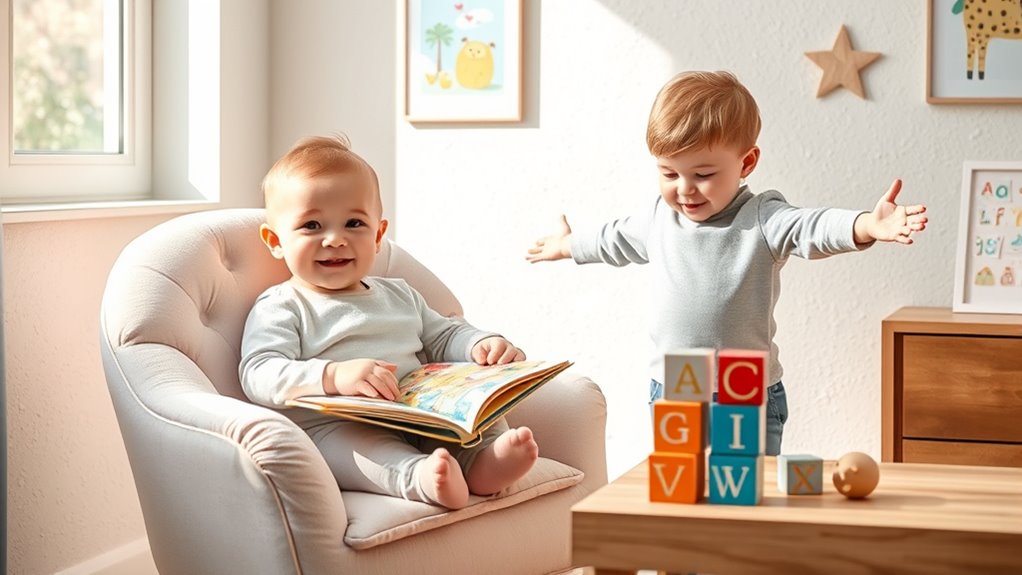
- 12 to 24 months: toddlers start pointing to pictures, understanding simple words, and repeating sounds or words they hear.
- Around 18 months: children may recognize common words in context and enjoy rhyming games, fostering phonetic awareness.
- 24 to 36 months: kids begin connecting sounds with letters, recognize simple words, and engage in storytelling with familiar characters.
- Throughout this period: consistent exposure, shared reading, and playful sound activities support foundational reading skills development.

Have you ever wondered how children progress from recognizing letters to reading full sentences? It’s a fascinating journey that begins well before they even start school. During the first few years, your child develops foundational skills that set the stage for reading success. One of the earliest and most critical steps is developing phonetic awareness. This means your child starts to recognize that words are made up of different sounds, or phonemes, and begins to connect those sounds with specific letters. You might notice them enjoying rhyming games or playing with sounds in words, which are signs that they’re honing this skill. Phonetic awareness helps your child understand how sounds work together to form words, making it easier to decode unfamiliar words later on.
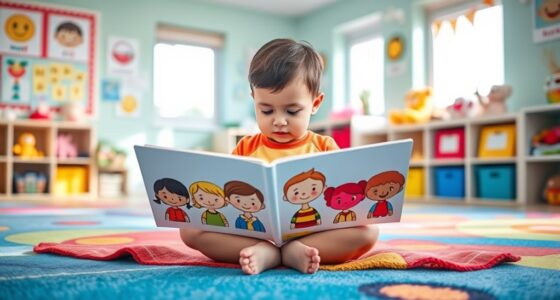
As your child’s language skills grow, they begin to grasp story comprehension. This doesn’t mean they’re reading sentences yet but rather understanding the basic idea behind stories told through pictures or simple words. When you read aloud, you might see your little one pointing to pictures and trying to predict what’s happening next. They start to understand that stories have a beginning, middle, and end, and they recognize familiar characters or settings. This understanding is essential because it builds their confidence and prepares them for more complex reading later. You can support this by asking questions about the story, encouraging your child to describe what they see, and making connections to their own experiences.
In this early age, children also develop visual recognition skills, which help them identify common words and symbols. These skills work hand-in-hand with phonetic awareness and story comprehension. For example, your child might recognize the word “milk” in different books or on packages, even if they can’t read it out loud yet. Repetition and exposure are key at this stage, so reading the same books multiple times helps reinforce their understanding of language patterns and word meanings. Additionally, understanding how high contrast visuals and clear images support recognition and learning can significantly boost their progress. Repetition and exposure are key at this stage, so reading the same books multiple times helps reinforce their understanding of language patterns and word meanings. It also makes story comprehension more natural as they become familiar with story structures and vocabulary.
Throughout these years, your role is essential. By engaging in shared reading, pointing out sounds, and talking about stories, you’re nurturing the skills your child needs to transition from recognizing letters to fluently reading sentences. Every giggle at a funny story or recognition of a familiar word boosts their confidence and motivation. Remember, every child develops at their own pace, but these milestones—phonetic awareness, story comprehension, and visual recognition—are fundamental markers along the way to becoming a confident reader.
Frequently Asked Questions
How Can I Encourage Early Reading at Home?
To encourage early reading at home, spend time reading aloud daily, which boosts phonemic awareness and story comprehension. Choose engaging books with bright pictures and simple words, and ask your child questions to promote interaction. Sing songs and rhyme to develop sound recognition. Create a print-rich environment with labels and signs. Your active involvement helps build essential skills and fosters a love for reading from a young age.
What Are Common Signs of Reading Difficulties?
Signs of struggling with reading can be subtle but significant. If you notice your child has difficulty developing phonological awareness or letter recognition, it might signal a challenge. Watch for delayed speech, trouble rhyming, or mixing sounds. These signs can hinder progress. Early intervention helps. Keep encouraging curiosity, and consult a specialist if concerns persist, so your child builds confidence and comprehension.
When Should I Worry About Delayed Speech?
If you notice your child’s speech delay beyond age two, it’s time to consult a pediatrician. While some variation is normal, delayed speech might indicate issues with language development. Keep an eye on whether your child isn’t babbling, using simple words, or forming sentences. Early intervention can help address speech delay, ensuring better communication skills as they grow. Trust your instincts and seek professional advice if you’re concerned.
Are Screen Time and Digital Books Beneficial for Toddlers?
Think of screens as a doorway to digital literacy, but remember, they’re just one part of your child’s learning journey. Interactive media can boost understanding and engagement, making learning fun. However, too much screen time can overshadow real-world experiences. Balance is key—use screens wisely to complement play and reading, and always prioritize meaningful interactions that foster your toddler’s development beyond digital worlds.
How Do Reading Milestones Vary Across Different Cultures?
You’ll notice that reading milestones vary across cultures, often shaped by cultural literacy and language practices. In some cultures, storytelling and oral traditions are emphasized, fostering multilingual development early on. Others may focus on early exposure to books and print. These differences influence how children develop language skills and literacy, highlighting the importance of understanding cultural context to support each child’s unique learning journey from infancy through toddlerhood.
Conclusion
As you watch your child’s reading journey unfold, remember it’s like planting seeds that bloom over time. Each milestone, no matter how small, nurtures their love for words and stories. By celebrating these moments, you’re guiding them through a magical garden of discovery and growth. Trust in the process, knowing that with patience and encouragement, you’ll help your little reader blossom into a confident, lifelong learner—turning the pages of their future with joy and curiosity.