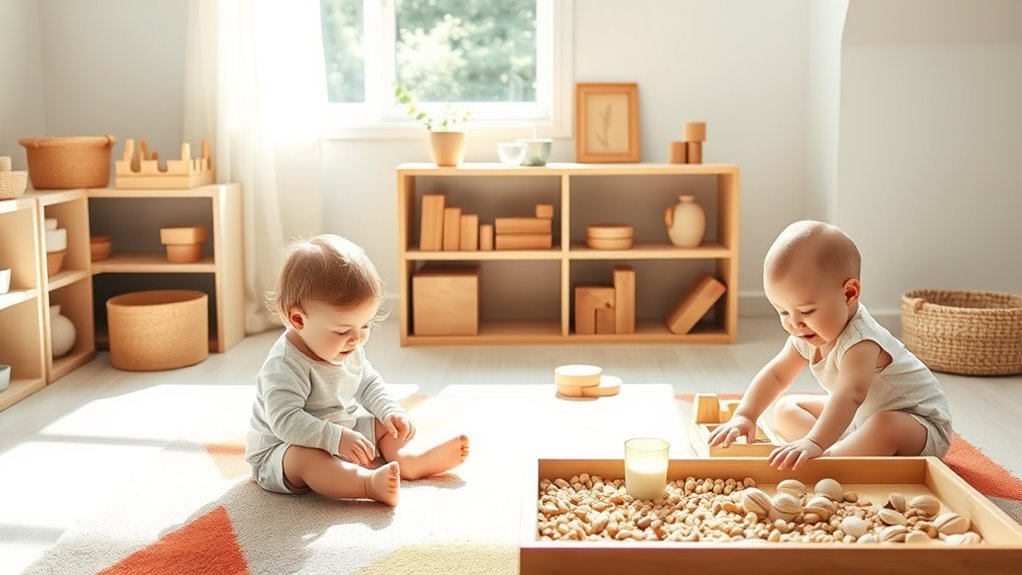

You can create a thriving Montessori environment at home by offering simple activities that encourage sensory exploration and fine motor skills. Use textured fabrics, water, or rice for hands-on experiences, and provide small, graspable objects like beads or wooden blocks to develop coordination. Keep materials accessible and inviting to foster independence and curiosity. If you explore further, you’ll discover ways to tailor activities that match your child’s interests and developmental stage.
Key Takeaways
- Provide textured fabrics, water bowls, and sound-making objects to stimulate sensory exploration.
- Offer small, graspable items like beads and blocks to develop fine motor skills.
- Organize materials at child’s eye level in a calm, clutter-free environment for independent choice.
- Observe children’s engagement to tailor activities that match their developmental stage and interests.
- Use simple, hands-on activities to foster curiosity, independence, and a love of learning at home.

Montessori activities for babies and toddlers provide a wonderful way to support their natural curiosity and development. At this stage, children are eager to explore their environment, and engaging them in activities that foster sensory exploration can considerably enhance their learning. Sensory exploration involves exposing your little one to different textures, sounds, and visual stimuli, helping them make sense of the world around them. Simple activities like offering textured fabrics, soft brushes, or bowls filled with water or rice allow your child to touch, feel, and experiment. These experiences not only satisfy their innate curiosity but also help develop their sensory processing skills.
Focusing on fine motor skills is equally important during these early years. Montessori activities that encourage grasping, pinching, and manipulating objects help strengthen tiny muscles in their hands and fingers. For example, providing your child with small, graspable objects like beads, wooden blocks, or silicone spoons allows them to practice pinching and holding, laying the foundation for later skills like writing. You can also set up activities such as transferring objects from one container to another using tongs or spoons, which enhances hand-eye coordination and precision. These activities are enjoyable and straightforward but have lasting benefits for your child’s independence and academic readiness.
Creating a prepared environment at home is key to supporting your child’s development through Montessori methods. Keep materials within easy reach, at their level, so they can independently choose and engage with activities. Use baskets or trays to organize different sensory and fine motor activities, making it easy for your child to select what interests them. Keep the environment calm, inviting, and free of clutter to foster concentration and focus. As your child explores, observe their preferences and abilities, then introduce new challenges that match their developmental stage. This personalized approach encourages confidence and a love of learning.
Conclusion
By incorporating these Montessori activities into your daily routine, you’ll nurture your little one’s curiosity and independence right at home. Remember, patience and observation are your best tools—like a conductor guiding a symphony. With gentle guidance, you’ll see your baby or toddler blossom into a confident, enthusiastic learner, much like a young knight setting out on an adventure. Embrace this journey, and watch their world unfold with wonder and joy.