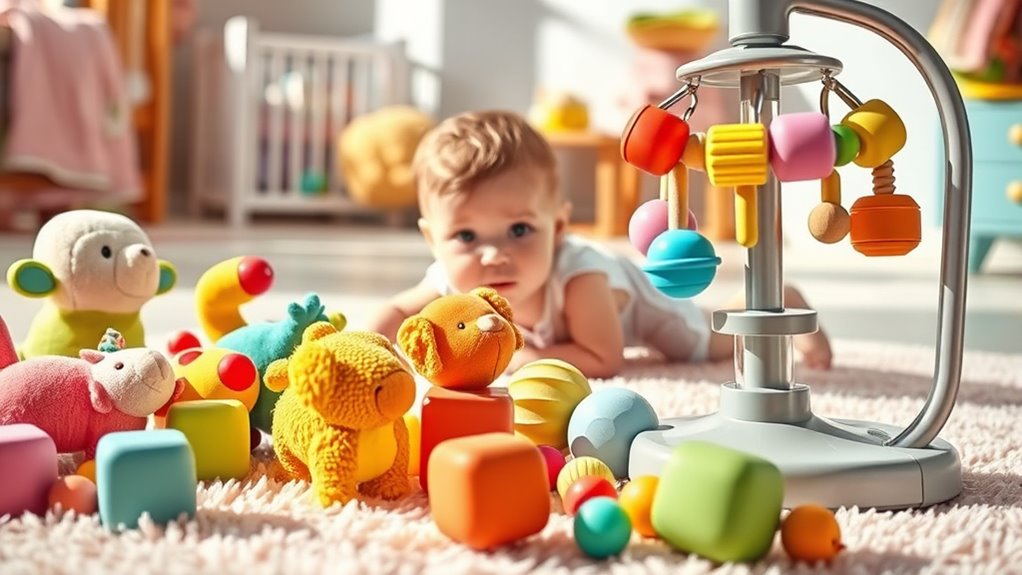

Rotating your baby’s toys keeps them engaged and promotes development by regularly introducing fresh options that match their growth stage. Store unused toys out of sight and swap them every few weeks to prevent boredom and overstimulation. Focus on toys that encourage movement, language, or fine motor skills, and regularly check for safety hazards. Doing this makes playtime safer and more exciting. Keep exploring to discover even more tips on creating a stimulating environment for your little one.
Key Takeaways
- Rotate toys every few weeks to keep playtime fresh and stimulate your baby’s curiosity.
- Store unused toys out of sight to prevent clutter and make hazard checks easier.
- Match toy choices with your baby’s developmental milestones to promote growth and engagement.
- Regularly inspect toys for damage or safety issues during each rotation.
- Limit the number of toys in use at once for safer, more focused play sessions.
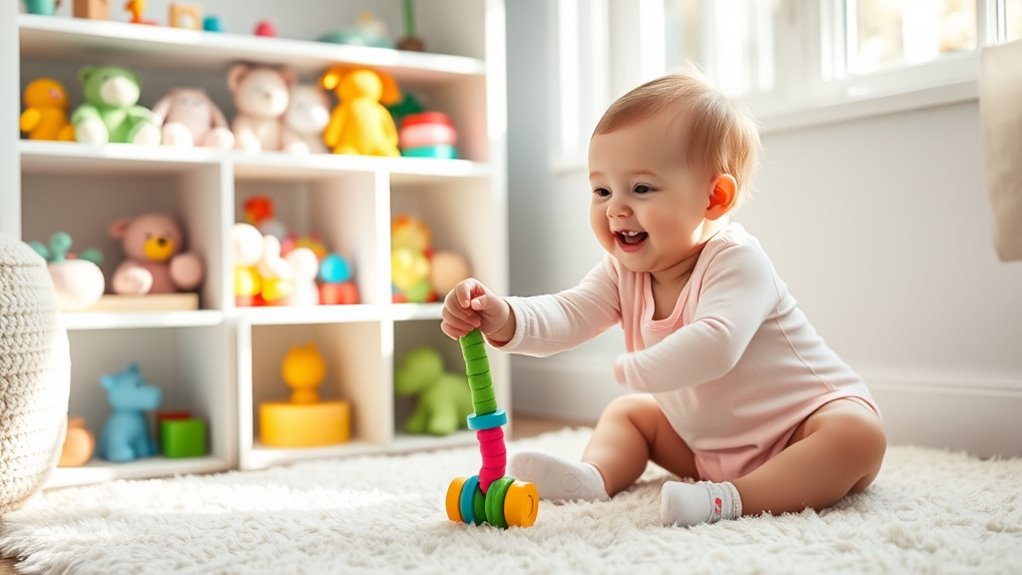
Have you ever noticed how your child’s interest in toys can fade quickly, leaving cluttered shelves and frustrated cleanup efforts? It’s a common scene in many households. Kids often seem excited about a toy one day, only to ignore it the next. This pattern can be frustrating, but it also offers an opportunity to keep your child engaged and safe through toy rotation. When you rotate toys, you introduce fresh options gradually, which helps sustain your child’s curiosity and supports their development milestones. Different toys stimulate different skills—some promote fine motor skills, others encourage problem-solving, and some foster imaginative play. By rotating toys, you guarantee your child has access to a variety of developmental challenges without overwhelming their environment. Plus, it’s easier to keep track of the safety considerations associated with each toy. When you limit the number of toys in use at a time, it becomes simpler to check for any hazards, broken parts, or recalls, reducing potential safety risks.
Implementing a toy rotation system isn’t complicated. You can start by dividing your collection into manageable groups—say, a handful of toys for each rotation cycle. Store the rest out of sight, perhaps in a closet or storage bin. Every few weeks, swap out the toys on display with those stored away. This keeps the selection feeling fresh and exciting for your child, making playtime more engaging and less monotonous. As your child grows, you can adjust the types of toys you rotate, ensuring they always align with their current developmental milestones. For example, when they’re learning to crawl, prioritize toys that encourage movement or hand-eye coordination. When they’re talking more, include toys that promote language skills. This approach not only keeps playtime stimulating but also supports their ongoing growth.
Safety considerations remain vital in this process. Regularly check each toy for damage—loose parts, sharp edges, or broken pieces—and remove any that no longer meet safety standards. Rotating toys allows you to focus your attention on fewer items at once, making it easier to maintain a safe play environment. It also prevents your child from becoming overwhelmed by a clutter of toys, which can sometimes lead to unsafe situations. Overall, toy rotation is a practical strategy that benefits your child’s development and peace of mind. It transforms playtime into a dynamic, safe, and enriching experience, guaranteeing your child stays engaged and safe as they explore and learn.
Top picks for "rotation keep baby"
Open Amazon search results for this keyword.
As an affiliate, we earn on qualifying purchases.
Conclusion
By rotating your baby’s toys, you keep playtime fresh and exciting, sparking their curiosity and helping them develop new skills. It’s simple, effective, and keeps clutter at bay. When you switch things up regularly, you prevent boredom and encourage exploration. So, why settle for the same old toys when a little change can make a big difference? Embrace toy rotation and watch your little one stay engaged and happy with every play session.