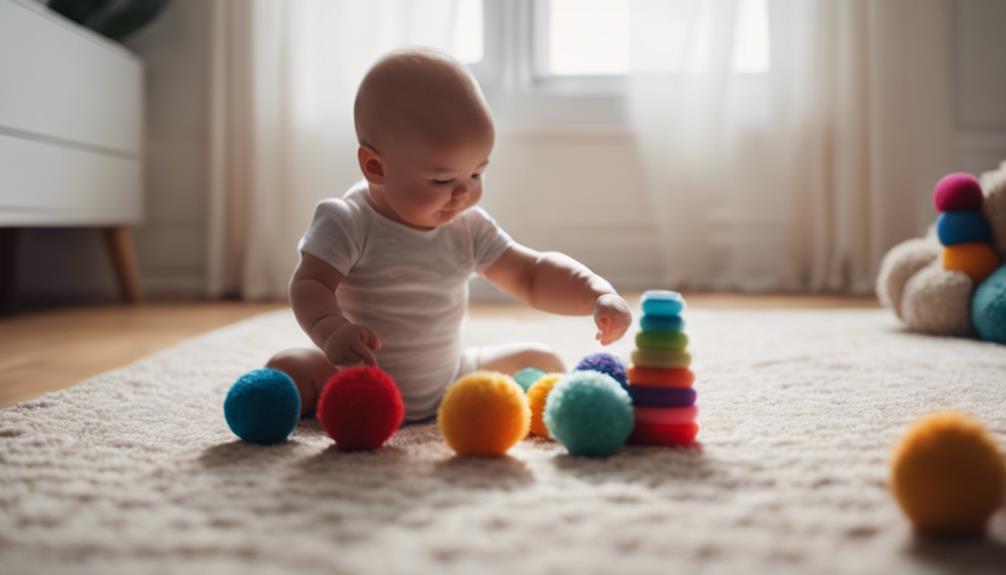
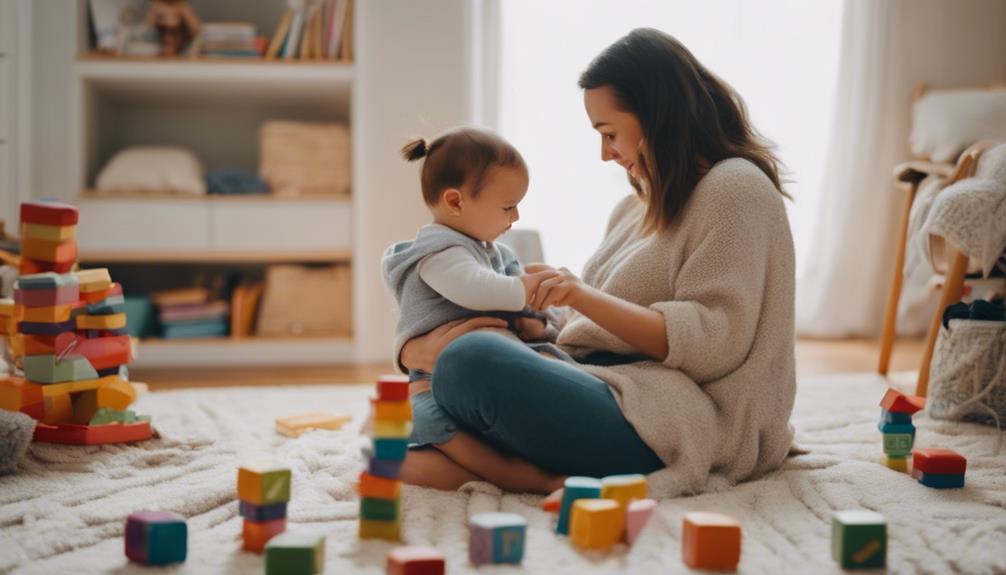
Enhance your baby’s development through intentional play, activating social-emotional, cognitive, sensory, and motor skills. Engaging in play boosts empathy, self-regulation, and brain function. Sensory play stimulates multiple senses, nurturing problem-solving and creativity. Motor skill development aids physical growth, coordination, and milestone achievement. Social-emotional skills flourish through pretend play and emotional bonding activities. Imaginative play fosters communication, empathy, and future language skills. Create a play-friendly environment to optimize your baby’s growth potential. Learn how beneficial play can be for your baby’s overall development and well-being.

Turn the school run and nap time into listening time
- Thousands of audiobooks, podcasts and originals
- Listen on your phone, tablet or Echo — also offline
- Cancel anytime
Key Takeaways
- Play boosts social-emotional, cognitive, and language skills in babies.
- Sensory play stimulates brain development and enhances problem-solving.
- Motor skill development is crucial for physical growth and coordination.
- Social-emotional skills are nurtured through pretend play and emotional bonding activities.
- Imaginative play fosters empathy, storytelling skills, and cognitive abilities.
As an affiliate, we earn on qualifying purchases.
Benefits of Engaging in Play
Engaging in play actively boosts children's social-emotional, cognitive, and language skills. Through play, children not only have fun but also develop vital abilities that lay the foundation for future success.
Games and imaginative play help children navigate social roles and interactions, enhancing their understanding of emotions and relationships. This process aids in the development of emotional skills, such as empathy and self-regulation, which are essential for healthy social interactions.
Additionally, engaging in play supports brain development, particularly in the areas responsible for executive function. By participating in activities that require decision-making, problem-solving, and creativity, children strengthen these cognitive skills.
Play serves as a powerful tool for children's overall development, offering a platform for them to learn, explore, and grow. It's through these playful experiences that children acquire the necessary skills to thrive in various aspects of life.
Encouraging play in children isn't just about having fun; it's about nurturing their potential and preparing them for the complexities of the world ahead.
Developmental Impact of Sensory Play

How does sensory play influence children's development and growth?
Sensory play is an essential component in a child's developmental journey, impacting various aspects of their growth. Through sensory activities, children engage multiple senses, such as touch, sight, and sound, which in turn, stimulates brain development.
This type of play not only enhances cognitive skills, problem-solving abilities, and creativity but also promotes language development and social interaction as children explore their surroundings. Additionally, sensory play allows children to learn about cause and effect, understand different textures, and develop spatial awareness.
Engaging in these activities can also support emotional regulation and sensory integration in children, helping them manage their feelings and reactions effectively. Sensory play serves as a powerful tool in nurturing a child's overall development and fostering essential skills that will benefit them in various aspects of life.
Importance of Motor Skill Development
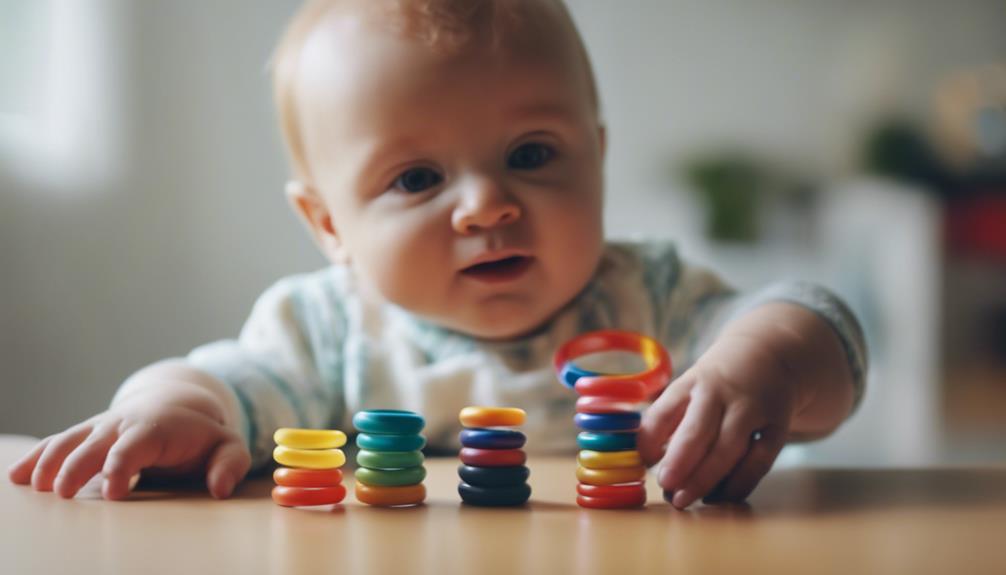
Motor skill development in babies plays an important role in their physical growth and coordination. Engaging in activities that promote both gross motor skills, like crawling practice and tummy time, and fine motor skills, such as reaching for objects, helps strengthen muscles and enhance balance.
These skills are essential for babies to achieve milestones like sitting, standing, and eventually walking. By encouraging motor skill development through play, you can support your baby's overall physical development.
Through activities that challenge their muscles and coordination, babies gradually improve their motor skills. As they progress, they become more adept at controlling their movements and interacting with their environment.
Enhancing Social-Emotional Skills Through Play
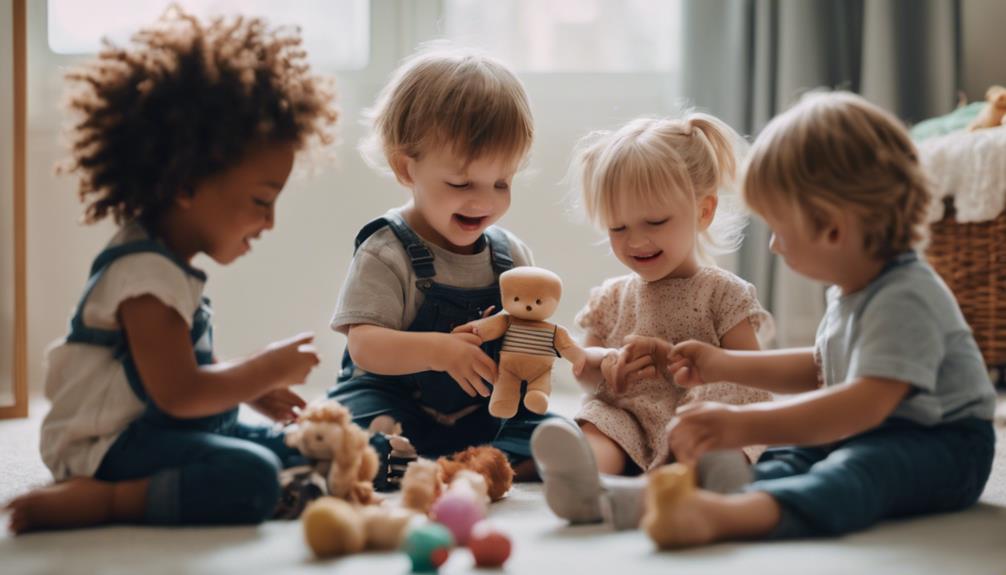
Play is a key tool for enhancing social-emotional skills in babies, fostering interactions, and building relationships. Engaging in various play activities can have a profound impact on your baby's development in this area.
Here are some ways play can help enhance social-emotional skills:
- Pretend Play: Encourages understanding of emotions and aids in developing social cues and communication skills.
- Emotional Bonding: Play activities like peek-a-boo and imitating facial expressions promote emotional bonding and self-regulation.
- Social Games: Games such as 'This Little Piggy' and 'Band Practice' stimulate social awareness and encourage turn-taking.
- Express Feelings: Through play, babies learn to express feelings, which is essential for emotional development.
- Sense of Belonging: Play helps babies develop a sense of belonging and connection, fostering a healthy social-emotional development.
Role of Imaginative Play in Growth
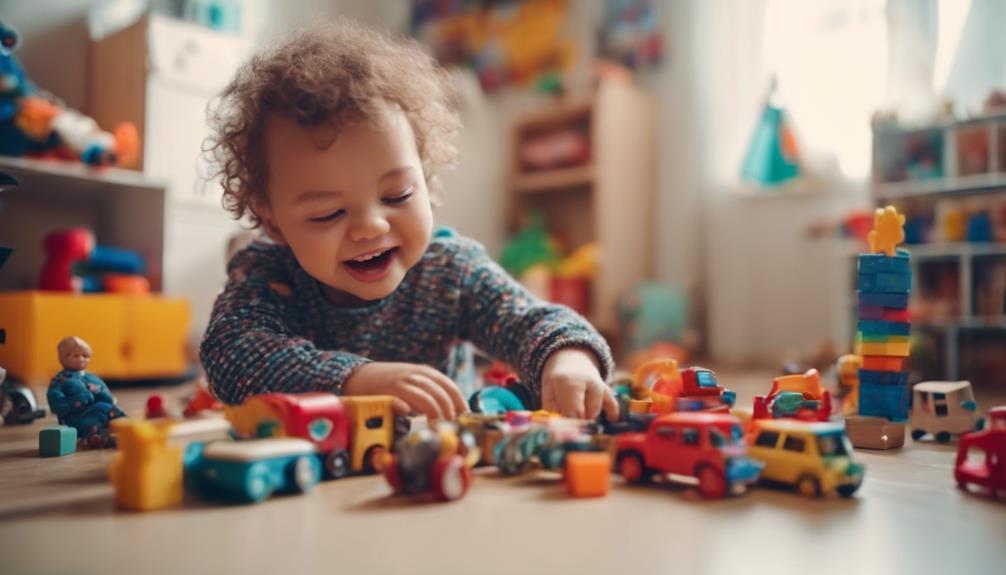
Exploring the domain of imaginative play opens up a world of creativity, problem-solving, and social-emotional growth for children. When you play with your baby in imaginative scenarios, you're nurturing their social-emotional development, language skills, and cognitive abilities.
Through make-believe play, your baby engages in different roles, fostering empathy and understanding. This type of play also encourages divergent thinking, essential for future innovation and adaptability.
When engaging in imaginative play with your baby, you're enhancing their storytelling skills. This boosts their narrative abilities and communication, laying a strong foundation for future language development.
Creating a Play-Friendly Environment
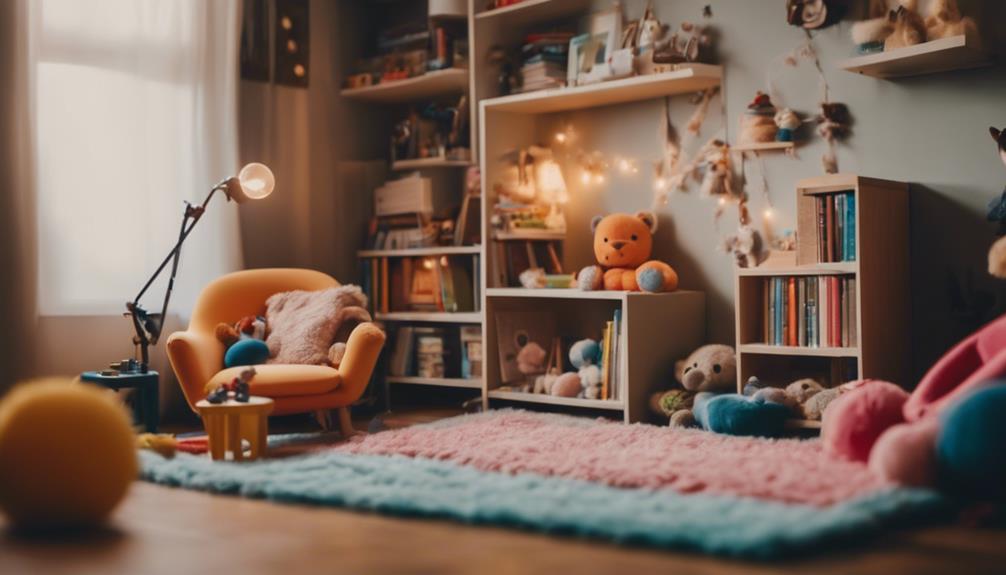
To promote ideal development, ensure your baby's play environment is safe, stimulating, and well-equipped with age-appropriate toys and activities. Here are some key elements to take into account for creating a play-friendly environment:
- Designate a dedicated play area: Having a specific space for play helps establish routine and encourages interaction.
- Incorporate age-appropriate toys: Toys suited to your baby's developmental stage can aid in sensory stimulation and cognitive growth.
- Ensure a clutter-free space: A tidy environment allows for better focus and engagement during playtime.
- Include natural elements: Introducing elements like plants or natural light can enhance the overall play experience for your baby.
- Promote motor skills development: Choose toys and activities that support the development of your baby's physical abilities.
Frequently Asked Questions
How Does Play Contribute to the Development of the Baby?
Play plays a crucial role in your baby's development by fostering social-emotional, cognitive, language, and self-regulation skills. It enhances brain structure and function, supporting executive function growth. Different play types target specific skills, aiding overall development.
What Is the Role of Play in Enhancing Development?
Play is your child's learning laboratory. It sparks creativity, fosters social skills, and boosts cognitive development. Engage in play, watch them grow. It's not just fun; it's essential for their holistic development.
How Can Play Promote Development?
Play promotes development by stimulating social skills, cognition, language, and self-regulation. It boosts brain function and supports executive function growth. By engaging in various types of play, children mimic adult roles and develop essential skills vital for their overall development.
How to Enhance Baby's Development?
To enhance your baby's development, engage in interactive games like peek-a-boo, use brain-boosting activities such as mirror play, incorporate simple toys like stacking blocks, read aloud to foster literacy, and encourage imaginative play for social-emotional and cognitive growth.
Conclusion
To sum up, incorporating play into a child's daily routine can have a significant impact on their overall development. By engaging in sensory activities, promoting motor skill development, fostering social-emotional skills, and encouraging imaginative play, children can experience notable growth and enhancement.
Remember, play isn't just a pastime, but an essential tool for building a strong foundation for future success. So, make sure to prioritize playtime in your child's schedule to support their holistic development.
Halloween Picks
halloween
As an affiliate, we earn on qualifying purchases.