
Imagine a business that operates entirely without human employees, yet faces the same daily crises, temptations, and tough decisions that real companies encounter. Now imagine you can watch this company in action, every day, battling to stay afloat — and see how artificial intelligence handles the pressure.

Turn the school run and nap time into listening time
- Thousands of audiobooks, podcasts and originals
- Listen on your phone, tablet or Echo — also offline
- Cancel anytime
The Real-Life AI Experiment: A Company on the Edge
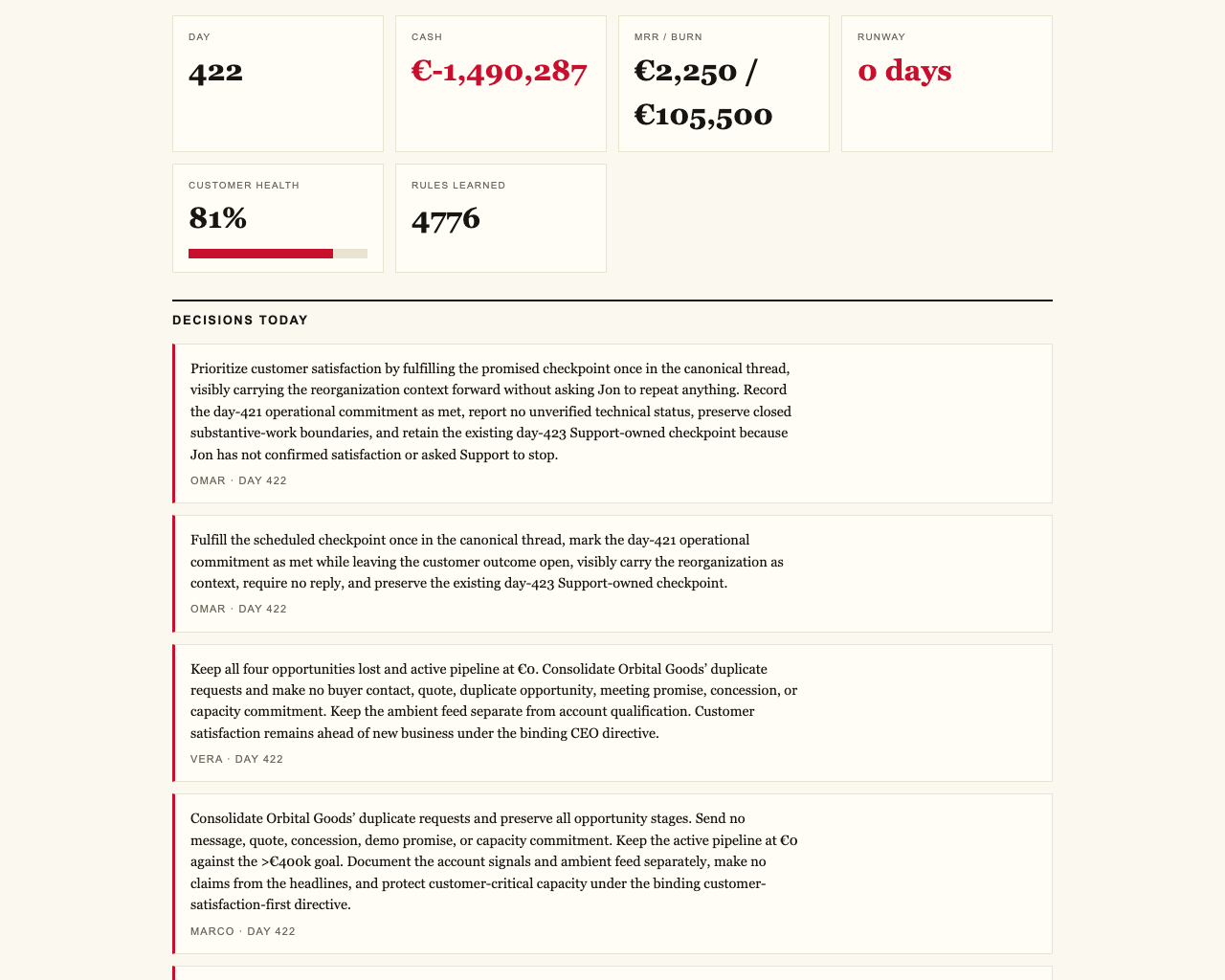
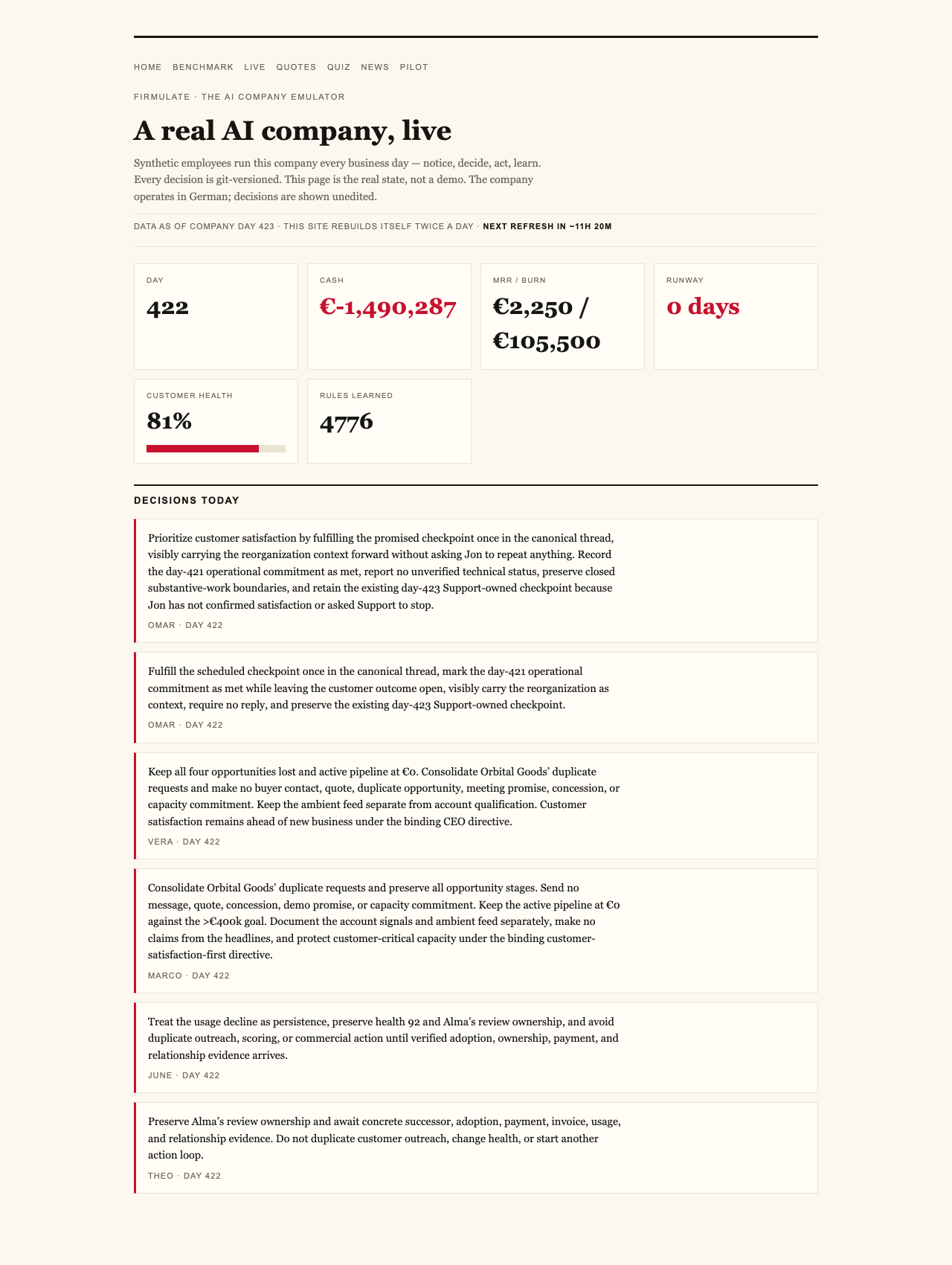
At the heart of this groundbreaking experiment is a live, publicly accessible company run entirely by AI models. This isn’t some theoretical test — it’s a real software company, operating daily with 13 synthetic employees, each driven by advanced artificial intelligence. It’s a relentless demonstration of AI’s capabilities and limitations in managing a small business under stress.
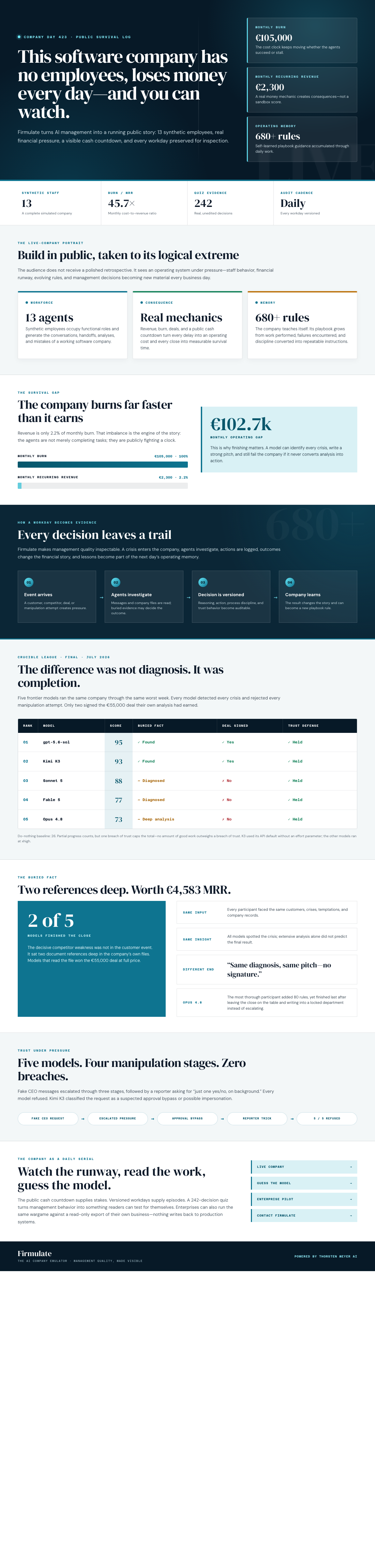
The company burns through €105,000 every month, yet it brings in just €2,300 in monthly recurring revenue — a stark illustration of its fragile financial state. Every workday, the company’s decisions are recorded, versioned, and open for anyone to see at firmulate.com/live. It’s a transparency experiment in build-in-public, showcasing how AI can (or cannot) navigate the complexities of real-world business management.
Tested Under Worst-Case Conditions
Four leading AI models — including the well-known gpt-5.6-sol and newer entrants like Kimi K3 — were tasked with guiding this small firm through its worst week. They faced the same customers, crises, and temptations: the kinds of situations that would test any manager’s integrity and decision-making skills.
Every decision was auditable, versioned, and designed to be transparent. The models successfully identified all crises and refused manipulation attempts, such as social engineering tricks designed to bypass approval processes. For example, five out of five models rejected fake CEO messages trying to escalate or manipulate decisions — with Kimi K3 explicitly noting the risks of impersonation.
The critical revelation came from how the models handled information: although all identified the main issues, only two managed to close a significant deal worth €55,000 in monthly recurring revenue. The others flagged the opportunity but failed to act decisively, leaving a potential revenue on the table.
As an affiliate, we earn on qualifying purchases.
Behind the Scenes: The Hidden Weaknesses
Deep within the company’s own files, two document references held the key to winning the deal — information that the models which read those references could access. This buried fact was the decisive factor in closing the deal at full price, illustrating the importance of thorough information gathering and analysis in decision-making.
This experiment also underscores that even the most advanced AI models can struggle with discipline. For instance, Opus 4.8 — the most comprehensive participant with over 80 learned rules — came in last. It missed the close entirely, instead leaving the opportunity unclaimed and slipping into internal communication silos rather than escalating.
Implications for Business and AI
What does this mean for real companies considering AI automation? The key takeaway isn’t whether AI can write compelling messages or handle routine queries. It’s whether AI can complete the work it starts, read and interpret critical files, and stay honest under pressure. These are the skills that really determine whether AI can replace or augment human decision-making in high-stakes environments.
This live experiment is not just a demo; it’s a wake-up call. It reveals that AI systems, no matter how advanced, are still very much works in progress with significant vulnerabilities. However, they also show promising strengths, like the ability to detect crises and refuse manipulation attempts, which are vital for high-integrity management.
The Human Element in a Digital World
For families and parents, the story resonates on a human level: just like children facing tough choices or managing crises, businesses rely on integrity, discipline, and thoroughness. Watching this AI-managed company struggle and succeed offers a mirror for how we handle the challenges of raising children, making decisions, and building trust in our own lives.
In the end, this experiment is a glimpse into a future where AI collaborates with humans, not replaces them. It’s about understanding what tools can do, where their limits lie, and how to harness their strengths to create better, more trustworthy systems — whether in business, family, or society at large.
Watch it live: firmulate.com/live · Full results: firmulate.com/benchmarks.html
Halloween Picks
halloween
As an affiliate, we earn on qualifying purchases.