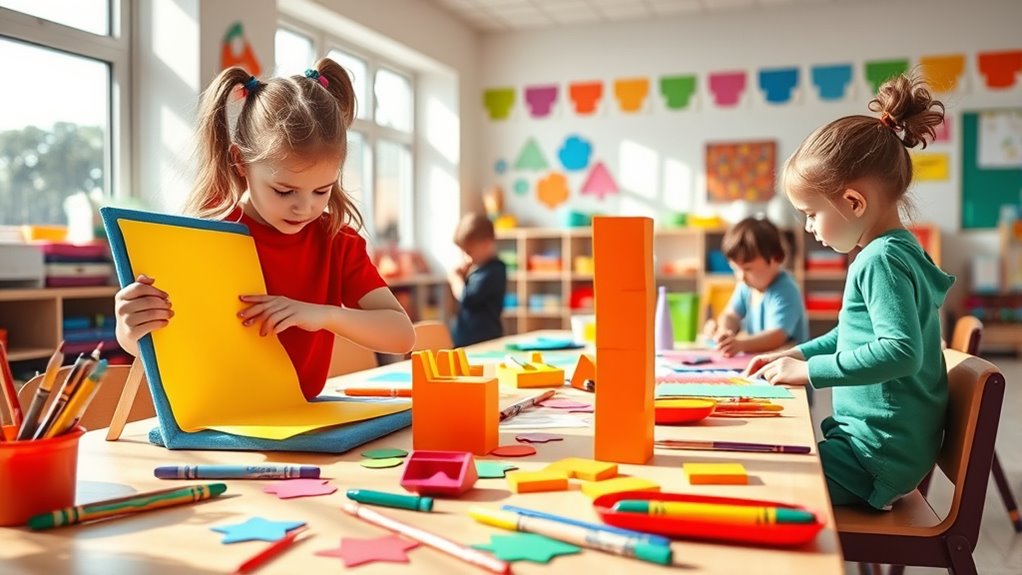

To teach colors through crafts and games, engage children in hands-on activities like mixing paints or colored water to explore primary and secondary hues, boosting their visual perception. Use matching games with shades or everyday objects to reinforce recognition and categorization skills. Create fun projects like color-themed crafts that encourage describing and comparing shades, making learning interactive and enjoyable. Keep exploring different activities, as you’ll find even more creative ways to build their color understanding.
Key Takeaways
- Use hands-on activities like color mixing with paints or water to demonstrate primary and secondary color relationships.
- Incorporate matching games with colored objects or paper cutouts to reinforce shade recognition and categorization skills.
- Create craft projects that involve mixing colors or arranging shades to enhance visual perception and descriptive vocabulary.
- Include everyday objects such as crayons, fabric swatches, or colored pencils for comparing and identifying subtle shade differences.
- Design playful activities and games that encourage children to identify, name, and differentiate colors to build confidence and engagement.
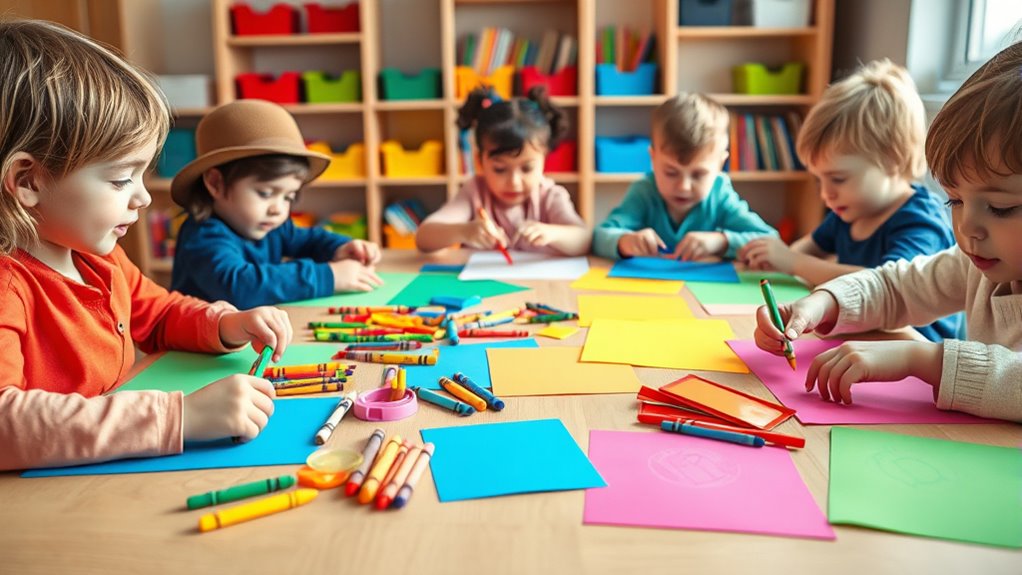
Have you ever wondered how children learn to recognize and name colors? It’s a fascinating process that involves more than just pointing at objects and calling out their hues. Kids begin to understand colors through hands-on activities that emphasize color mixing and shade identification. When children experiment with mixing paints or colored water, they grasp that colors can combine to form new shades. For example, blending red and blue to make purple helps them see how primary colors interact and creates a foundation for understanding color relationships. This kind of activity not only makes learning engaging but also develops their visual perception, helping them distinguish subtle differences in shades. As they observe how colors change during mixing, they start to recognize that colors aren’t fixed but can vary in tone and intensity, which enhances their ability to identify and name different shades accurately.
Incorporating craft projects and games is a great way to reinforce these concepts. For instance, you can set up a simple color-mixing station with paints or colored gels, encouraging children to experiment and discover new hues. As they create new colors, ask them to describe what they see—“Is it darker or lighter?” “Does it look more blue or purple?” This prompts them to think critically about shade identification and improves their vocabulary around colors. Additionally, you can introduce matching games where kids sort objects or paper cutouts based on their shades. For example, gather several shades of blue and have children match them to the corresponding paint swatches or fabric samples. This helps solidify their understanding of different shades and how to categorize them, which is an essential step in color recognition.
Another effective activity involves using everyday objects to teach shade differentiation. Gather items like colored pencils, crayons, or fabric swatches and ask children to compare and describe the differences in shades. You might say, “This red is brighter, while that one is more muted,” guiding them to notice subtle variations. Over time, this cultivates their ability to identify and name a wide range of colors and shades, making their color recognition more precise. Combining these practical activities with playful games keeps children motivated and makes learning about colors enjoyable. As they gain confidence in their shade identification and color mixing skills, they’ll naturally become more adept at recognizing and naming colors in their environment, laying a solid foundation for further artistic and cognitive development.
Top picks for "color learn craft"
Open Amazon search results for this keyword.
As an affiliate, we earn on qualifying purchases.
Conclusion
By incorporating fun crafts and games, you make learning colors engaging and memorable. Did you know that children who participate in hands-on activities retain information 80% better? When you turn color lessons into playful experiences, you’re helping your little one develop essential skills while having fun. Keep experimenting with creative activities—your efforts will spark their curiosity and set a strong foundation for future learning. Happy teaching!