
TL;DR
Educational toys for toddlers are toys that invite active, age-appropriate play, such as stacking blocks, board books, nesting cups, and pretend-play props. Choose for your child’s current interests and abilities, follow package age guidance, check CPSC recalls, and remember that simple play with a responsive adult can be more useful than extra lights or sounds.
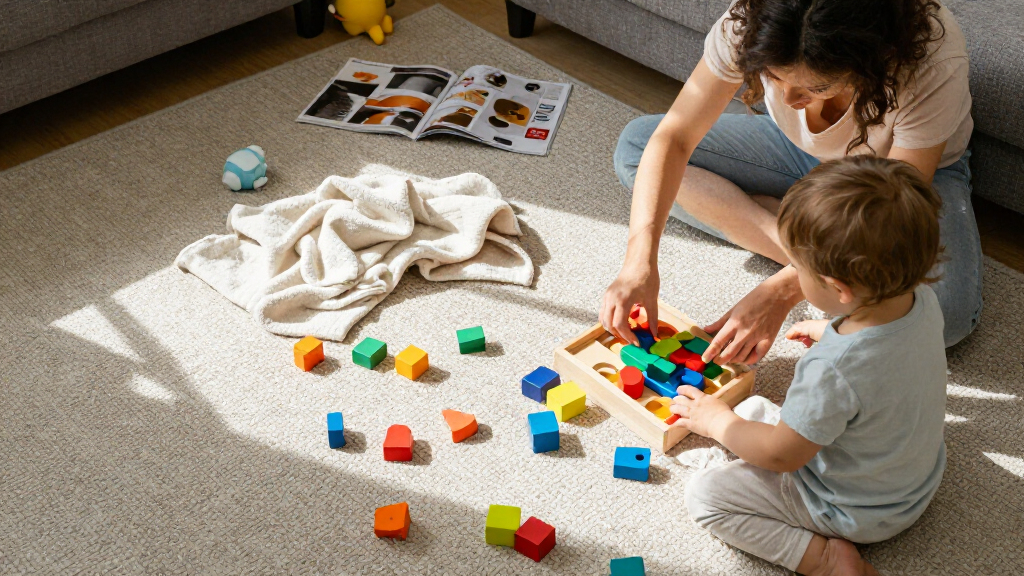
A tower of blocks can teach a toddler plenty before it tumbles with a satisfying clatter. Your child may test balance, reach for a new block, and announce “uh-oh” when the stack falls. That small burst of play shows why educational toys for toddlers do not have to flash, sing, or come with a big promise on the box.

Give the gift of listening to the whole family
- Choose a 1-, 3-, 6- or 12-month membership
- They pick the audiobooks they love
- Easy to send by email
This guide helps you choose toys that suit your child’s age, interests, and stage of play. You’ll find practical examples for language, movement, and problem-solving, plus straightforward ways to check safety and value. The goal is simple: give your toddler room to explore, with toys that feel fun in their hands and manageable in your home.
Toddlers are typically children from about 1 to 3 years old, but children develop at different rates. A toy can support learning when it invites active play; it cannot guarantee a particular skill or outcome. Your attention, a safe space, and an interesting object can turn an ordinary afternoon into a little workshop of discovery.
Choose toys that invite your toddler to act, repeat, explore, or pretend; an “educational” label is not required.
Match the toy to your child’s current interests and abilities as well as the manufacturer’s age guidance.
Check for choking risks, damage, loose parts, and secure battery compartments, and search CPSC recalls before use.
Use books, songs, familiar objects, and responsive conversation for natural chances to share words.
Simple, affordable materials can support rich play; extra technology and higher prices do not guarantee more learning.
Choose toys that invite your toddler to do something
Educational toys for toddlers work best when they invite a child to act, explore, and try again. A useful toy might let your toddler stack, sort, scribble, pretend, or see what happens when they push a button themselves. The learning comes from the play opportunity, not from a label promising a specific result. When children can make choices and see the effects of their actions, they get repeated chances to test an idea, adjust, and try again. That repetition can make a toy interesting beyond its first few minutes.
Think of a set of nesting cups. Your toddler can line them up, knock them down, hide a toy under one, or fill a cup with bath water. Each action offers a different small challenge: matching sizes, anticipating where an object went, or noticing that a full cup feels heavier. A toy with one fixed action may still delight a child, especially when they enjoy repetition, but open-ended toys can accommodate changing interests and skills. The tradeoff is that they may need a little adult help at first to get play started.
Different toys invite different kinds of practice: blocks and shape sorters invite simple problem-solving; board books and songs create chances to hear and use words; large pieces and chunky crayons let little hands grasp and turn; push toys and soft balls invite movement. Pretend food, dolls, and toy vehicles offer chances to act out familiar moments. These are opportunities, not guarantees of development. A child may use a toy in an unexpected way, and that can be just as engaging as the activity the maker pictured.
A good play prompt gives your toddler something to try, then leaves room for their own idea.
For example, offer a cardboard box beside a toy car. Your toddler might push the car through a doorway, fill the box with blocks, or climb beside it and turn it into a garage. The box costs little, but the play can shift with the child. That flexibility is what makes a simple toy useful over time: it stays relevant as the child finds new ways to use it. Check that any household object is sturdy, clean, and safe for your child’s age and habits.
Products Worth Considering

LEGO Elf Club House 10275 Building Kit, 1,197 Pieces

Owlet Dream Sock Smart Baby Monitor

Graco Ultra QuickShot II Cordless Airless Sprayer, Model 26E006
As an affiliate, we earn on qualifying purchases.
Match the toy to your child’s current interests
Educational toys for toddlers should match the child who will play with them, not only the age printed on the package. The label offers important guidance, but your toddler’s interests, skills, and habits help you decide whether a toy will be inviting and manageable. A child who loves filling and dumping may enjoy large blocks and containers more than a puzzle with many pieces. A good fit often means the child can begin playing with little frustration while still having something new to figure out.
Watch what your toddler already does. Do they carry objects from one room to another? Try a sturdy basket and large toys to collect. Do they like pointing at pictures? A board book with clear images can give you plenty to name together. If they enjoy pushing chairs across the floor, a stable push toy may suit their play, provided the product is designed for their age and used with appropriate supervision. These observations are useful because they show what already holds the child’s attention; choosing from that starting point can make a new toy more likely to get used.
Try this quick selection process before buying:
- Notice the play: Watch what your child chooses during an ordinary afternoon. Repeated actions can point to the kind of activity they currently enjoy.
- Pick one manageable challenge: Choose a toy that invites a next step without requiring lots of help. Too easy may lose its appeal; too difficult may turn play into frustration.
- Check the fit: Read the age label and warnings, then consider your child’s abilities and mouthing habits. The package provides a safety baseline, while your knowledge of your child helps with the final choice.
- Imagine three uses: Ask whether your toddler could play with it in more than one way. Multiple uses can keep a toy useful as interests change, though a single-purpose toy can still be a favorite.
Say your 18-month-old spends ten minutes putting socks in a laundry basket. A set of large nesting containers may meet that interest better than a complicated shape puzzle. The puzzle may be suitable for another child or another time; the basket play gives you a useful clue about what your toddler wants to do now. Starting with that clue can reduce the chance that a toy sits unused, while leaving room to offer a slightly different challenge later.
Check safety before the toy reaches the play mat
A toy is age-appropriate when its design and risks fit the child’s age and abilities, so start with the manufacturer’s label and warnings. Those details may flag choking hazards, small detachable parts, or other risks. They also help explain why an item intended for an older child may be unsuitable even if your toddler seems interested. Then look closely at the toy itself: it should feel sturdy, have secure components, and suit the way your toddler handles objects.
Small parts deserve particular care if your child still mouths toys. Avoid products with loose pieces that could pose a choking risk, and check toys regularly for cracks, broken edges, or components that have come loose. Damage can change a toy’s risk over time, so a toy that was safe when new may no longer be suitable after heavy use. If a toy uses batteries, inspect the battery compartment and make sure it closes securely. Keep toys with accessible button batteries or magnets away from young children.
Before buying or passing down a toy, search the U.S. Consumer Product Safety Commission (CPSC) recall database for current recall notices. A recall check matters because some defects are not visible during a quick inspection. For example, a bright wooden toy handed down from a cousin may look perfectly sound, but a quick recall check can reveal a safety issue that is not visible from the outside. Follow local safety guidance as well as the package directions.
Age labels help, but they do not make supervision unnecessary. A toy marked for toddlers may still be a poor fit for a child who tends to chew pieces or has not yet developed the skills needed for its play. Matching the toy to your child can mean setting aside an appealing item for now and choosing a simpler one, such as a sturdy board book or large blocks suited to the child’s stage. Recheck toys as your child grows and as wear changes their condition.
Help language grow through everyday play
Books, songs, familiar objects, and pretend-play toys create natural chances for toddlers to hear words and try their own. A toy cannot guarantee faster speech development, but it can give you something interesting to talk about together. Following your toddler’s attention helps keep the exchange connected to what they care about, rather than asking them to perform on demand. Name what they notice, then give them time to respond in their own way.
Imagine your child holding a toy dog and making a barking sound. You might say, “The dog says woof,” then pause. Your toddler may repeat the sound, point to the dog’s tail, or simply carry on playing. Each response gives you a chance to share a moment without turning it into a quiz. The pause matters: it gives your child room to make a sound, gesture, or choice, and it lets you see what they want to do next.
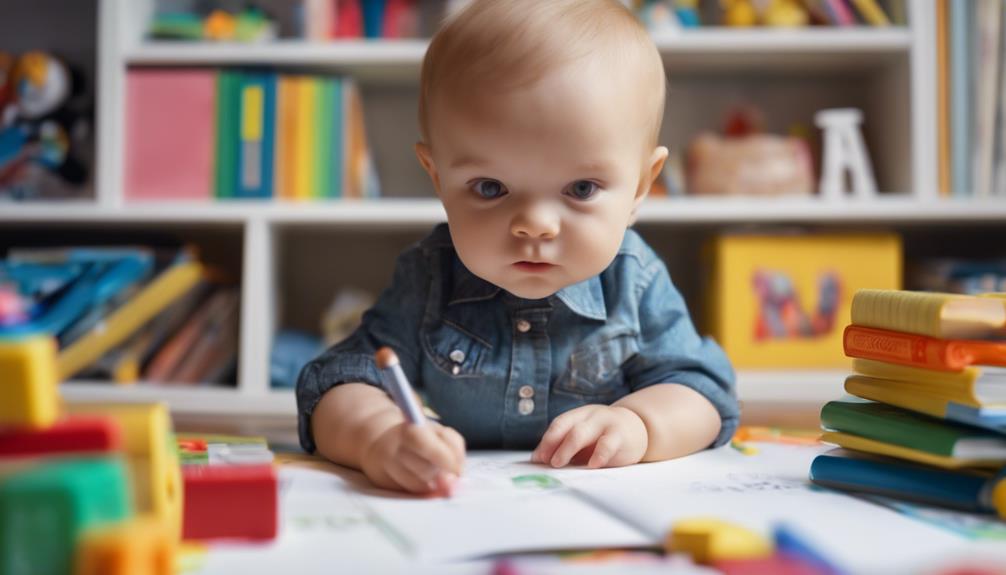
Board books make this easy. Instead of reading every word on a page, point to a red bus and say, “Here comes the bus.” Your toddler might tap the wheels or make a sound; you can follow with “Round and round they go.” Simple songs work the same way, especially when you leave a familiar pause for your child to fill with a word, gesture, or grin. Repeating favorite books and songs can be useful because familiar patterns give a child a chance to anticipate what comes next.
For instance, a play kitchen can become a tiny conversation about lunch: “You’re stirring the soup,” or “Would the doll like a cup?” Keep the language connected to what your child is doing. Responsive interaction adds warmth and meaning to play, while independent exploration gives your toddler space to make their own discoveries. You can move between the two: join briefly with a comment, then let the child lead again.
Make a small, varied toy selection work harder
You do not need a fixed number of toys to make play worthwhile. A few safe, varied options that your toddler can reach and use in different ways may be enough. Keeping fewer toys available can make it easier for a child to choose, though toy rotation is only one practical option—not a rule every family needs to follow. The useful question is whether the available toys give your child a few different ways to play without making cleanup or access harder for your household.
Picture a low shelf with a board book, a few large blocks, a soft ball, and a toy vehicle. Your toddler can pull down one choice without tipping a giant bin across the room. If the blocks disappear from the shelf for a week and return later, they may feel interesting again. Rotation can also reduce the number of things to tidy at once, but it takes adult effort and may not suit every child or home. If rotating toys adds stress to your day, leave them accessible and choose what works for your home.
Simple and expensive toys can both offer enjoyable play; price is not a measure of educational value. Crayons and paper, pretend food, dolls, and sturdy containers can all invite children to explore. Ordinary household items can also work if they are safe for your child and used with suitable supervision. Think about a large plastic bowl and a few chunky blocks: your toddler can fill the bowl, empty it, and start over. A low-cost item can offer many play possibilities, while a more expensive toy may be worthwhile if it is durable, safe, and something your child enjoys using.
Market terms such as STEM, Montessori-inspired, “sensory,” and “eco-friendly” describe a product’s category or design claims, not a guaranteed developmental result. Check the actual features, materials, age guidance, and safety details. A wooden toy may appeal for its feel and finish; an electronic toy may amuse your child. What matters is how the child engages with it. Looking beyond the label helps you compare what the toy actually allows your toddler to do with its price and place in your home.
Use adult attention without turning play into a lesson
Adults can enrich play by talking, reading, or joining a toddler’s pretend game while following the child’s lead. You do not need to teach a formal lesson or direct every move. A brief comment can give a child a word or idea, then a little silence can give them room to continue. This balance lets you add a prompt without taking over the play or making every moment feel like practice.
For example, if your toddler is stacking blocks, you might say, “That one is wobbly,” rather than repeatedly correcting the tower. Your child may add a wider block, knock the stack over, or wander away. All three responses tell you something about what interests them at that moment. Observing instead of correcting can keep the activity enjoyable and give the child a chance to test their own solution.
Technology does not automatically make a toy more educational. Lights, recorded songs, and app connections can entertain, but consider whether your toddler gets to act and explore or mostly watches and listens. A simple push toy that your child steers around a chair may invite more movement than a toy that performs a light show after a single touch. Some children enjoy a sound or light as part of play; the tradeoff is whether the feature supports the child’s own actions or tends to hold their attention by itself. The right choice can depend on the child and the setting.
For infant sleep, feeding, or medical questions, follow your pediatrician’s guidance rather than relying on a toy or product’s marketing. For general play, keep the focus on shared enjoyment and safe exploration. If your toddler spends a long time making a toy bus stop at the sofa, join the game with one question—“Who’s getting on?”—and see where the story goes. If your child ignores the question, you can simply stay nearby and let the game continue on their terms.
Frequently Asked Questions
What are good educational toys for a 1-year-old?
Try sturdy, age-appropriate options such as large blocks, nesting cups, board books, simple push toys, and objects for filling and emptying. Read the package guidance, check for small detachable pieces, and supervise play as needed. A toddler who likes to bang and stack may enjoy blocks more than a toy with many steps.
What toys help toddlers learn to talk?
Books, songs, pretend-play toys, and familiar objects give you natural things to name and talk about. You can describe what your child is doing and respond to their sounds or gestures. No toy can guarantee faster speech development; for concerns about your child’s communication, ask your pediatrician.
Are electronic toys good for toddlers?
Electronic toys can be entertaining, but lights and sounds are not required for learning. Consider whether your child gets to act, explore, and interact, rather than mostly watch or listen. Check the age label and follow your pediatrician’s advice about screens.
How many toys does a toddler need?
There is no fixed number. A few safe, varied toys that your child can reach and use in different ways may be enough, alongside books and household items suited to their age. Some families rotate toys to make choosing easier, but it is optional.
How can I tell whether a toy is age-appropriate?
Read the manufacturer’s age label and warnings, then think about your child’s current skills and habits, including whether they mouth objects. Age labels address safety and play complexity as well as the intended age range. Check the toy’s condition and look for current CPSC recall notices too.
Do educational toys make children smarter?
A toy alone does not determine a child’s intelligence or development. Toys can offer chances to practice skills through play, especially when the activity engages the child and an adult responds warmly. Children learn through many experiences beyond toys.
Are expensive educational toys better?
Price and educational value are not the same. Blocks, crayons, board books, and pretend-play props can invite rich play when they are safe and suit your toddler. Choose based on the child’s interest, product safety, and what they can do with the toy.
Conclusion
Choose a toy your toddler can use safely and enjoy actively, then let their curiosity set the pace. A few blocks, a book, and your attention can turn a quiet corner into a place for stories, experiments, and the cheerful crash of a tower coming down.
Before a new toy joins the play mat, check its age guidance, look for any CPSC recall, and ask yourself what your child might do with it. The best next move may be as simple as setting out one inviting object and watching what happens.