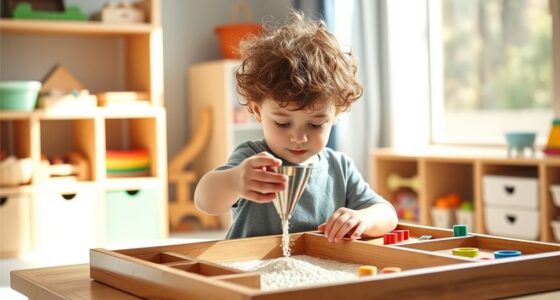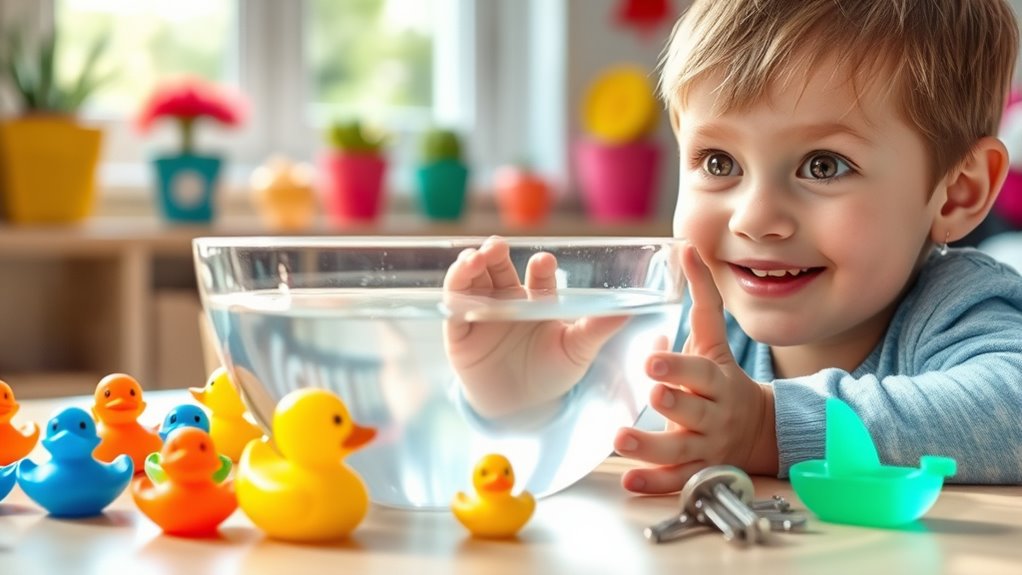

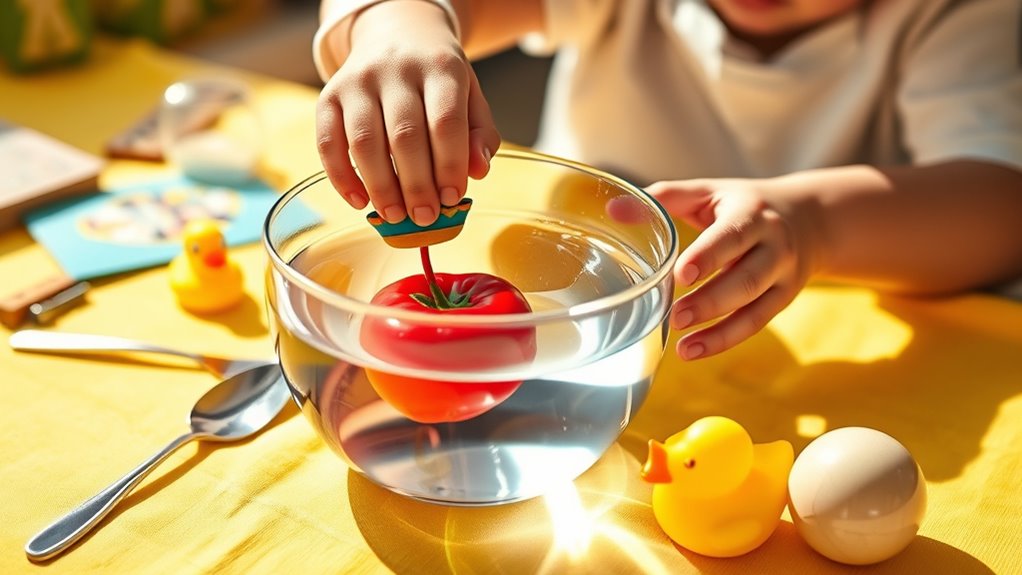
You can easily engage little ones with simple science experiments like sink or float, which sparks curiosity and builds early science skills. Use household items such as fruit, toys, and household objects to explore which items sink or float in water. These hands-on activities promote observation and critical thinking while making learning fun. Keep experimenting, and you’ll discover more easy ideas to deepen their curiosity and understanding of basic science concepts.
Key Takeaways
- Simple sink or float experiments teach children about buoyancy using everyday objects in water.
- Incorporate colorful water mixing activities to enhance visual learning and engagement.
- Use household items like toys, coins, and paper clips to explore magnetic properties alongside sink or float tests.
- Combine experiments for deeper understanding, such as testing materials’ magnetic and water behaviors simultaneously.
- Keep activities playful and relaxed, celebrating discoveries to foster curiosity and a love for science.
Introducing simple science experiments is a fantastic way to spark your little one’s curiosity and love for learning. Kids are naturally inquisitive, and engaging them with hands-on activities makes exploring science both fun and memorable. One great experiment focuses on water color mixing, which is perfect for teaching about colors and how they combine. You can start by giving your child a few small cups of primary-colored water—red, blue, and yellow. Let them pour small amounts into a larger tray or dish to observe what happens when the colors meet. As they mix the water, they’ll see new colors form—orange from red and yellow, green from blue and yellow, and purple from red and blue. This simple activity demonstrates how colors blend and introduces basic concepts of color theory. Plus, it encourages fine motor skills and visual learning.
Engage kids with water color mixing to explore colors, blending techniques, and stimulate visual and motor skills.
Another exciting experiment involves magnetic discovery, which taps into your child’s natural fascination with magnets. Gather some household items—paper clips, coins, plastic toys, wooden blocks—and ask your child to see which objects are attracted to a magnet. Using a strong magnet, let them explore which objects stick and which don’t. This activity teaches about magnetic properties and introduces scientific vocabulary like “attraction” and “repulsion.” It’s a quick experiment that stimulates observation skills and critical thinking. As your child tests different objects, encourage questions like, “Why does this stick but not that?” This curiosity can lead to deeper understanding and a love for exploring the natural world.
You can also combine these ideas into more complex experiments or keep them simple for quick, engaging sessions. For instance, after learning about color mixing, you might explore how different materials react to magnets—maybe some magnetic paint or filings. These experiments don’t need fancy equipment or complicated instructions. All they require is your enthusiasm and a willingness to explore together. As you guide your little one through these activities, emphasize that making mistakes is part of learning. Sometimes, colors won’t blend perfectly, or objects won’t respond to magnets as expected. That’s okay—these moments are opportunities for discussion and discovery.
Introducing simple science experiments like water color mixing and magnetic discovery helps your child develop observation skills, understand basic scientific concepts, and nurture their natural curiosity. Keep the activities playful and relaxed, and celebrate their discoveries along the way. Remember, the goal isn’t perfection but fostering a love for exploring the world around them. With each experiment, you’re not only teaching them about science but also creating lasting memories and a foundation for lifelong learning.
Top picks for "easy science experiment"
Open Amazon search results for this keyword.
As an affiliate, we earn on qualifying purchases.
Conclusion
Trying these simple science experiments with your little one is a fun way to spark curiosity and learning. Some might worry they’re too young for hands-on activities, but you’ll see that even small children can enjoy and understand basic science concepts. These experiments are safe, easy, and perfect for little hands. So go ahead—explore, discover, and create memorable moments together. Your child will love learning through play, and you’ll love watching their curiosity grow!