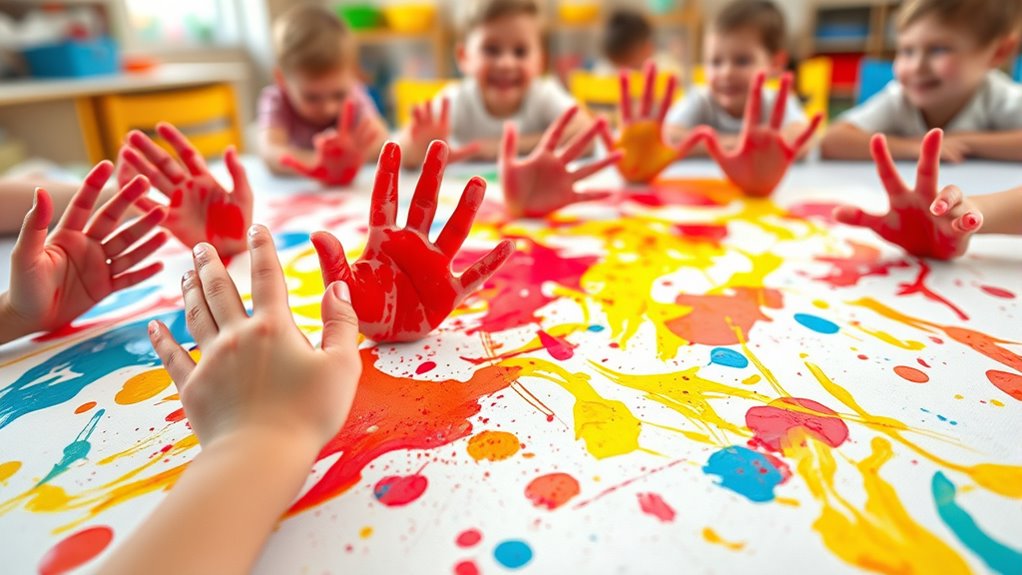

Finger painting is important for young children because it provides a rich sensory experience that helps develop their sense of touch, coordination, and motor skills. It encourages creativity and confidence by letting kids explore colors and textures freely, fostering innovation and problem-solving. This activity also promotes emotional bonding and social interaction with caregivers or peers. By engaging in finger painting, children build a foundation for lifelong learning and expression—if you want to discover more about its benefits, keep exploring.
Key Takeaways
- Enhances sensory development by allowing children to explore textures and colors through touch.
- Builds confidence and encourages creative expression without fear of making mistakes.
- Supports cognitive growth by fostering problem-solving and innovative thinking.
- Develops fine motor skills and hand-eye coordination essential for daily activities.
- Promotes social bonding and emotional development through shared artistic experiences.
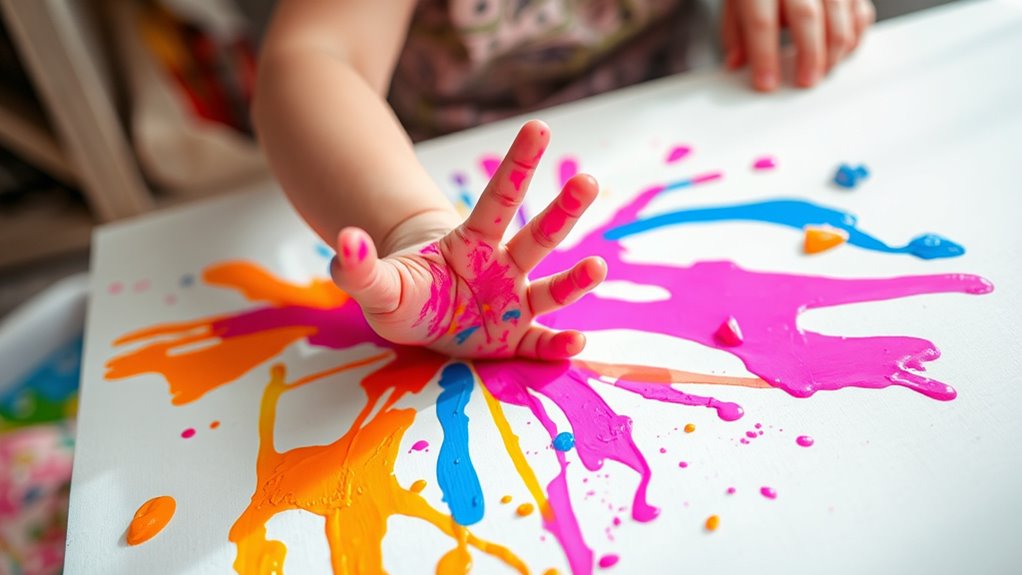
Have you ever considered how early art experiences can spark a child’s creativity and confidence? When you introduce little ones to activities like finger painting, you’re not just giving them a fun way to express themselves—you’re also supporting their sensory development and creativity enhancement. Finger painting provides a rich sensory experience because children get to feel the texture of the paint, notice how colors blend, and explore different sensations through touch. This tactile engagement helps develop their sense of touch and spatial awareness, allowing them to understand how their movements influence the art they create. As they dip their fingers into paint and spread it across paper, they’re learning to coordinate their hand movements with their visual perceptions, which is essential for overall sensory integration.
Early art activities like finger painting boost creativity, sensory skills, and confidence in young children.
Moreover, finger painting encourages children to experiment freely without the fear of making mistakes. They learn to trust their instincts and explore their environment with curiosity. This process of uninhibited exploration nurtures their creativity, helping them see that art isn’t about perfection but about expression. When kids see their unique creations take shape, it boosts their confidence and fosters a positive attitude toward trying new things. The act of mixing colors and creating abstract patterns allows them to think outside the box, promoting creative thinking from an early age. These experiences serve as a foundation for later artistic pursuits and problem-solving skills.
You’ll notice that finger painting also enhances their motor skills. As children pick up paint and spread it with their fingers, they strengthen the small muscles in their hands and fingers. This fine motor development is essential for tasks like writing, buttoning, or tying shoelaces later on. The repetitive motion of spreading paint encourages hand-eye coordination and control, which are fundamental for many daily activities. Plus, the process is inherently engaging—children are naturally drawn to sensory-rich activities, making finger painting an excellent way to keep them focused and motivated to learn.
Finally, engaging in finger painting together provides a wonderful opportunity for you to bond with your little one. Sharing in their creative process helps build trust and communication, while also allowing you to observe their developmental progress firsthand. Overall, finger painting isn’t just messy fun; it’s a powerful tool that nurtures sensory development, sparks creativity, and builds confidence—laying the groundwork for your child’s lifelong love of learning and self-expression.
Conclusion
Remember, finger painting isn’t just about colors and shapes; it’s about releasing your child’s imagination and building confidence. When you encourage their creativity, you’re planting seeds for a lifelong love of art and learning. Think of each swipe and smear as a brushstroke on the canvas of their future—each one essential, each one unique. So, explore with enthusiasm, because in their tiny hands, art becomes a powerful tool to explore, express, and grow.