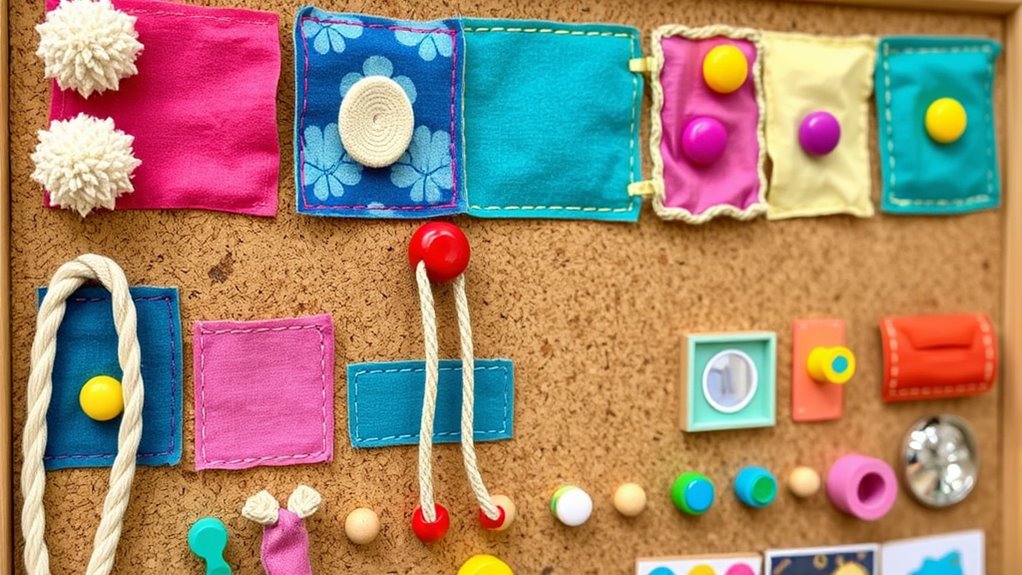

Creating a DIY busy board is a fantastic way to keep little hands engaged while fostering motor skills and sensory development. Include activities like latches, switches, and buttons to challenge finger dexterity, along with textured materials and sound elements to stimulate senses. Personalize it with themes your child loves, ensuring all parts are safe and securely attached. Curious about more ideas? Keep exploring to discover how to craft a fun, educational busy board that truly suits your child’s needs.
Key Takeaways
- Incorporate a variety of latches, switches, and knobs to develop fine motor skills and hand-eye coordination.
- Use colorful, textured materials and sensory elements like crinkle paper or bells for engaging sensory exploration.
- Personalize the board with themes or favorite animals to boost interest and motivation.
- Secure all components firmly using non-toxic, child-safe materials to ensure safety during play.
- Design the board with a balance of motor challenges and sensory inputs to promote comprehensive developmental benefits.

A busy board is a fantastic way to keep young children engaged and develop their fine motor skills. When you create or choose a busy board, you’re giving your little one a hands-on opportunity to explore, manipulate, and learn through sensory play. These activities are designed to enhance motor skills by encouraging grasping, turning, sliding, and pressing, all of which strengthen tiny muscles in their hands and fingers. Sensory play, which involves different textures, colors, and sounds, adds an extra layer of engagement that keeps your child fascinated and promotes cognitive development.
To start, consider incorporating elements that challenge their motor skills while offering sensory experiences. For example, you could add a variety of latches and locks that require different movements to open and close. This type of activity helps children practice precise finger movements and hand-eye coordination. Small switches, buttons, and knobs are also excellent for fine motor development—they encourage pinching, pushing, and turning, which are *essential* skills at this stage. When you include these features, you’re not just amusing your child; you’re helping them refine their motor control in a fun, interactive way.
Sensory play can be integrated by adding textured materials like soft fabric, rough felt, or bumpy rubber surfaces. Incorporate elements that produce sounds when manipulated, such as bells, crinkle paper, or squeaky toys. These stimuli captivate your child’s attention, making the busy board an exciting sensory-rich environment. Bright colors and contrasting patterns also stimulate visual senses, keeping your little one visually engaged as they explore each component. When you design a busy board with a variety of sensory inputs, you create an immersive experience that encourages curiosity and promotes sensory integration.
You can personalize your busy board to suit your child’s interests and developmental needs. For instance, if they love animals, include animal-shaped buttons or sliders that resemble their favorite creatures. If they enjoy music, add small instruments or sound-producing elements. The key is to create a balanced mix of activities that challenge their motor skills while engaging their senses. Keep in mind that safety is paramount—use non-toxic materials and secure all components firmly to prevent any accidents.
Frequently Asked Questions
What Safety Precautions Should I Take When Making a Busy Board?
When making a busy board, you should prioritize childproofing tips and material safety. Use non-toxic, durable materials and avoid sharp edges or small parts that could be swallowed. Secure all components tightly to prevent choking hazards, and double-check that fasteners are child-safe. Regularly inspect the board for wear and tear, ensuring it remains safe as your child explores and learns.
At What Age Is a Busy Board Most Appropriate?
While the world whispers about perfect timing, you’ll find that busy boards suit children when they reach a delightful stage of developmental readiness, usually around 6 months to 3 years. This age appropriateness fosters curiosity and motor skills, encouraging exploration. Pay attention to your little one’s interests and abilities, and you’ll discover the ideal moment when a busy board can become a wonderful tool for learning and entertainment.
How Do I Choose Non-Toxic Materials for My DIY Busy Board?
When choosing materials for your DIY busy board, focus on eco-friendly options and non-toxic paints to keep your child safe. Look for natural or sustainably sourced woods, and avoid plastics with harmful chemicals. Use non-toxic paints and finishes to add color and protection. Always check labels for safety certifications, and opt for smooth, untreated surfaces to prevent splinters and guarantee a healthy play environment.
Can Busy Boards Be Customized for Specific Developmental Stages?
Did you know that tailored toys boost learning by 30%? You can customize busy boards for specific developmental stages by focusing on age-appropriate features. For early toddlers, include simple zippers or knobs to improve fine motor skills. For older children, add puzzles or counting elements to challenge their cognitive growth. This developmental tailoring guarantees your busy board stays engaging and supports your child’s unique growth needs perfectly.
How Do I Maintain and Clean the Busy Board Regularly?
You should establish a regular cleaning routine to keep the busy board safe and inviting. Use a damp cloth with mild soap to wipe down surfaces, ensuring you avoid harsh chemicals that could damage material durability. Check for loose parts or sharp edges often, and tighten or repair as needed. Proper maintenance helps preserve the board’s condition, making it a fun, safe, and durable activity station for your little one.
Conclusion
Now that you’ve got these busy board ideas, you’re all set to create engaging, hands-on fun for your little one. Remember, a well-made DIY learning board can turn a fidgety day into a joyful adventure—think of it as your own personal magic box of discovery. So grab your supplies, channel your inner inventor, and watch your child’s curiosity soar like a modern-day Leonardo da Vinci. Happy building!