
Taking your toddler on backyard nature walks is a wonderful way to teach them about the environment around them. They can learn to identify different plants, observe colorful flowers and leaves, and even spot insects like bees or butterflies. By encouraging close observation and asking questions, you foster curiosity and critical thinking. These outdoor adventures build confidence and create special routines. Keep exploring with your child, and you’ll discover many more exciting discovery moments awaiting you.
Key Takeaways
- Toddlers can learn to observe and identify various plants, flowers, and leaves, enhancing their recognition skills.
- Outdoor walks introduce children to insects, their roles, and encourage respectful curiosity about nature’s creatures.
- Exploring natural elements fosters critical thinking by asking questions about colors, textures, and plant features.
- Regular backyard walks build routines that promote confidence and curiosity in outdoor environments.
- Outdoor exploration helps toddlers understand ecosystem interconnections and develop a lifelong appreciation for nature.
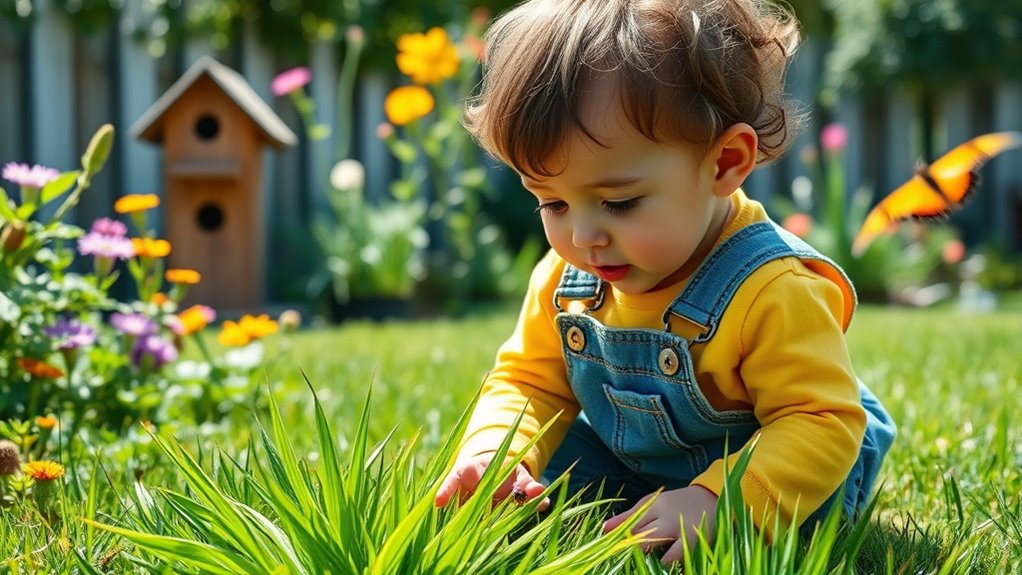
Have you ever considered turning your backyard into a personal nature sanctuary? It’s a perfect way to introduce your toddler to the wonders of the outdoors. As you explore together, you’ll find that even a small yard can become a fascinating classroom filled with colorful plants, buzzing insects, and tiny creatures waiting to be discovered. One of the best ways to nurture your child’s curiosity is by engaging in plant identification. Show them how to look closely at different leaves, flowers, and trees, helping them notice details like shapes, colors, and textures. Use simple language to describe what you see, and encourage your toddler to touch and observe each plant. This active participation will spark their interest and build their confidence in recognizing nature’s variety. As they begin to identify familiar plants, you’ll lay the groundwork for a lifelong appreciation of the natural world. Additionally, introducing nature-inspired decor can enhance their outdoor experience and create a more inviting environment for exploration.
Insect observation is another captivating activity during backyard walks. Kids are naturally curious about bugs and critters, and your yard offers a perfect setting for close-up encounters. Bring a magnifying glass along and help your toddler spot bees, butterflies, beetles, and even tiny ants crawling across the ground. Explain what each insect is doing, such as pollinating flowers or digging tunnels, making the experience both educational and fun. These moments teach your child about the essential roles insects play in the ecosystem, fostering respect and curiosity rather than fear. As you observe, you’ll also help your toddler develop patience and attention to detail, skills that are valuable for all sorts of learning.
Encouraging your child to explore their environment actively makes the experience more meaningful. Ask questions like, “What color is that flower?” or “Can you find a bug that’s red?” This prompts observation and critical thinking. Don’t rush; instead, take your time to notice the small things—like a tiny snail on a leaf or a flower bud just starting to bloom. Your involvement demonstrates that discovering nature is a shared adventure, not just a solo activity. Over time, these walks will become a treasured routine, helping your toddler develop a sense of wonder and confidence in identifying plants and insects. Plus, they’ll learn important lessons about the interconnectedness of life, all from the comfort of your backyard. With a little guidance, your outdoor space can transform into a lively classroom where curiosity flourishes and learning happens naturally.
Conclusion
As you watch your toddler pause to examine a colorful leaf or listen to birds sing, you realize these simple moments spark curiosity and wonder. Just yesterday, a butterfly gently landed on a flower, inviting your child to marvel at nature’s tiny miracles. These unexpected encounters turn your backyard into a living classroom, where every dewdrop and insect becomes a story waiting to be explored. Embrace these coincidences—they’re shaping your child’s love for the outdoors.