
TL;DR

Get baby and family essentials delivered free — and shop member deals
- Fast, free delivery on millions of items
- Access to Prime Big Deal Days deals on October 6–7
- Prime Video, Amazon Music and more included
Choose a baby Halloween costume that fits securely, keeps your baby’s face clear, and allows easy movement. Check for choking hazards and recalls, plan around feeding and diaper changes, and make the outing short enough to suit your baby’s comfort.
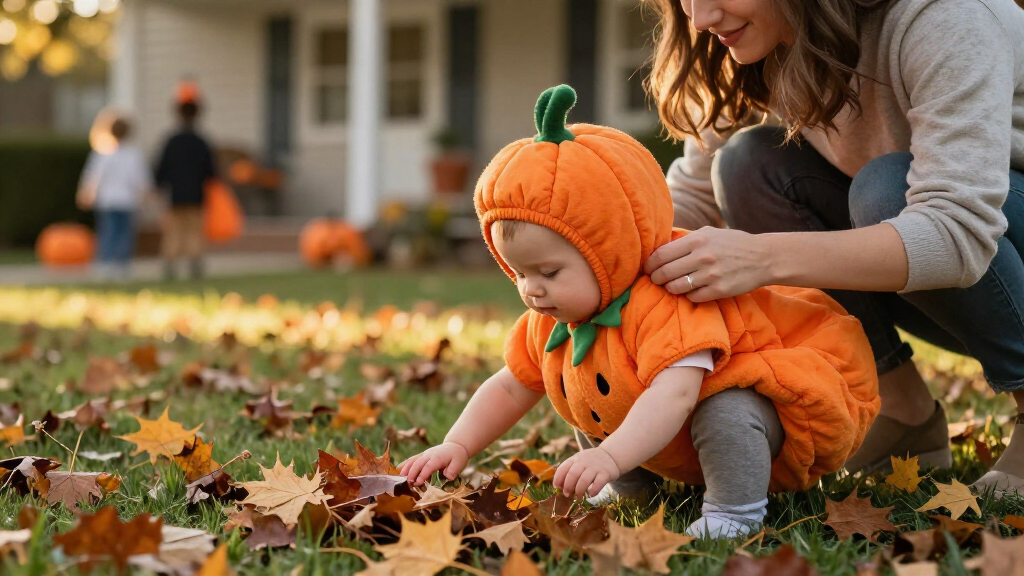
One minute, your baby is a cheerful pumpkin in a soft orange sleeper; the next, they’re tugging at a scratchy hood while you hunt for a diaper-change snap. That’s the difference between a cute costume and one that works for a real evening with a baby.
This guide helps you choose baby Halloween costumes that fit your child, the weather, and your plans. You’ll find practical checks for comfort and safety, ideas for stroller-friendly outfits, and ways to make the celebration special without expecting your baby to last through a long night.
Safety comes first, but that doesn’t mean the outfit has to be complicated. A soft animal sleeper, a pumpkin-colored base layer, or a simple family theme can look festive while leaving plenty of room for naps, feeds, and quick changes.
Choose a soft, well-fitting costume with a clear face and no loose ties, long strings, or small detachable parts.
Check the brand’s size chart, then test the outfit over the layers your baby will actually wear.
For stroller or carrier use, keep the baby’s face visible and avoid bulky clothing beneath carrier straps.
Pick snaps or zippers that make diaper changes manageable, and pack a spare outfit and familiar blanket.
Check CPSC recall information, and remember that a festive sleeper or photo can replace a full costume.
How to choose a baby costume that feels good all evening
Baby Halloween costumes work best when they feel like comfortable clothes first and a costume second. Choose a soft, well-fitting outfit that keeps your baby’s face uncovered, leaves room for easy movement, and won’t bunch up when they sit in a stroller or your arms. These details matter because babies can’t reliably tell you what is bothering them; rubbing seams, restricted movement, or fabric shifting near the face may show up as fussiness instead.
Start with the fabric: rub the inside between your fingers and check the seams, labels, and trim for anything scratchy. A plush one-piece animal suit may look adorable, but a loose hood or stiff appliqué can bother a baby who spends most of the evening against your chest. There’s a tradeoff between a dramatic look and a light, familiar outfit: the more layers and embellishments a costume has, the more there is to irritate skin or shift while your baby is held. Wash a new outfit before use if its care label allows, then try it on briefly at home. A short trial can reveal discomfort before you’re away from home, though it cannot predict every issue during a longer outing.
Check every detail, not just the main garment. Skip long strings, loose ties, small detachable decorations, and accessories that could come off or become choking hazards. Infants explore by mouthing objects, so a decoration that seems securely attached to an adult may still warrant close inspection. Keep the costume away from candles and other open flames, and look up the item in CPSC recall information before you use it. A product’s “safe” marketing language does not replace checking its construction.
For example, if your baby is happiest in cotton pajamas, a pumpkin-print sleeper may be a better fit than a layered character costume with a stiff hat. Age-appropriateness matters: details suitable for an older child may be unsuitable for an infant who mouths objects. Choose a look that matches your baby’s abilities and supervision needs. The simpler option may offer fewer styling choices, but it can make it easier to notice your baby’s cues and respond quickly.
baby Halloween costume soft plush animal onesie
As an affiliate, we earn on qualifying purchases.
As an affiliate, we earn on qualifying purchases.
How to check the fit, size, and costume details
Baby Halloween costumes should fit securely without squeezing, dragging, or covering the baby’s face. Use the brand’s size chart as a starting point, then check how the outfit sits on your own baby; an age label alone cannot tell you whether the sleeves, legs, or neckline will work. Babies vary in proportions, and costume cuts can vary too, so the practical test is how the outfit behaves during ordinary movement—not just whether the number on the label seems right.
- Try it over the intended base layer. If you’ll add a cotton bodysuit, test the costume over that layer rather than over a thin shirt. This helps you catch tightness before the outing. If the extra layer makes the costume restrictive, sizing up may help, but a larger costume can also create trailing or bunching fabric; if neither size works comfortably, choose a different design.
- Check movement and position. Make sure your baby can bend their arms and legs, sit comfortably, and settle into the stroller or carrier without fabric bunching. A costume that feels fine while standing may pull at the neck or gather behind the knees once your baby is seated, so test the position they’ll actually spend time in.
- Inspect openings and fasteners. Look for snaps or zippers that are easy for you to use and do not press into skin. Fast access can make a change less disruptive, especially when your baby is tired, but fasteners should still close securely and stay clear of delicate skin.
- Check all accessories. Keep hats, hoods, and decorative pieces away from the face; remove anything loose, sharp, or likely to come off. Accessories can complete the look, but they add another thing to monitor and are often the first part to shift when a baby is carried.
Imagine a costume that fits perfectly while your baby stands in front of a mirror but rides up under the chin once they’re buckled in. A short test in the actual stroller or carrier can reveal that problem before you leave home. The point is not to keep adjusting a costume throughout the evening; it’s to find out early whether the design works in the position your baby will use.
Costumes should fit closely enough to avoid trailing fabric but comfortably enough for movement and suitable layers. If you’re using a carrier, follow its maker’s instructions, keep your baby’s face visible, and avoid bulky clothing under the straps. Bulky material can affect how the carrier fits, so warmth may need to come from an appropriate layer over the carrier rather than padding underneath its straps; follow the specific carrier guidance. If the outfit only works when pulled tight or piled high, pick another one.
Which costume styles work best for babies?
The most practical baby Halloween costumes are often soft, simple designs that work with your baby’s age and where they’ll spend the evening. One-piece animals, pumpkin outfits, storybook themes, and coordinated family looks can all be festive without needing a face covering or complicated accessories. The right choice depends less on the theme than on how much handling the outfit requires: a baby who will mostly be held may do better in a soft sleeper than in a costume with pieces that need frequent repositioning.
| Costume style | Why it can work | What to check |
|---|---|---|
| Soft sleeper or pajamas | Easy to wear and often simple to change | Fit, fabric, and suitability for the temperature |
| Animal or pumpkin outfit | Creates a clear look with minimal extras | Hood position and securely attached details |
| Family or sibling theme | Makes group photos feel coordinated | Baby’s comfort should guide the design |
| DIY outfit with simple accents | Lets familiar clothes do most of the work | Use lightweight details that cannot come loose |
For a baby who cannot sit or walk yet, choose an outfit that looks good while seated or tucked into a stroller. A themed blanket or soft animal ears for a supervised photo can provide the same visual punch as a full costume, without putting layers and accessories on your baby for hours. The tradeoff is that a photo prop may be less convenient during an outing, so keep it supervised and remove it once the photo is done.
Trends change by year and retailer, but comfort-first sleepers, handmade touches, and coordinated family themes keep returning. For instance, parents can wear simple woodland colors while the baby wears a soft fox-print sleeper. The family still looks connected, and the baby’s outfit stays familiar. Age-appropriate simplicity often makes the best photos, too: a baby’s curious expression is already the star. A coordinated theme does not need identical or elaborate costumes; letting the baby wear familiar clothes can keep the look cohesive without making the baby carry the burden of the theme.
How to dress your baby for the weather and the outing
Dress your baby for the actual weather, not the costume photo online. A comfortable base layer with a removable costume or outer layer can help on a chilly evening, while a warm indoor party may call for a lightweight outfit to prevent overheating. A costume that is warm enough outdoors can become uncomfortable indoors, so a plan for adjusting layers is more useful than choosing one outfit based only on the forecast.
Check the forecast for the time you plan to go out, then think about how long your baby will be outside and whether you’ll be walking, driving, or attending an indoor event. A fleece animal suit might suit a cool evening, but it can feel too warm inside a crowded community hall. Keep an eye on your baby and adjust layers as needed rather than assuming one outfit works everywhere. The practical tradeoff is between adding warmth and making it easy to respond when conditions change; removable layers let you do both, provided they don’t interfere with safe positioning.
For a stroller or carrier, fit matters as much as warmth. Avoid bulky layers beneath carrier straps, and follow the carrier manufacturer’s instructions. Keep your baby’s face visible and clear of blankets or costume fabric. A practical example: dress your baby in a comfortable base layer, bring a separate warm layer for the walk, and remove it once you’re indoors if your baby seems too warm. This approach also means you can shorten the outing without needing to keep your baby dressed for a long stretch.
Allow easy movement when choosing extra layers; thick fabric can bunch around the legs or interfere with how your baby sits. Plan a short neighborhood visit, a community gathering, or photos at home if the weather is poor. There is no required trick-or-treating age. Your baby’s comfort and routine—not the number of houses visited—should shape the plan. A shorter celebration is not a failed version of Halloween; it can be the better choice when weather, naps, or feeding needs make a longer outing uncomfortable.
How to make diaper changes and soothing breaks easier
Choose a costume with quick access to the diaper area and enough flexibility for feeding, cuddles, and rest. Snaps, zippers, and two-piece designs often make changes easier than outfits that require removing several layers, but check that fasteners do not press against your baby’s skin. Easy access can matter more as the evening goes on: a quick change may help you keep a brief outing calm, while a complicated outfit can turn a routine need into extra handling when your baby is already tired.
Before you buy, imagine a real change in a dim hallway or the back seat of a car. Can you open the outfit without pulling it over your baby’s head? Are the snaps easy to reach? A cute costume with a dozen tiny buttons may become frustrating when you need a fast change and your baby is squirming. If the costume is difficult to open, you may be tempted to delay a change or remove multiple layers; choosing a simpler closure reduces that friction, though you should still check that it closes securely.
Pack a small backup kit: a spare everyday outfit, diapers, wipes, and a familiar blanket can make a short outing smoother. If your baby usually needs a feed or nap at a particular time, plan around that routine. For example, take photos after a calm feed, then head out for a brief visit rather than trying to keep a tired baby dressed through a long evening. The backup outfit is not just for spills; it gives you an easy way to end the costume portion if your baby becomes uncomfortable.
Some babies dislike costumes, and that’s a good reason to simplify. Try the outfit for a few minutes at home; if your baby fusses or seems uncomfortable, switch to a festive sleeper or everyday clothes in Halloween colors. Change your baby into their usual safe sleep clothing when it’s time to sleep. A costume is optional; your baby does not need to stay dressed up to make the day memorable. Treating the costume as a brief part of the celebration, rather than an all-evening requirement, leaves room for your baby’s needs to set the pace.
What to do when a full costume is too much
A full costume is not required for a fun Halloween; a themed everyday outfit, supervised photo, or brief celebration can be enough. If your baby resists a hood or layered suit, respect that signal and choose a simpler way to mark the day. Babies have limited ways to communicate discomfort, so repeated fussing or trying to pull at an outfit is a reason to pause and reassess rather than keep dressing them for the sake of a planned look.
Try a soft, Halloween-colored sleeper, a small headband that stays safely away from the face, or a themed blanket for a supervised photo. Avoid masks because they can interfere with breathing, vision, or comfort. Even a soft hat should fit safely and stay clear of your baby’s face; take it off if it slips or your baby objects. Accessories may create a stronger costume effect, but that visual benefit is small if the item needs constant adjustment or gets in the way of seeing your baby clearly.
DIY can keep the outfit affordable and familiar. Start with clothes your baby already tolerates, then add a few lightweight details that are securely attached. Avoid sharp objects, loose pieces, irritating materials, and anything that could cover the face. For instance, a parent might pair a plain orange sleeper with a pumpkin-print blanket for a quick photo, rather than attaching small felt pieces to the baby’s clothes. This keeps the theme visible without adding decorations the baby could pull off or mouth.
Check the garment and accessories before each use, and look for CPSC recalls before relying on a purchased costume. The most important aspects remain fit, comfort, and clear breathing—not how elaborate the outfit looks. If the baby’s costume becomes a struggle, let the photo, family colors, or a festive storybook do the work instead. Choosing a simpler option is a practical adjustment, not a compromise on making the occasion special.
Frequently Asked Questions
What makes a Halloween costume safe for a baby?
Choose a comfortable, well-fitting outfit with the baby’s face uncovered and no loose ties, long strings, or small detachable pieces. Check the costume and accessories before use, and search CPSC recall information for the product.
Can my baby wear a Halloween mask?
A mask can interfere with breathing, vision, or comfort, so choose a soft hat or simple headband instead if your baby tolerates it. Keep any accessory away from the face and remove it if it shifts or bothers your baby.
How should I dress my baby for cold Halloween weather?
Use comfortable layers you can adjust, and check your baby regularly for signs of being too warm or cold. If you use a stroller or carrier, follow the manufacturer’s instructions and avoid bulky layers beneath carrier straps.
How can I make diaper changes easier in a costume?
Look for accessible snaps or zippers, or choose a two-piece outfit that opens quickly. Try the costume at home first, and pack a spare everyday outfit in case the costume becomes uncomfortable or messy.
What if my baby refuses to wear the costume?
Keep the outfit simple and stop if your baby seems uncomfortable. A themed sleeper, Halloween-colored clothes, or a supervised photo with a festive blanket can still make the occasion special.
Conclusion
Pick the outfit your baby can comfortably wear, move in, and come out of quickly—not the one with the most pieces. Check its fit, inspect every accessory, look for recalls, and let your baby’s routine set the length of the celebration.
A soft pumpkin sleeper and one bright family photo can hold more Halloween magic than a perfect costume worn through tears. Keep your baby comfortable, and the memories will take care of themselves.
Cold & flu season Picks
humidifiers
As an affiliate, we earn on qualifying purchases.