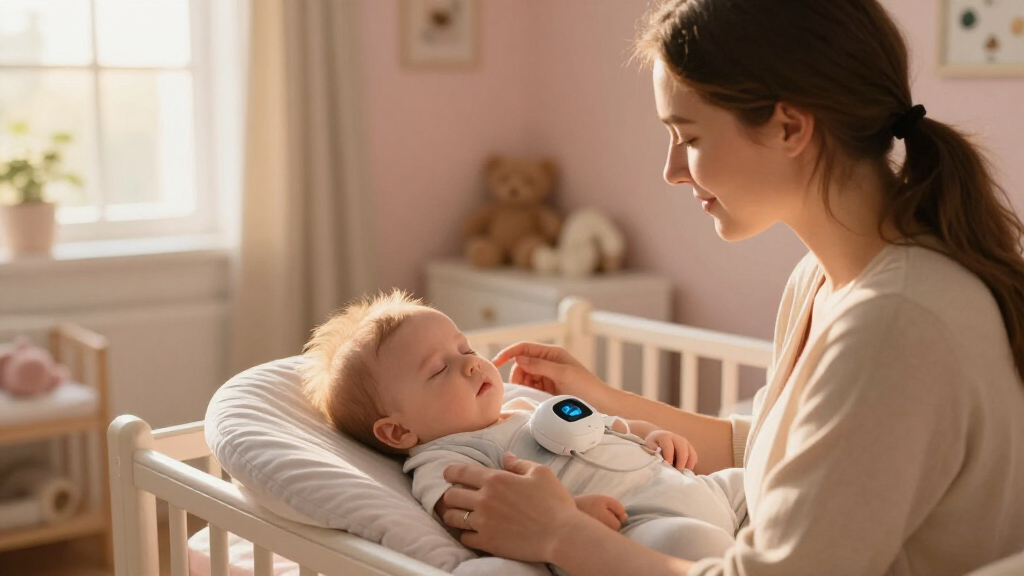
The best baby sleep training devices combine consistent sound, gentle light cues, and simple routines so your baby learns when it’s time to sleep — and, just as importantly, when it’s okay to wake. My top pick is the Hatch Baby Sound Machine & Night Light Routine Builder, because its programmable wind-down routines do the actual training work rather than just masking noise. If you want smart control on a smaller budget, the Dreamegg Sound Machine Baby with app control and 34 sounds is the strongest value, and the Hatch Go is the pick to grab for travel and naps on the move. The main tradeoff in this category is between simple, affordable soothers that play sounds and true routine-builders that cost more but help teach sleep habits over time. Read on for the full breakdown of all eight devices.
Complete the kit


Key Takeaways
- Only the two Hatch models and the Frida Baby 3-in-1 offer true sleep-training routines with scheduled light and sound changes — the rest are soothers that support sleep rather than teach it.
- App control (Dreamegg, Hatch, Frida Baby) is the single biggest usability upgrade, letting you adjust sound and light from bed without opening the door and risking a wake-up.
- Crib-attached toys like the Baby Einstein Sea Dreams Soother and VTech Myla the Monkey are the cheapest options here, but babies can outgrow or even activate them mid-sleep, which can backfire during training.
- Battery-backed portability separates the Hatch Go and VTech Myla from outlet-dependent models — a deciding factor if you travel or need nap-time coverage outside the nursery.
- The VTech V-Hush Pro 2 is the only pick with built-in stories and songs, making it the longest-lived option as your baby moves from sleep training into toddler bedtime routines.
| Momcozy Smart Baby Sound Machine with Night Light |  | Best Overall | Number of Sounds: 34 | Sound Types: White noise, fan sounds, lullabies, nature sounds | Night Light Colors: 7 | VIEW LATEST PRICE | See Our Full Breakdown |
| Baby Einstein Sea Dreams Soother Musical Crib Toy and Sound Machine |  | Best for Young Babies | Duration: 25 minutes | Fits Crib Circumference: Up to 10.5 inches | Controls: Light and volume control | VIEW LATEST PRICE | See Our Full Breakdown |
| Dreamegg Sound Machine Baby – White Noise, Night Light, Alarm Clock, App Control, 34 Sounds |  | Best for Routine Building | Number of Sounds: 34 | Sound Types: Nature, ambient, white noise, melodies | Night Light Modes: Solid Color, Sunlight, Dynamic | VIEW LATEST PRICE | See Our Full Breakdown |
| VTech Myla the Monkey Baby Sleep Soother with White Noise and Night Light |  | Best Portable Pick | Sounds: 5 ambient sounds including white noise and trickling stream | Melodies: 5 calming melodies | Night Light: Soft-glow with adjustable brightness | VIEW LATEST PRICE | See Our Full Breakdown |
| Frida Baby 3-in-1 Alarm Clock, Sound Machine, Nightlight, Bluetooth Enabled |  | Best for Toddlers | Sound Options: 7 sounds: white noise, pink noise, heartbeat, lullaby, bird, waves, wind | Timer Options: 15, 30, 60 minutes | Nightlight: Colorful with 3 warm glow levels and blackout mode | VIEW LATEST PRICE | See Our Full Breakdown |
| VTech Baby Soothing Sleep Trainer V-Hush Pro 2 with Stories, Songs & Sounds |  | Best Feature-Rich Entertainer | Preloaded Content: 200+ items (100 stories, 100 classical songs, 10 lullabies, 10 natural sounds) | Night Light: Touch-controlled, 250+ colors | Ceiling Projector: Yes, six gentle projection frames | VIEW LATEST PRICE | See Our Full Breakdown |
| Hatch Go Portable Sound Machine & Sleep Soother for Babies & Kids (Putty) |  | Best Portable Pick | Number of Sounds: 10 preset sounds | Battery Life: Up to 15 hours | Charging: USB-C rechargeable | VIEW LATEST PRICE | See Our Full Breakdown |
| Hatch Baby Sound Machine & Night Light Routine Builder |  | Best for Routine Building | Sound and Light: Customizable sounds and night light colors | Scheduling: App-programmable sleep schedules and routines | Connectivity: Wi-Fi with app control | VIEW LATEST PRICE | See Our Full Breakdown |
More Details on Our Top Picks
Momcozy Smart Baby Sound Machine with Night Light
Among plug-in nursery units, this option stands out for balancing sound variety and app-based scheduling without a steep learning curve. The 34 sounds cover the full range parents actually use — white noise, fan, lullabies, nature — and the automatic on/off scheduling means you can program naps and bedtime once instead of sneaking into the room nightly. Compared with the Dreamegg Sound Machine Baby, which matches its sound count, the Momcozy trades the routine-builder features for a simpler setup, which many exhausted parents will prefer. Compared with portable units like the VTech Myla the Monkey, it offers far richer sound at the cost of being tethered to an outlet. The 2.4G-only Wi-Fi restriction is a real annoyance on modern routers, and there’s no battery backup.
Pros:- 34 sounds spanning white noise, fan, lullabies, and nature gives genuine variety as baby’s preferences change
- Smartphone app control lets you adjust volume or light without entering the nursery
- Automatic scheduling builds predictable nap and bedtime routines
- Multi-color night light doubles as a nursery light for night feeds
Cons:- Plug-in only — a power outage or an outlet-free room makes it useless
- 2.4G Wi-Fi limitation can cause setup headaches on newer dual-band routers
Best for: Parents setting up a dedicated nursery who want scheduled, app-controlled white noise without fussing with the device at night
Not ideal for: Travelers or families with mesh routers on 5G-only bands — it needs a constant outlet and 2.4G Wi-Fi
- Number of Sounds:34
- Sound Types:White noise, fan sounds, lullabies, nature sounds
- Night Light Colors:7
- Power:Plug-in
- Wi-Fi Compatibility:2.4G only
- App Control:Yes
- Waterproof Rating:IP00
Our verdict“If you want one set-it-and-forget-it unit that anchors a nursery sleep routine, this is the most complete package for the price.”
Baby Einstein Sea Dreams Soother Musical Crib Toy and Sound Machine
This crib-mounted soother plays a different position than sound machines: it’s a visual and auditory distraction for babies too young to self-soothe, with drifting sea-life light effects that hold a newborn’s attention during the bassinet-to-crib months. The included remote (12-foot range) lets a parent restart the 25-minute cycle from the doorway — a genuine sleep-saver compared with physically touching the crib. Where the Momcozy Smart Baby Sound Machine is built for all-night white noise, this unit is built for winding down; the 25-minute limit means it won’t run overnight. Fit is the biggest risk: it wraps rails up to 10.5 inches in circumference, so chunkier convertible cribs may not accommodate it. Battery power adds flexibility but recurring cost.
Pros:- Combined light show and sound captivates young babies at bedtime
- Remote control with 12-foot range avoids disturbing a drowsy baby
- Adjustable light and volume let you dial stimulation down gradually
- Crib mounting keeps it within baby’s sightline, where floor units can’t
Cons:- 25-minute play cap makes it unsuitable for all-night soothing
- 10.5-inch rail fit limit excludes some larger or convertible crib rails
Best for: Parents of newborns to about 9 months who want a crib-side wind-down aid combining lights, music, and remote restarts
Not ideal for: Parents seeking continuous overnight white noise or those with wide-rail convertible cribs
- Duration:25 minutes
- Fits Crib Circumference:Up to 10.5 inches
- Controls:Light and volume control
- Remote Range:12 feet
- Sound and Light:Calming light effects with music
- Mounting:Crib rail attachment
Our verdict“A focused wind-down tool for the earliest months — buy it for the light show, not as your household’s primary sound machine.”
Dreamegg Sound Machine Baby – White Noise, Night Light, Alarm Clock, App Control, 34 Sounds
What separates this model from the Momcozy Smart Baby Sound Machine — its closest rival in sound count — is its sleep-training toolkit: a routine builder, alarm clock, and timer designed to teach wake and sleep cues rather than just mask noise. The night light goes beyond static colors with Sunlight Breathing and dynamic fading modes, which pair naturally with a gradual wake-up routine for toddlers. The tradeoff is complexity; parents who want to press one button at bedtime may find the feature set more than they need, and full functionality requires completing app setup first. Its travel-friendly size gives it an edge over bulkier nursery units, though it can’t match the grab-and-go clip design of the VTech Myla the Monkey. This pick makes the most sense for parents actively shaping a schedule, not just surviving the night.
Pros:- Routine builder and alarm clock teach predictable sleep and wake cues over time
- Dynamic night light modes like Sunlight Breathing support gradual wake-ups
- App control allows remote management from another room
- Compact, travel-friendly form factor works beyond the nursery
Cons:- App setup is required before the device reaches its full potential
- Feature density can overwhelm parents who want simple operation
Best for: Parents committed to structured sleep schedules who want one device to handle routines, wake-up cues, and white noise as baby grows
Not ideal for: Parents who want minimal setup — full functionality depends on the app, and the feature depth can feel excessive
- Number of Sounds:34
- Sound Types:Nature, ambient, white noise, melodies
- Night Light Modes:Solid Color, Sunlight, Dynamic
- Dynamic Lighting Options:Color Changing, Color Fading, Sunlight Breathing
- Sleep Routine Features:Timer, alarm clock, customizable routines
- App Control:Yes, via Bluetooth/Wi-Fi
Our verdict“The strongest choice if your goal is teaching long-term sleep habits rather than just masking noise tonight.”
VTech Myla the Monkey Baby Sleep Soother with White Noise and Night Light
Every other device in this lineup lives in the nursery; the Myla the Monkey lives wherever you are. Its stretchable tail clips to strollers, car seats, and doorknobs, and the rechargeable battery means no cord-hunting on road trips — a clear advantage over the plug-in Momcozy Smart Baby Sound Machine for travel days. The compromise is scope: five melodies and five ambient sounds pale next to the 34-sound libraries of the Momcozy or Dreamegg, and the 60-minute auto-off can cut sound mid-nap in the car. The soft-glow light with adjustable brightness is genuinely useful for nighttime diaper changes on the go. Plastic construction keeps it light and inexpensive but won’t survive enthusiastic toddler handling indefinitely. This model is better suited to being your second soother — the one in the diaper bag — rather than your only one.
Pros:- Clip-on tail attaches securely to strollers, car seats, and cribs
- Rechargeable battery eliminates disposable-battery costs on trips
- Adjustable soft-glow light doubles as a portable night light
- Ten total sounds and melodies cover the basics of soothing
Cons:- 60-minute auto-off can end sound before a longer nap finishes
- Lightweight plastic build is less durable around older toddlers
Best for: Families who travel often or need on-the-go soothing for car rides, stroller walks, and vacations
Not ideal for: Parents seeking an all-night primary sound machine — the sound library and 60-minute timer are too limited
- Sounds:5 ambient sounds including white noise and trickling stream
- Melodies:5 calming melodies
- Night Light:Soft-glow with adjustable brightness
- Battery:Rechargeable
- Auto-off Timer:60 minutes
- Attachment:Stretchable tail for stroller, doorknob, or car seat
Our verdict“Buy this as your travel companion soother, not your nursery workhorse — it earns its spot in the diaper bag.”
Frida Baby 3-in-1 Alarm Clock, Sound Machine, Nightlight, Bluetooth Enabled
While most picks here target infancy, this device is built for the toddler sleep-training phase — the “stay in bed until the light changes” years. The toddler lock is the standout detail: it stops little hands from cranking the volume or switching sounds at 3 a.m., something the Dreamegg Sound Machine Baby, with its richer routine features, doesn’t address as directly. The blackout mode and three warm glow levels support the visual cue system many sleep consultants recommend, and Bluetooth streaming lets parents play personal playlists beyond the seven built-in sounds. Compared with the Momcozy, the sound library is smaller, but that matters less for toddlers, where the light-cue system does the heavy lifting. Initial setup leans fiddly, and it’s genuinely wasted money on a newborn.
Pros:- Toddler lock prevents middle-of-the-night setting changes by curious hands
- Nightlight with three glow levels and blackout mode supports color-coded sleep cues
- Bluetooth streaming adds personalized audio beyond the 7 built-in sounds
- Combined alarm, sound machine, and nightlight replaces three separate devices
Cons:- Initial setup process is more involved than a basic sound machine
- Age-limited design offers little value beyond the toddler years
Best for: Toddler parents working on independent bedtimes and morning wake-up rules with light-based cues
Not ideal for: Infant-focused families — the alarm-clock and toddler-lock features are useless for babies, and simpler machines cost less
- Sound Options:7 sounds: white noise, pink noise, heartbeat, lullaby, bird, waves, wind
- Timer Options:15, 30, 60 minutes
- Nightlight:Colorful with 3 warm glow levels and blackout mode
- Connectivity:Bluetooth enabled
- Child Safety:Toddler lock
- Additional Features:Backlit buttons, auto shut-off
Our verdict“The right tool for toddler sleep training with light cues — skip it until your child is old enough to test the rules.”
VTech Baby Soothing Sleep Trainer V-Hush Pro 2 with Stories, Songs & Sounds
Where the Hatch Go keeps things deliberately minimal, the VTech V-Hush Pro 2 goes in the opposite direction: 200+ pieces of preloaded content, including 100 stories and 100 classical songs, means there’s enough variety to keep a bedtime routine fresh for years. The ceiling projector with six gentle frames is the standout differentiator in this lineup — nothing else here turns the nursery ceiling into part of the wind-down ritual. Add a 250-color touch night light and a down-firing 360° Bluetooth speaker, and this model doubles as an audio device once your child outgrows the sleep-training phase. The tradeoff is complexity: setup is genuinely involved, recording your own voice messages requires the app, and parents who want a set-it-and-forget-it device may find the feature count more burden than benefit. Compared with the simpler Hatch Baby Routine Builder, it skips the subscription entirely, which matters for long-term value.
Pros:- Massive library of 200+ preloaded stories, songs, and sounds with no subscription needed
- Ceiling projector and 250-color night light create a genuinely multi-sensory wind-down environment
- App-based voice recording lets parents add personalized comfort messages
- High-definition 360° Bluetooth speaker keeps the device useful well beyond the baby years
Cons:- Setup is multi-step and app-dependent, which is frustrating for a middle-of-the-night device
- Feature overload — many buyers will never touch most of the content or color options
Best for: Parents who want a single device that covers sound, light, projection, and storytelling from infancy through toddlerhood — without subscription fees
Not ideal for: Sleep-deprived caregivers who want plug-and-play simplicity — the multi-feature setup and app dependency add friction at exactly the wrong hour
- Preloaded Content:200+ items (100 stories, 100 classical songs, 10 lullabies, 10 natural sounds)
- Night Light:Touch-controlled, 250+ colors
- Ceiling Projector:Yes, six gentle projection frames
- Bluetooth Speaker:High-definition, down-firing, 360° sound
- Voice Recording:Yes, via free app
- Subscription Required:No
Our verdict“This pick makes the most sense for families who see bedtime as a full routine — stories, light, and sound — rather than just white noise.”
Hatch Go Portable Sound Machine & Sleep Soother for Babies & Kids (Putty)
The Hatch Go answers a question the other devices in this roundup don’t even ask: what happens when your baby needs to sleep somewhere that isn’t the crib? With a clip that attaches to strollers and car seats, a 15-hour rechargeable battery, and zero dependence on WiFi or an app, it’s the only option here that genuinely works on the road. Compared with the VTech Myla the Monkey — the other travel-friendly contender — the Hatch Go offers longer battery life and easier one-handed controls, though its 10 sounds can’t be expanded or customized. That simplicity is the whole point: no phone pairing at 2 a.m., no firmware updates, no learning curve. The flip side is that it does one thing only. Unlike the VTech V-Hush Pro 2, there’s no projector, no stories, no speaker function — and buyers who want programmable schedules will need a nursery unit like the Hatch Routine Builder instead.
Pros:- Clips onto strollers, bags, and car seats for true on-the-go use
- Up to 15 hours of battery life covers naps and overnight without recharging
- No app, WiFi, or Bluetooth required — controls work instantly with one hand
- Built from recycled materials in a range of neutral colors
Cons:- Hard limit of 10 sounds with no way to add or customize
- No scheduling, night light, or connectivity features — strictly a sound machine
Best for: Families who travel frequently or rely on stroller naps and need reliable sound away from the nursery
Not ideal for: Parents building a structured bedtime routine at home — there are no schedules, lights, or content beyond the 10 preset sounds
- Number of Sounds:10 preset sounds
- Battery Life:Up to 15 hours
- Charging:USB-C rechargeable
- Portability:Built-in clip for strollers, bags, and car seats
- Connectivity:None — no app, WiFi, or Bluetooth
- Materials:Recycled materials
- Colors:Mint, Honey, Peach, Putty, Slate, Greige
Our verdict“If your baby’s sleep needs to travel with you, this is the pick; if sleep happens mostly in the crib, spend the money on a fuller-featured unit instead.”
Hatch Baby Sound Machine & Night Light Routine Builder
This is the device for parents whose real problem isn’t noise — it’s structure. The Hatch Routine Builder pairs customizable sounds and lights with app-programmed sleep schedules, so the same unit signals nap time, bedtime, and okay-to-wake time without a parent in the room. That scheduling muscle is what separates it from the Dreamegg, which offers more raw sound variety (34 sounds) but less routine logic, and from the Hatch Go, which has no scheduling at all. Remote app control also means you can adjust volume or dim the light from the hallway without opening the door — a genuinely useful outcome during night weaning or early-morning wake-ups. The catch: the best features sit behind the Hatch+ subscription, and only three months are included. Compared with the VTech V-Hush Pro 2, which charges nothing ongoing, the total cost of ownership climbs if you keep subscribing. Setup is also more involved than simpler units.
Pros:- Programmable schedules tie lights and sounds to naps, bedtime, and wake-up times
- App control lets parents adjust settings remotely without entering the room
- Personalized routines adapt as your child moves from infant to toddler
- Three months of Hatch+ included to trial the full feature set
Cons:- Best scheduling and content features require an ongoing Hatch+ subscription after the trial
- Setup is more involved than plug-and-play units like the Hatch Go
- Fewer sound presets than competitors like the Dreamegg’s 34 options
Best for: Parents of infants and toddlers who want time-based light and sound cues to enforce nap schedules and okay-to-wake times
Not ideal for: Budget-conscious buyers who resist subscriptions — the routine features that justify the price largely live behind Hatch+ after month three
- Sound and Light:Customizable sounds and night light colors
- Scheduling:App-programmable sleep schedules and routines
- Connectivity:Wi-Fi with app control
- Subscription:3 months of Hatch+ included
- Ages:Infant through toddler
- Colors:Mint, Peach, Putty, Greige, Beechwood
Our verdict“This model is better suited to parents who want a device that enforces the routine itself, provided they’re comfortable paying for Hatch+ beyond the trial.”
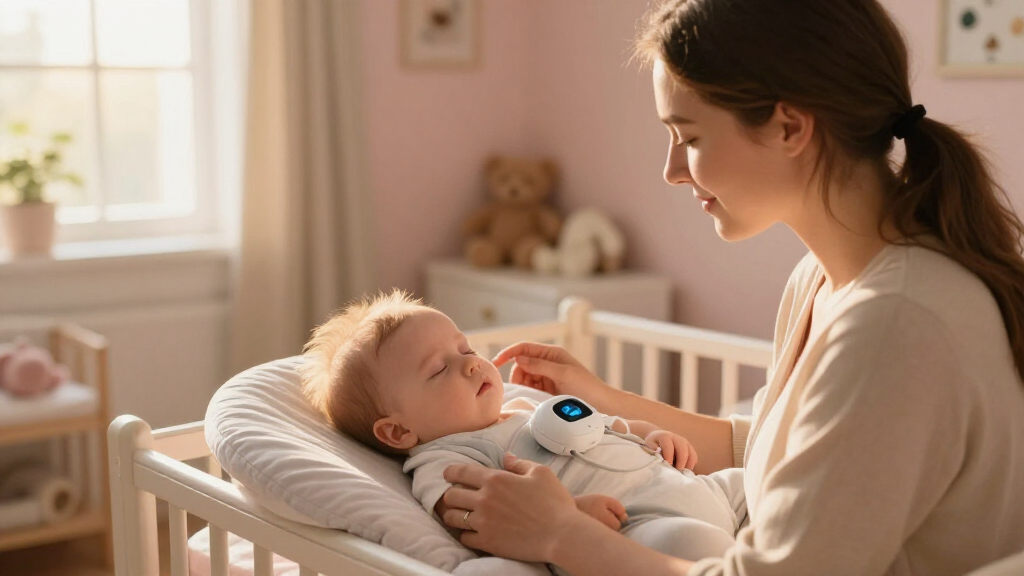
How We Picked
I ranked these devices on five factors that actually affect sleep training outcomes: routine capability (can it run scheduled wind-down and wake-up programs?), sound quality and variety (white noise depth, lullabies, nature sounds, and volume range), light function (dimmable night lights and color cues that signal sleep versus wake time), ease of use at 2 a.m. (app control, physical buttons, memory settings), and value over time — whether the device stays useful past the infant stage.
The ranking logic is straightforward: devices that actively teach sleep habits through programmable routines sit at the top, versatile mid-range machines fill the middle, and single-purpose soothers rank lower despite lower prices, because they solve tonight’s fussiness without building longer-term habits. Where two devices tie on function, I gave the edge to the one with better controls or a longer useful lifespan.
Factors to Consider When Choosing Baby Sleep Training Devices
Before settling on a specific device, it helps to understand what separates a genuine sleep training tool from a glorified noise machine — and which mistakes parents most often make when shopping for one.
Soothing Versus Training: Know What You’re Buying
The most common mistake in this category is buying a soother and expecting it to train sleep. A device that plays white noise helps your baby fall asleep tonight, but a routine builder with scheduled light and sound programs teaches the association between cues and sleep that pays off for months. If your baby is under four months, a simple soother is genuinely all you need — sleep training formally starts later, so paying for programmable routines now may be premature. Parents of babies six months and older get far more from routine-capable devices, because timed wind-downs and wake-up light cues align with established methods like fading and cue-based approaches. Ask yourself whether you’re solving a short-term fussy phase or building a long-term habit before deciding how much to spend.
Sound Variety and Volume Range
Not all white noise is equal. Machines with only a handful of sounds tend to rely on looped audio, and some babies notice the loop point and stir at the gap — look for devices with 20-plus sounds or non-looping noise generation. Volume range matters more than maximum loudness: you want a quiet low end for newborns (pediatric guidance recommends keeping nursery sound around 50 decibels) and enough headroom to mask household noise in a busy home. A timer function sounds convenient but can undermine training, since sound shutting off mid-sleep-cycle is a classic cause of early waking. Continuous overnight operation, which every Hatch, Dreamegg, and Frida model here supports, is the safer default.
App Control Versus Physical Buttons
Remote control is the feature parents underestimate most. Walking into the room to adjust a sound machine — even quietly — frequently resets a drowsy baby and undoes twenty minutes of settling. App or Bluetooth control lets you fix volume, change sounds, or trigger a feed-back-to-bed routine from the hallway or your own bed. The tradeoff: app-dependent devices are harder for grandparents or daycare providers to operate, and a phone battery dying at bedtime is a real vulnerability. The best designs, like the Frida Baby 3-in-1, pair app control with simple physical buttons so anyone can run the basics. If multiple caregivers will use the device, prioritize that dual approach.
Light Cues and the Wake-Up Problem
A dimmable night light is table stakes, but color-programmable lights are what make early-morning wakings trainable. The idea is simple: a red or amber glow means sleep time, and a green or yellow glow means it’s okay to get up — a system toddlers grasp surprisingly fast. Devices like the Hatch Routine Builder and Frida Baby clock are built around this progression, which is why they hold value well past age two. One caution: bright or blue-shifted lights near bedtime can suppress melatonin, so check that the low brightness setting is genuinely dim, not just less bright. If early rising is your family’s specific struggle, light programming should be non-negotiable on your shortlist.
Placement, Portability, and Safety
Where the device lives shapes what you should buy. Crib-attached soothers sit within arm’s reach of your baby, which is engaging by day but raises two issues: babies who can activate the toy themselves may wake fully at 3 a.m. to play, and corded devices must never go inside a crib. Standalone units belong on a dresser at least three feet from the crib, which means volume and projection quality matter more than for close-range toys. For families who travel, visit grandparents often, or need naps in the stroller or car, a battery-powered portable like the Hatch Go prevents the routine from collapsing the moment you leave home. Consistency is the engine of sleep training, so a device that only works in one outlet in one room is a weaker tool than it appears.
Lifespan and Total Cost
Cheap soothers are cheap because they’re disposable — most are outgrown within a year. When comparing prices, calculate cost per year of use instead of sticker price: a $70 routine builder that lasts from infancy through preschool beats a $25 crib toy replaced twice. Devices with stories, alarms, and time-to-wake features (the V-Hush Pro 2, Frida Baby, and both Hatch models) remain useful for older siblings, which halves the effective cost for growing families. Subscription features deserve scrutiny too — some smart sound machines gate premium content behind monthly fees, so check what works offline before buying. The best value in this category is almost never the cheapest box on the shelf.
Frequently Asked Questions
At what age should I start using a sleep training device?
Sound machines are safe and often helpful from the newborn stage, as long as you keep volume moderate (around 50 decibels) and place the unit across the room rather than on the crib rail. Formal sleep training methods generally aren’t recommended until a baby is around four to six months old, when they’re developmentally ready to self-soothe. That means a simple soother like the VTech Myla the Monkey makes sense early on, while a routine builder like the Hatch is an investment you’ll activate fully a few months in. If you buy a routine-capable device from the start, you can use its sound and light functions from day one and add programmed routines when your baby is ready — no need to buy twice.
Will my baby become dependent on white noise to sleep?
Yes, most babies do form an association with consistent sound — but that’s not the problem parents fear it is. Sound dependence is easy to maintain (the machine does the work) and simple to fade later by gradually lowering the volume over a couple of weeks, typically around the toddler years. The bigger risk is inconsistency: a machine that shuts off on a timer, like some crib soothers, can cause the exact night wakings you’re trying to prevent. That’s why I favor continuous-play devices with app control, such as the Dreamegg or Hatch models. Treat white noise as a sleep cue you control, not a crutch you’re stuck with.
Are crib-attached soothers like the Baby Einstein Sea Dreams safe for overnight use?
Crib toys with straps are generally designed to meet safety standards for infant use, but they belong on the outside of the crib rail, secured tightly, and should be removed once your baby can push up or grab at them — usually around five or six months. Battery compartments and dangling elements become grab hazards as mobility increases. Overnight, there’s also a behavioral wrinkle: babies who learn to hit the activation button may wake themselves fully to replay the music. Many parents use crib soothers for supervised wind-downs and naps, then rely on a standalone machine like the Frida Baby 3-in-1 for overnight. If overnight use is your priority, skip the crib toy category entirely.
Is a cheaper sound machine enough, or do I need a smart routine builder?
It depends entirely on what problem you’re solving. If your baby falls asleep fine but wakes at every household noise, a $30-to-$50 machine with good continuous white noise — the Dreamegg is the standout here — solves it for a fraction of the price. If your struggles involve bedtime resistance, early morning wakings, or inconsistent routines, programmable devices earn their cost, because scheduled light and sound cues do the teaching across weeks, not just the soothing tonight. Smart features like app control also prevent the accidental wake-ups that come with walking in to adjust settings. As a rule of thumb: buy the cheap machine for noise problems, buy the routine builder for habit problems.
Can one device work for both my baby and my toddler?
Often yes, and that’s the smartest way to shop if you have or plan on having multiple kids. Devices built around wake-up light colors and audio variety — the Hatch Routine Builder, Frida Baby 3-in-1, and VTech V-Hush Pro 2 — transition naturally from infant white noise to toddler time-to-wake training and bedtime stories. The V-Hush Pro 2 is especially strong for this, since its story library stays relevant through the preschool years. Single-purpose devices like crib soothers and portable units don’t make this leap well; the Hatch Go, for example, remains useful mainly as a travel sound machine. If lifespan matters to you, prioritize devices with an alarm clock and programmable colors from the start.
Conclusion
The right pick here depends less on price and more on what stage of sleep you’re actually fighting. For best overall, the Hatch Baby Sound Machine & Night Light Routine Builder earns the top spot because it’s the only device that fully automates sleep training cues, from wind-down routines to wake-up lights, and stays useful for years. The Dreamegg Sound Machine Baby is the clear best value — app control and 34 sounds at a mid-range price make it ideal for noise problems rather than habit problems. For best premium, the VTech V-Hush Pro 2 justifies its cost with stories, songs, and sounds that carry your child from infancy into the toddler years.
For beginners and newborn parents, the Momcozy Smart Sound Machine offers gentle sound and light without overwhelming setup, while the Baby Einstein Sea Dreams Soother and VTech Myla the Monkey suit tight budgets and supervised naps — just don’t expect training from them. The Frida Baby 3-in-1 is my pick for toddler households battling early wake-ups, thanks to its clock and light cues. And for a specific need — travel and naps on the go — the Hatch Go keeps your routine intact anywhere. Match the device to your actual sleep problem, and you’ll get months of use instead of a drawer full of unused soothers.