
TL;DR

Turn the school run and nap time into listening time
- Thousands of audiobooks, podcasts and originals
- Listen on your phone, tablet or Echo — also offline
- Cancel anytime
Baby safety gates are essential for preventing access to hazards like stairs and kitchens. Proper selection, correct installation, and regular checks are key to keeping your child safe—these are the most important tips to follow.
Imagine a quiet afternoon, your little one suddenly crawling toward the staircase. Your heart races. Baby safety gates aren’t just a piece of furniture—they’re your first line of defense against everyday hazards. But not all gates are created equal, and choosing the right one can feel overwhelming.
In this guide, you’ll learn how to pick the safest gate, install it properly, and keep it in top shape. Because when it comes to your child’s safety, every detail matters.
Always use a hardware-mounted gate at the top of stairs, not pressure-mounted.
Check for certification labels like ASTM F1004 or EN 1930 to verify safety compliance.
Measure your openings carefully and match the gate’s specifications to avoid dangerous gaps.
Inspect and tighten hardware monthly—don’t wait for damage to become a safety risk.
Replace or remove gates when your child can climb over, open, or defeat them—developmental progress trumps age.
How to Spot a Safe Baby Safety Gate in Seconds
Not all gates are built the same. A quick glance can tell you if a gate is safe or a potential hazard. Look for a certification label from trusted standards like ASTM F1004 or EN 1930. These labels indicate that the gate has undergone rigorous testing to ensure it can withstand the forces exerted by a curious child. Check the mounting system: hardware-mounted gates screw into the wall or banister, providing a sturdy and immovable barrier. In contrast, pressure-mounted gates rely on tension and can shift or dislodge under pressure, especially at the top of stairs where stability is critical. Avoid pressure-mounted gates at the top of stairs because they can become a safety risk if they shift or accidentally come loose when your child pushes or leans on them.
Test the gate’s fit and stability. Push and pull it firmly from different angles. If it wobbles, feels loose, or moves easily, it’s not secure enough. A reliable safety gate should be firmly anchored, resistant to climbing, and designed to prevent children from squeezing through or getting trapped. Remember, the safety of the gate directly correlates with how well it can withstand active attempts by a child to climb or push through it, which is why stability and proper installation are non-negotiable.
As an affiliate, we earn on qualifying purchases.
Choosing the Right Baby Safety Gate for Your Home
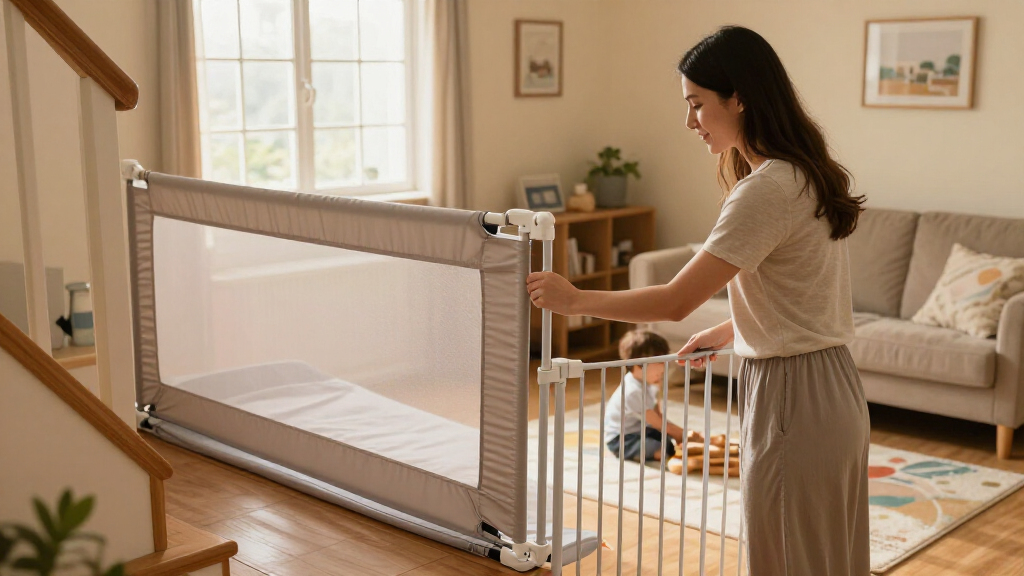
Picking a gate isn’t only about safety standards. It’s about understanding how the gate interacts with your specific environment and the potential risks involved. For example, a hardware-mounted gate provides a fixed, secure barrier ideal for the top or bottom of stairs because it’s less likely to shift or be dislodged—crucial in preventing falls. On the other hand, pressure-mounted gates are more convenient for doorways or level spaces where stability is less of a concern but may be less reliable for high-risk areas. The tradeoff is between ease of installation and maximum security. Using a retractable mesh gate can be advantageous for wide or irregular openings, but only if the tension is properly set and the material is durable enough for your child’s activity level. A mismatch—such as using a pressure-mounted gate at the top of stairs—can create dangerous gaps or allow a child to climb over, defeating the gate’s purpose. Always consider the specific risks of your environment, and match the gate type accordingly, ensuring it meets safety standards and manufacturer recommendations for your intended location.
Top of Stairs? Here’s How to Keep It Safe
Stair safety is non-negotiable because falls from stairs can cause serious injuries or even be fatal. Using a hardware-mounted gate specifically rated for top-of-stair use is essential. These gates should be securely mounted into wall studs or solid wood using proper anchors—never drywall—since drywall alone cannot support the force exerted during accidental pushes or falls. The gate must swing away from the stairs to prevent tripping or accidental opening over the edge. Some gates open inward, which can be safer because they don’t obstruct the pathway or risk falling over the edge if they swing outward. Position the gate as close to the bottom step as the manufacturer recommends, ensuring your child cannot crawl or climb over several steps to reach the bottom—this minimizes the risk of tumbling down multiple stairs. Proper placement and sturdy installation are critical to effectively preventing falls, which are among the leading causes of injury in young children.
Understanding Safety Standards and Certifications
In the US, the Consumer Product Safety Commission sets safety standards for child gates, based on ASTM F1004. These standards ensure gates can withstand pulling, pushing, and climbing forces typical of active children. Look for products with clear labeling, detailed instructions, and a certification mark like JPMA (Juvenile Products Manufacturers Association). Such marks mean the gate has been tested and approved for safety and durability, giving you peace of mind. In Europe, EN 1930 is the main safety standard for child gates, emphasizing secure locking mechanisms, structural integrity, and material safety. Registering your product with the manufacturer can be beneficial because it allows you to receive notifications about recalls or safety updates, which is vital for maintaining a safe environment as your child grows and becomes more mobile. Understanding these standards helps you make informed decisions and ensures that the gate you choose has been evaluated for real-world safety and reliability.
What Features Are a No-Go? Skip These Dangerous Gaps
Some older or poorly designed gates are not just ineffective—they are outright dangerous. Avoid accordion-style gates with large diamond-shaped openings because these gaps can trap a child’s head, limbs, or clothing, leading to injuries or choking hazards. Gaps that are wider than 3 inches are particularly risky, as small children can slip through or get stuck. Steer clear of gates with missing labels, unclear instructions, or damaged parts, as these are signs of compromised safety. Homemade or repaired gates with unapproved parts may not meet safety standards and can fail unexpectedly. Pet gates used as child barriers are often designed with larger gaps, weak latches, or footholds that children can exploit—these should never substitute certified child safety gates. Always inspect the gate thoroughly for any potential hazards, especially near windows or balconies where a fall could be catastrophic. Choosing gates without these dangerous features is essential for creating a truly safe environment for your child.
Latest Trends in Baby Gate Design—What’s New?
Market trends focus on safety, convenience, and space-saving features. Recent innovations include threshold-free hardware gates that eliminate tripping hazards at doorways, retractable barriers that can be easily stored when not in use, and modular systems designed to adapt to open-plan layouts or fireplaces. These features aim to improve safety without compromising accessibility or aesthetics. Smart features like auto-close mechanisms, visual lock indicators, and electronic alerts are gaining popularity because they help prevent human error—such as forgetting to close or lock the gate—but they are not foolproof. Auto-close latches can malfunction, and electronic alerts depend on power sources, which may fail. When shopping, always verify the product’s certification for the intended use, and read reviews to ensure safety claims are legitimate. Avoid products with vague instructions or incomplete safety information to prevent potential hazards. Choosing reputable brands and checking for recent recalls further ensures your investment is safe and effective.
Installation and Maintenance: Keep Your Safety Gate in Top Shape
Proper installation and ongoing maintenance are vital to ensuring your safety gate remains effective. Begin by carefully measuring your openings at multiple points, accounting for baseboards, moldings, and wall angles, since uneven surfaces can affect stability. Follow the manufacturer’s instructions meticulously—skipping steps or improper mounting can create gaps or weak points that compromise safety. After installing, test the gate with firm pushes and pulls from different angles. Confirm that the latch clicks securely and that the gate cannot be lifted or pushed out of place. Regularly inspect the hardware, hinges, and latch mechanisms for signs of wear, rust, or damage. During the first few weeks, perform daily checks to ensure everything remains tight and secure. Over time, hardware can loosen due to use or environmental factors, so re-tighten or replace parts as needed. Consistent maintenance prevents deterioration that could otherwise render the gate ineffective, ensuring continuous protection for your child.
Your Most Common Questions—Answered
Can I use a pressure-mounted gate at the top of stairs? Usually not. Pressure-mounted gates rely on tension and are more prone to shifting or dislodging under active pressure, which can create a fall hazard. For stairs, always opt for a hardware-mounted gate that is securely anchored into wall studs or solid wood framing, providing a stable barrier capable of withstanding a child’s attempts to push or climb. Using the correct type of gate at the top of stairs is crucial because falls from stairs are among the leading causes of injury in young children, and an unstable gate greatly increases this risk.
When should I remove the safety gate? Once your child exceeds the height and strength to climb over or push through the gate, or can operate the latch independently, it’s time to remove it. Developmental progress, such as increased mobility and problem-solving skills, often outpace the safety features of the gate. Regularly assess your child’s abilities rather than relying solely on age, and remove or replace gates as needed to prevent accidental escapes or injuries.
Are retractable gates safe for stairs? When certified for stair use and installed correctly, retractable gates can be safe. They should have a secure locking mechanism, meet safety standards, and be tensioned properly to avoid accidental opening. Always verify the product’s certification labels and follow installation instructions carefully, as improper setup can lead to gaps or failure during active use, potentially resulting in falls or entrapment.
Can pet gates be used for kids? Only if explicitly designed and labeled for child safety. Many pet gates have larger gaps, weaker latches, or footholds that children can exploit, making them unsuitable substitutes for certified child safety gates. Using a pet gate as a child barrier can create serious hazards, especially near windows or balconies. Always choose gates tested and approved for children to ensure maximum safety.
How often should I check my gate? During periods of active mobility or when your child is learning new skills, check the gate daily to ensure it remains secure. After any impact, fall, or if you notice signs of wear, perform a more thorough inspection immediately. Regular checks prevent hardware loosening, latch failure, or structural damage that could compromise safety. Making these inspections a routine habit is one of the most effective ways to maintain a safe environment for your growing child.
Conclusion
Childproofing your home is a constant race—each new step in your child’s mobility demands fresh safeguards. A well-chosen, properly installed safety gate can be your best ally in preventing accidents. But remember, no gate replaces vigilant supervision.
Think of safety gates as a sturdy fence—only effective if they’re secure, correctly positioned, and regularly maintained. Ready to make your home safer? Start by checking your current gates today. Because a moment’s attention now can prevent a lifetime of regret.
Halloween Picks
halloween
As an affiliate, we earn on qualifying purchases.