To give your 10-12 month old baby nutritious and safe finger foods, try offering soft fruit slices like bananas or avocados, cooked vegetables such as sweet potatoes, small pieces of cooked chicken or cheese, and gentle crackers or bread sticks. make certain everything is cut into manageable, bite-sized pieces and supervise during mealtime. Incorporating a variety of textures and flavors supports their development. Keep exploring more ideas to foster healthy eating habits and confidence at mealtimes.
Key Takeaways
- Offer soft, bite-sized options like steamed veggie sticks, ripe fruit slices, or small cheese cubes to promote self-feeding.
- Include textured foods such as cooked chicken pieces or scrambled eggs to develop oral motor skills.
- Prepare colorful, engaging plates with a variety of fruits, vegetables, and proteins to encourage exploration.
- Cut all finger foods into manageable sizes and supervise closely to ensure safety during meals.
- Incorporate teething-friendly options like chilled fruit or chilled teething toys to soothe gums while eating.
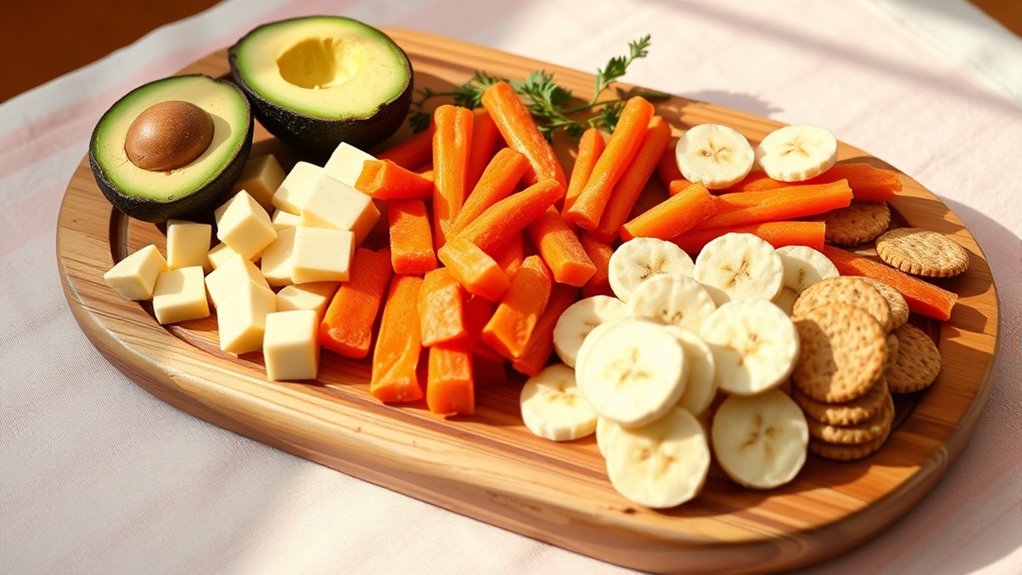
As your baby approaches their first birthday, they become more curious about exploring food on their own. You’ll notice they reach for snacks, pick up pieces of food, and want to feed themselves, which is exciting but also requires some planning. Incorporating finger foods into their diet is a great way to encourage independence while ensuring they get the nutrition they need. When selecting foods, keep in mind their developing pincer grasp and their ability to manage different textures. Preparing a variety of finger foods can make mealtimes more engaging and help your little one develop fine motor skills.
Teething relief is often a top priority at this stage. Babies tend to experience discomfort as their teeth emerge, which can make eating a bit uncomfortable. Offering soft, easy-to-chew items like banana slices, steamed sweet potato, or ripe avocado can soothe their gums and reduce teething pain. Cold foods or chilled teething toys can also provide relief during mealtime. It’s important to pay attention to your baby’s cues and avoid anything too hard or sharp that might cause discomfort or pose a choking hazard. Soft, manageable pieces will help your baby feel more comfortable while they explore new tastes and textures.
Meal planning becomes essential as you introduce more finger foods into your routine. Focus on creating balanced, colorful plates that include fruits, vegetables, proteins, and grains. You might prepare small, bite-sized pieces of cooked chicken, soft cheese, or scrambled eggs, alongside chopped fruits like berries or melon. Having a variety on hand keeps your baby interested and exposes them to different flavors. Keep in mind that their appetite might fluctuate, so offering small portions and allowing them to ask for more helps prevent waste and overeating. Also, consider the timing of snacks and meals to maintain a consistent routine that supports their growth and development.
Safety is always paramount when serving finger foods. Make sure all items are cut into small, manageable pieces to prevent choking. Supervise mealtimes closely, especially when your baby is trying new foods or textures. Stay patient if they’re hesitant or struggle with certain items; it takes time for babies to master self-feeding. Incorporate a variety of textures—soft, chewy, and slightly firm—to help develop their palate and oral skills. Additionally, understanding the importance of projector image quality can inspire you to create a well-rounded feeding environment that encourages your baby’s independence and healthy eating habits. With some thoughtful meal planning and attention to teething needs, you’ll create a positive feeding environment that encourages your baby’s independence and healthy eating habits.
Conclusion
As you introduce finger foods to your 10-12 month old, remember that variety helps develop their palate and motor skills. Did you know that babies who are offered a diverse range of foods are more likely to try new flavors later on? Keep offering safe, nutritious options, and watch your little one grow more confident with each meal. Your patience today sets the foundation for healthy eating habits tomorrow.