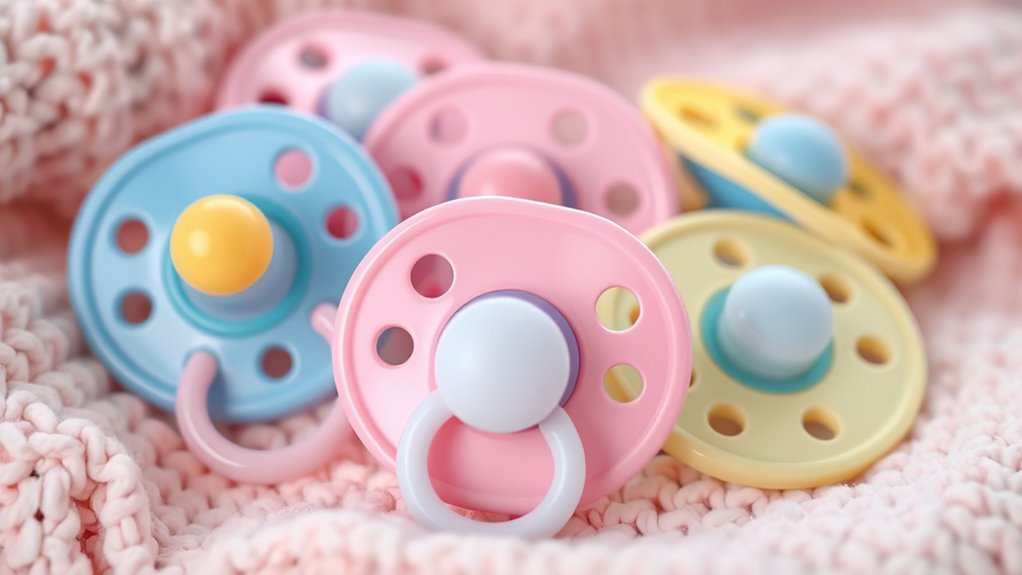

Pacifiers can be helpful in soothing your baby and providing comfort, but it’s important to use them wisely. Limit use as your child approaches age one or two to support healthy mouth development and prevent dependency. Offer alternative comfort strategies and gradually reduce reliance to encourage self-soothing skills. Monitoring your child’s use and consulting professionals can help guarantee safe, beneficial use. Keep these tips in mind to balance comfort and development—more helpful advice awaits if you continue.
Key Takeaways
- Pacifiers soothe babies and aid in self-soothing, but excessive use may impact mouth development.
- Limiting pacifier use as your child approaches age one or two supports healthy dental growth.
- Gradually reducing reliance helps prevent dependency and encourages development of coping skills.
- Always choose safe, age-appropriate pacifiers and regularly inspect for damage to ensure safety.
- Consult a pediatrician or dentist if you notice persistent oral issues or concerns about pacifier use.
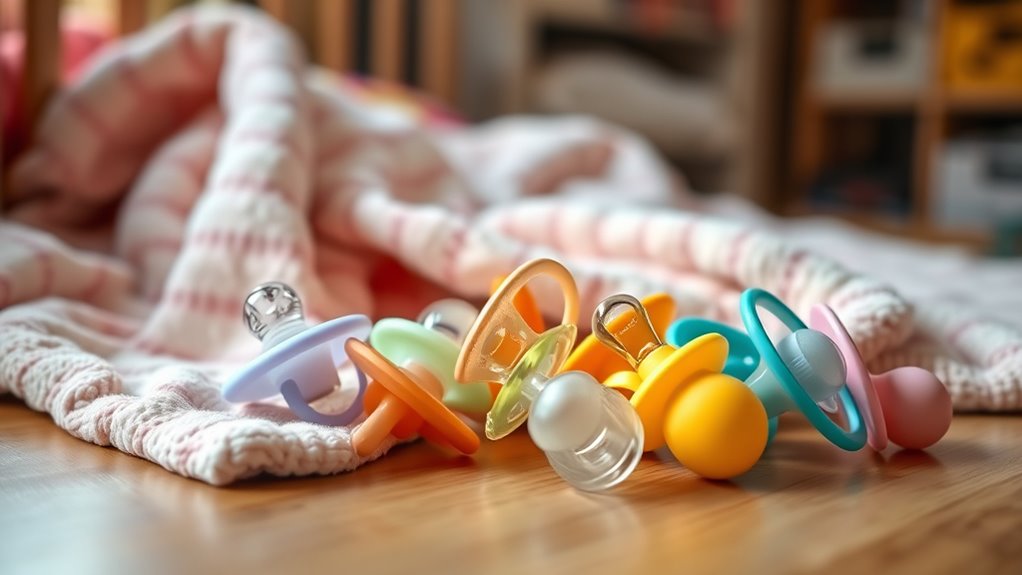
Are pacifiers a helpful tool or a potential concern for your child’s health? As a parent, you might wonder if offering a pacifier is beneficial or if it could cause more problems than it solves. Pacifiers can soothe your baby and help them feel secure, but it’s important to understand how they might impact mouth development and whether dependency concerns are valid. When used appropriately, pacifiers can be a valuable tool, but overuse or prolonged use might interfere with your child’s oral growth.
One of the main issues with pacifier use relates to mouth development. Your child’s mouth is constantly changing during the first few years, and excessive or improper use of a pacifier can influence the alignment of teeth and the shape of their palate. Extended use might cause bite issues, such as an open bite or overbite, which could require orthodontic treatment later on. To avoid this, it’s best to limit pacifier use to the first couple of years and encourage your child to develop other soothing methods as they grow older. Early weaning from the pacifier can help promote normal mouth development and prevent long-term dental problems.
Dependency concerns are another common worry among parents. You might notice your child becoming increasingly attached to their pacifier, seeking it out even when they’re not distressed. While a certain level of comfort is natural, excessive reliance can make it difficult for your little one to self-soothe without it. This dependency might also hinder their ability to develop other coping skills or speech patterns, especially if they’re using the pacifier frequently during waking hours. To prevent over-dependence, you can gradually reduce pacifier use, especially as your child approaches age one or two. Offering alternative comfort objects or engaging in activities can help your child learn to self-soothe without relying solely on the pacifier.
Additionally, research indicates that prolonged pacifier use may be associated with emotional attachment that impacts a child’s ability to develop independence. Ultimately, the key is moderation. Using a pacifier thoughtfully, with an eye on limiting prolonged use, can help minimize potential mouth development issues and dependency concerns. Keep an eye on your child’s oral health and behavior, and consult your pediatrician or dentist if you notice persistent issues or if you’re unsure about the right timing for weaning. Remember, while pacifiers are beneficial for calming and soothing, they’re just one part of your child’s overall development. Making mindful choices about their use can support healthy growth and help your child develop confidence in other self-soothing methods.
Top picks for "pacifier good tips"
Open Amazon search results for this keyword.
As an affiliate, we earn on qualifying purchases.
Conclusion
Remember, pacifiers are like a double-edged sword—they can soothe your little one but also pose risks if misused. By following safe practices and knowing when to start weaning, you’re guiding your child through a delicate dance—like a gentle tide that gradually pulls away. With patience and care, you’ll help your little one find their balance, ensuring pacifiers become a helpful tool rather than a barrier to healthy development.