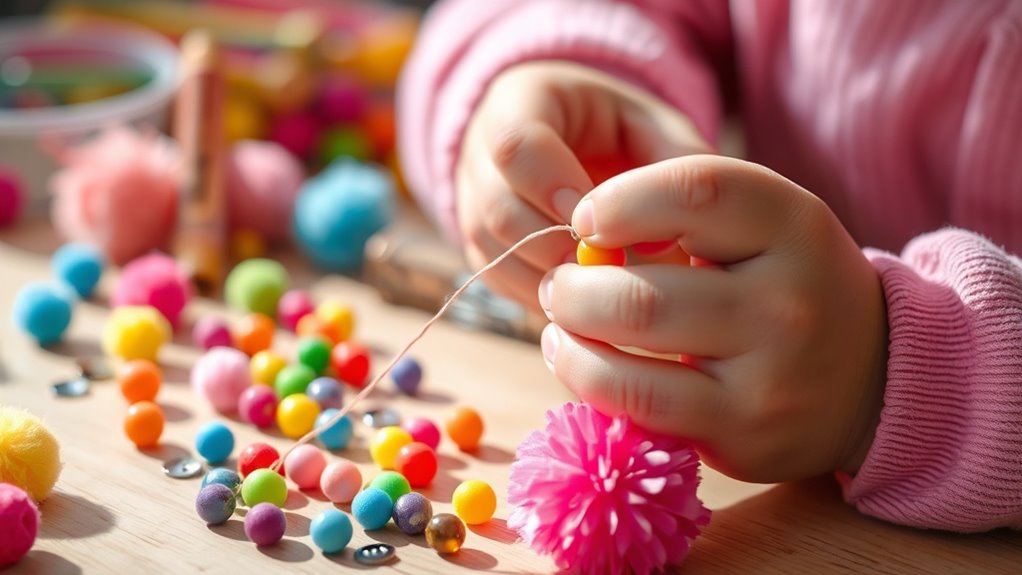

You can boost your child’s fine motor skills with simple DIY crafts designed for tiny hands. Activities like threading beads, sticking stickers, or squeezing playdough help develop hand-eye coordination, finger strength, and sensory awareness. Using everyday materials such as rice, paper, and small toys makes crafting fun and easy. Consistent practice with these engaging projects builds confidence and independence. Keep exploring these craft ideas, and you’ll discover even more ways to support their development.
Get ready for Prime Big Deal Days — try Prime free
Exclusive member deals on October 6–7, plus fast free delivery. Cancel anytime.
As an affiliate, we earn on qualifying purchases.
Key Takeaways
- Use simple materials like beads, pasta, or buttons for stringing activities to develop hand-eye coordination.
- Incorporate textured crafts such as painting or stamping to enhance tactile sensory awareness.
- Include cutting and tearing tasks with safety scissors or paper to strengthen finger muscles.
- Create sensory bins with small objects for scooping, pouring, and sorting to refine fine motor control.
- Design repetitive, engaging activities like sticker placement or squeezing glue to promote independence and confidence.
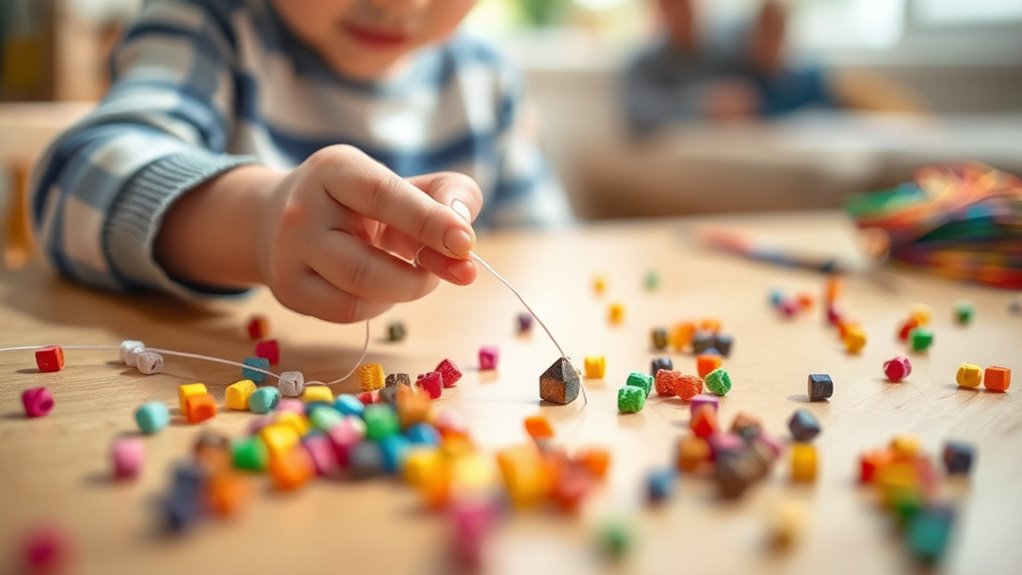
Have you ever wondered how simple crafts can boost your child’s fine motor skills? Engaging in easy DIY projects isn’t just fun—it’s a powerful way to develop essential skills like hand-eye coordination and sensory play. When your child manipulates small objects, threads, or paints, they’re practicing precise movements that strengthen their finger muscles and improve their ability to coordinate what they see with how they move. These activities turn everyday craft time into valuable learning moments, helping your little one gain confidence and independence in their movements.
Engaging in simple crafts enhances your child’s fine motor skills and boosts their confidence through sensory play.
Sensory play plays a vital role in fine motor development, especially during craft activities. For instance, when your child explores different textures—like squishing play dough, feeling the roughness of sandpaper, or pinching beads—they’re engaging their senses while refining their fine motor control. Incorporating sensory elements into crafts, such as using textured materials or mixing colors, heightens their awareness of different sensations. This sensory engagement not only makes crafting more stimulating but also enhances their ability to process tactile information, which is essential for overall development.
As your child works on crafts like threading beads onto a string or squeezing glue bottles, they’re practicing hand-eye coordination. This skill involves synchronizing what they see with their hand movements, and it’s fundamental for tasks like writing, tying shoes, or buttoning shirts. By guiding small beads onto a string or carefully placing stickers, they learn to focus their visual attention and translate that focus into precise motor actions. These activities are simple yet effective ways to build the control and coordination needed for more complex tasks later on.
You can easily turn everyday materials into engaging craft projects that promote fine motor skills. For example, create a sensory bin filled with rice or beans where your child can dig, scoop, and pour. Add small objects like buttons or pom-poms for sorting and pick-up activities. Painting with small brushes or finger paints helps strengthen hand muscles and encourages controlled movements. Even cutting along lines with safety scissors or tearing paper into pieces involves the same fine motor processes that will support their writing and self-care skills. Developing fine motor skills through these activities is crucial for their overall academic and daily life success.
Incorporating these simple crafts into your routine provides a playful, hands-on way to boost your child’s development. As they explore textures, manipulate small objects, and focus on precise movements, they’re building the foundation for more advanced skills. Plus, the joy of creating something together makes the experience memorable and motivates them to keep practicing. So, gather some materials and watch your child’s fine motor skills flourish through fun, sensory-rich craft activities.
children's fine motor skill craft kits
As an affiliate, we earn on qualifying purchases.
As an affiliate, we earn on qualifying purchases.
Conclusion
So, next time you think tiny hands can’t handle something delicate, just remember these simple crafts. It’s almost amusing how a few popsicle sticks or small beads can turn your little one into a master craftsman—no fancy tools needed. Who knew that encouraging fine motor skills could be so effortless? Just sit back, watch their tiny fingers work their magic, and enjoy the chaos. After all, who needs perfection when you’ve got adorable, crafty chaos?
NFL season / tailgating Picks
team gear
As an affiliate, we earn on qualifying purchases.