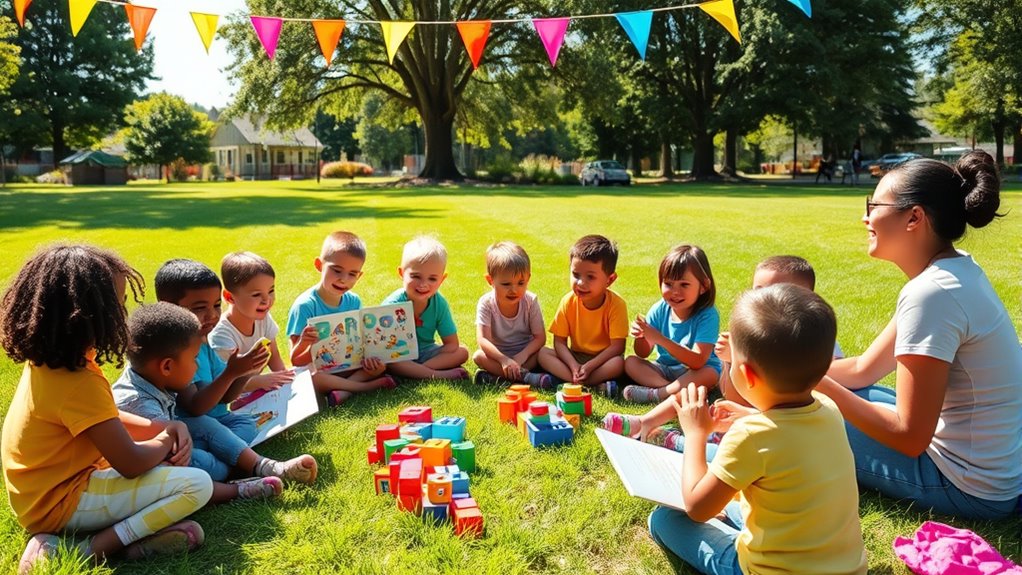

A playdate with purpose focuses on engaging activities that foster sharing, learning, and social skills. You can create inviting, safe spaces and introduce structured group tasks like puzzles or collaborative art. Open-ended toys such as blocks or dress-up encourage creativity and teamwork, while allowing room for unstructured play builds emotional growth. By setting the right environment and guiding gentle interactions, you help children develop meaningful friendships—keep exploring to discover even more effective strategies.

Turn the school run and nap time into listening time
- Thousands of audiobooks, podcasts and originals
- Listen on your phone, tablet or Echo — also offline
- Cancel anytime
Key Takeaways
- Incorporate structured group activities like puzzles and art projects to promote teamwork and sharing skills.
- Create inviting, safe environments that encourage children to express themselves and interact comfortably.
- Use open-ended toys and materials to foster creativity, collaboration, and collective ownership.
- Support unstructured play to nurture emotional growth, social skills, and peer connections naturally.
- Guide children gently in interactions, teaching patience, respect, and cooperation during group play.

A playdate with purpose transforms a simple gathering into an opportunity for growth, learning, and meaningful connection. When you intentionally craft environments, you set the stage for children to develop vital social skills, share experiences, and build lasting friendships. Instead of letting play unfold randomly, you guide activities that promote cooperation and empathy, helping kids understand the value of working together. By creating spaces that are inviting, safe, and stimulating, you encourage children to feel comfortable expressing themselves and engaging with others. This careful planning fosters an atmosphere where nurturing friendships becomes natural and effortless.
Start by choosing activities that require collaboration, like building a large puzzle or participating in group art projects. These activities teach children to share materials, listen to different ideas, and compromise when they encounter disagreements. As they navigate these interactions, they learn patience, respect, and how to celebrate each other’s successes. When you set up these environments thoughtfully, you help children see the benefits of teamwork, making sharing and learning a seamless part of their experience. Incorporate open-ended toys and materials—think blocks, dress-up clothes, or craft supplies—that encourage kids to create together rather than compete. These tools spark creativity and foster a sense of collective ownership, which naturally nurtures friendships.
Beyond structured activities, creating opportunities for unstructured play is equally important. Allow kids to explore freely, guided by their interests and curiosity. During these moments, your role is to observe and gently facilitate interactions, helping shy children join in or encouraging quieter voices to be heard. By doing so, you build an inclusive environment where every child feels valued and supported. Incorporating well-being tips into your playdate planning can further enhance the social and emotional growth of the children involved. Over time, this approach helps children develop confidence in sharing ideas and caring for their peers.
open-ended building blocks for kids
As an affiliate, we earn on qualifying purchases.
As an affiliate, we earn on qualifying purchases.
Frequently Asked Questions
How Can I Adapt Activities for Different Age Groups?
When adapting activities for different age groups, you should focus on age appropriate modifications and engagement strategies. Consider each child’s developmental stage, simplifying or expanding tasks as needed. Use visuals or hands-on materials for younger kids, while offering more complex challenges for older children. Incorporate movement or quiet activities to maintain interest, ensuring everyone stays engaged and learns. Adjusting activities this way makes your playdate inclusive and fun for all ages.
What Safety Precautions Should I Consider During Group Playdates?
Safety during group playdates is like building a sturdy bridge—you need strong supervision guidelines to prevent accidents. Always watch children closely, especially around toys and equipment, and set clear boundaries. Keep emergency preparedness in mind by having a first aid kit nearby and knowing emergency contacts. Guarantee the environment is safe, age-appropriate, and free from hazards. Your attentive supervision and preparedness create a secure space for kids to learn and share confidently.
How Do I Encourage Shy Children to Participate?
To encourage shy children to participate, you should focus on building confidence and fostering inclusion. Gently invite them into activities, offer positive reinforcement, and give them time to warm up. Create a supportive environment where they feel safe and valued. By patiently encouraging their involvement and respecting their comfort levels, you help shy kids feel more confident and included in group settings, making playdates enjoyable for everyone.
What Are Some Inexpensive Group Activity Ideas?
You can organize inexpensive group activities like creative art projects using recycled materials, which encourage collaboration and expression. Outdoor adventures, such as scavenger hunts or nature walks, are also budget-friendly options that promote teamwork and exploration. These activities require minimal supplies and can be tailored to your children’s interests, helping shy kids feel more comfortable participating while fostering sharing and learning in a fun, engaging way.
How Can I Involve Parents in Group Learning Activities?
Imagine the warmth of shared moments, where parent involvement transforms simple activities into treasured memories. You can involve parents by inviting them to customize activities, making them feel valued and connected. Share ideas, ask for input, and create opportunities for hands-on participation. When parents are engaged, it fosters a sense of community, encouraging children to learn and share more openly. Your thoughtful approach makes every activity meaningful and memorable.
Conclusion
Remember, sharing is caring, and playdates with purpose foster both. By engaging in group activities that promote learning and connection, you create a nurturing environment where kids grow and bonds strengthen. These moments teach invaluable lessons about cooperation and kindness. So, embrace these opportunities—because as the saying goes, “It takes a village.” When you invest in meaningful play, you’re helping build a brighter, more compassionate future for everyone involved.
Fall Picks
fall essentials
As an affiliate, we earn on qualifying purchases.