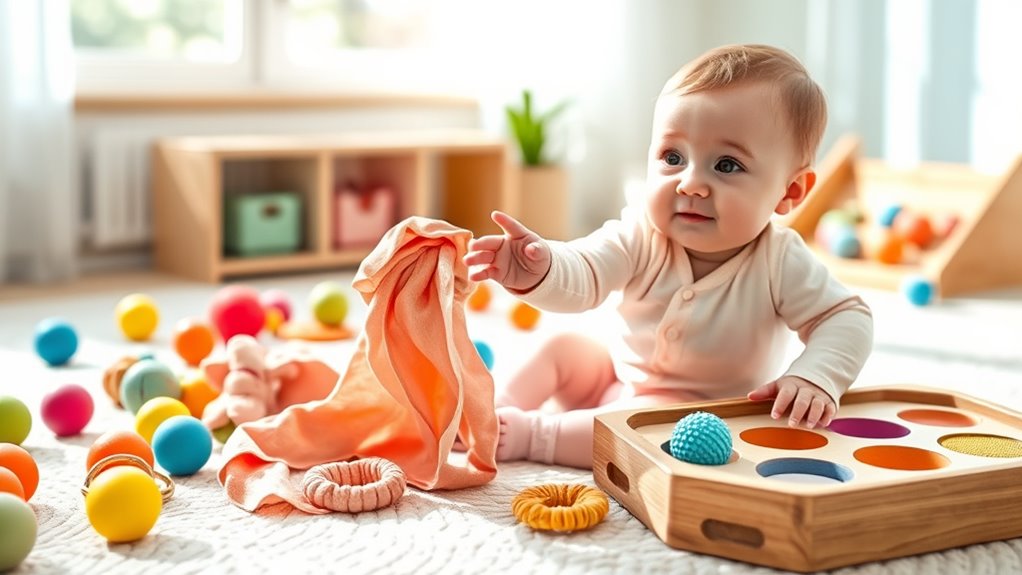

Incorporating sensory play into your baby’s daily routine helps boost their brain development, fine motor skills, and emotional confidence through engaging tactile experiences. You can introduce textured fabrics, soft brushes, or sensory bins filled with rice or water beads during daily activities like diaper changes, outdoor exploration, or playtime. Turning routines into chances for discovery helps your baby learn about textures and shapes naturally. Keep exploring different ways to make sensory play part of every day, and you’ll see great benefits unfold.

Get baby and family essentials delivered free — and shop member deals
- Fast, free delivery on millions of items
- Access to Prime Big Deal Days deals on October 6–7
- Prime Video, Amazon Music and more included
Key Takeaways
- Integrate tactile activities into daily routines like diaper changes with textured fabrics or soft brushes.
- Use sensory bins with rice, pasta, or water beads during playtime to promote exploration and fine motor skills.
- Encourage outdoor tactile experiences such as feeling grass, leaves, or sand to broaden sensory input.
- Incorporate simple tactile objects into everyday tasks to turn routine moments into learning opportunities.
- Regularly introduce new textures and materials to support comprehensive sensory, cognitive, and emotional development.

Sensory play is essential for your baby’s development because it helps them explore their environment and build critical skills. When you engage your little one in activities that involve tactile exploration, you’re giving them the opportunity to understand the world through their senses. Touch is one of the first ways babies learn about their surroundings, and by providing a variety of textures, you support their sensory development. Soft blankets, bumpy toys, smooth stones, or crinkly fabrics all serve as tools for your baby to feel, grasp, and investigate. These experiences aren’t just fun—they’re foundational for developing their sense of touch and improving their ability to differentiate textures, temperatures, and shapes.
Sensory play helps babies explore textures, build critical skills, and understand their environment through touch.
As your baby touches different objects, they start to develop their fine motor skills and hand-eye coordination. You might notice them squeezing a squishy ball or running their fingers over a textured book page. These simple activities help strengthen their grasp and expose them to new sensations, enriching their understanding of the physical world. Incorporating tactile exploration into daily routines can be as easy as offering a variety of safe objects for your baby to hold and explore or creating sensory bins filled with rice, pasta, or water beads. These activities turn everyday moments into opportunities for meaningful sensory development, making learning an enjoyable and natural part of their day.
You can also harness the power of sensory-rich environments to boost your baby’s overall sensory development. For example, during diaper changes or playtime, introduce textured fabrics or soft brushes to gently stimulate their skin. When outdoors, allow your baby to feel different natural textures—grass, leaves, or sand—under your supervision. These experiences help your little one become more comfortable with diverse sensations, which is essential for their overall growth and confidence. Additionally, research shows that regular sensory stimulation can positively influence neural development and cognitive skills. Remember, the key is variety; exposing your baby to different tactile experiences helps them build a broad sensory vocabulary, which is fundamental for their cognitive and emotional development.
As an affiliate, we earn on qualifying purchases.
Frequently Asked Questions
When Is the Best Time to Start Sensory Play With My Baby?
You can start sensory play as early as your baby shows signs of development milestones, typically around 2 to 3 months. During this time, they begin exploring their environment and crave sensory exploration. Engage them with soft textures, gentle sounds, and bright colors to stimulate their senses. Keep activities simple, safe, and responsive to their cues, encouraging curiosity and supporting their growth in a fun, interactive way.
How Do I Ensure Sensory Activities Are Safe for My Baby?
Think of sensory activities as a delicate garden—you need to protect the plants while helping them grow. To guarantee sensory safety, always supervise your baby closely and choose age-appropriate items. Baby proofing tips like covering sharp edges, securing small objects, and avoiding choking hazards help prevent accidents. Trust your instincts, and remember that gentle, safe exploration fosters confidence and curiosity without risking harm.
What Are Some Inexpensive Sensory Play Ideas?
You want inexpensive sensory play ideas? Try DIY textures using household items like rice, pasta, or cotton balls. Fill a shallow bin with these materials and let your baby explore different feels. You can also use safe kitchen utensils or sponges for added sensory experiences. These ideas are budget-friendly, safe, and stimulate your baby’s senses while encouraging curiosity and learning. Always supervise to keep play safe and fun!
How Can I Tell if My Baby Is Overwhelmed During Sensory Play?
Think of your baby as a delicate instrument, sensitive to noise and touch. If you notice signs of baby stress or overstimulation signs—like turning away, fussiness, or rubbing eyes—your little one might be overwhelmed. Keep sensory play gentle and watch for these cues. When you see them, pause, soothe, and give your baby a break. Trust your instincts; you’re tuned into your baby’s needs better than anyone.
How Often Should Sensory Activities Be Incorporated Into Daily Routines?
You should aim to include sensory activities in your baby’s daily routine around 2 to 3 times a day, adjusting based on their sensory milestones and cues. Keep play frequency appropriate, so your little one stays engaged without feeling overwhelmed. Observe their responses and pause if they seem overstimulated. Consistent, gentle exposure helps your baby develop essential sensory skills while enjoying each playful moment.
Conclusion
By weaving sensory play into your baby’s daily routine, you turn ordinary moments into a vibrant symphony of discovery. Each touch, sight, and sound becomes a note in their growing melody of learning. As you guide their tiny hands and curious eyes, you’re nurturing a world of wonder that blossoms with every playful breath. Embrace these joyful rhythms, and watch as your little one dances joyfully through a day filled with endless exploration and love.
Halloween Picks
halloween
As an affiliate, we earn on qualifying purchases.