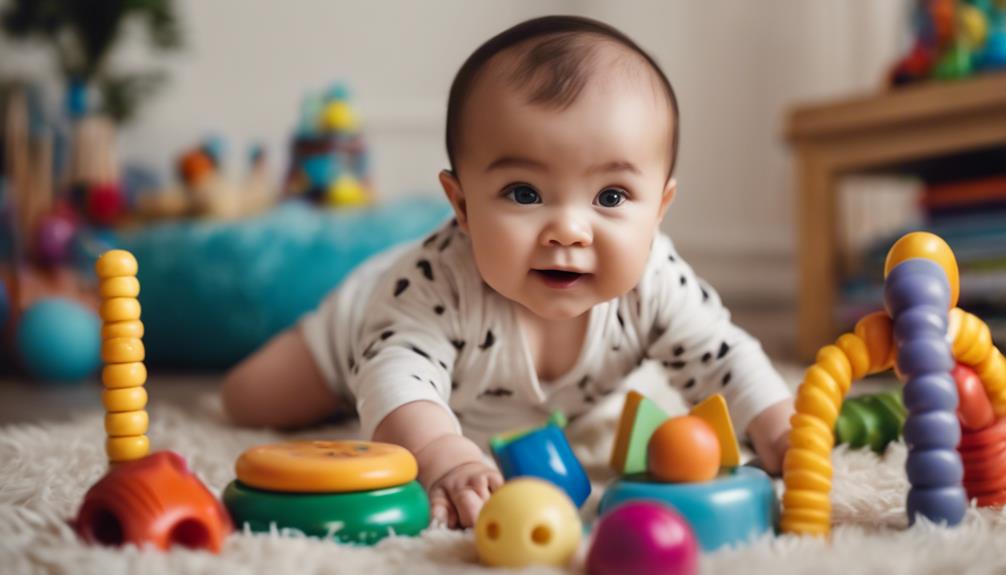

If your baby skips crawling, don’t worry—it’s often a normal variation in development. Babies explore and move in different ways, such as scooting or rolling, which still help strengthen muscles and coordination. Skipping crawling doesn’t mean there’s a problem or delay; many children progress to walking and other skills at their own pace. If you’re curious about your little one’s overall growth, keep going to learn more about typical development signs.

Turn the school run and nap time into listening time
- Thousands of audiobooks, podcasts and originals
- Listen on your phone, tablet or Echo — also offline
- Cancel anytime
Key Takeaways
- Skipping crawling is common and does not typically indicate developmental delays or future issues.
- Babies may explore and develop motor skills through alternative methods like scooting or rolling.
- Variations in movement and exploration are normal parts of individual developmental sequences.
- Milestones like sitting or walking can occur without crawling first, reflecting flexible development.
- Overall activity levels and curiosity are better indicators of healthy development than crawling alone.

Many parents expect their babies to start crawling as a natural milestone, but sometimes, a baby skips this stage altogether. If you notice your little one isn’t crawling by a certain age, you might worry about what it means for their development. It’s important to remember that every baby develops at their own pace, and skipping crawling doesn’t automatically signal a problem. Instead, consider how this might relate to their overall motor skill milestones and sensory development.
Crawling is often viewed as a key step in a baby’s physical growth. It helps strengthen muscles, improve coordination, and build balance. However, some babies skip crawling and go straight to walking or other movements. This isn’t necessarily a cause for concern. Some infants might prefer alternative ways of exploring their environment, such as scooting, rolling, or crawling backward. These behaviors still support their motor skills, even if they don’t follow the typical crawling pattern.
Sensory development plays a significant role in how babies choose to move. Babies learn about the world through their senses—touch, sight, sound, and proprioception (body awareness). If a baby is highly sensitive or prefers certain textures and surfaces, they might avoid crawling altogether. They could be more comfortable observing from a sitting or lying position until they feel confident enough to move differently. This variation can be part of their natural sensory processing and doesn’t hinder their overall development.
Additionally, some babies develop motor skills in a different sequence that suits their individual needs. For example, a baby might roll over early, then move directly to sitting and standing, bypassing crawling. As long as your child is reaching other milestones, such as sitting unsupported, standing, or walking, it indicates healthy progression. Motor skill milestones aren’t rigid; they’re a flexible guideline showing typical ranges of development.
If you’re concerned about your baby skipping crawling, observe their overall activity levels and other skills. Are they engaging with toys, reaching for objects, or rolling over? Do they show curiosity about their surroundings? These behaviors suggest their sensory development is on track. Sometimes, babies just find their own unique ways to explore and develop skills, and that’s perfectly normal. Consulting your pediatrician can provide reassurance and ensure your child’s growth aligns with their individual timeline. Remember, every baby is different, and skipping crawling doesn’t define their future abilities or intelligence.
As an affiliate, we earn on qualifying purchases.
Frequently Asked Questions
Can Skipping Crawling Affect a Baby’S Future Athletic Abilities?
Skipping crawling might seem like a small thing, but it can impact your baby’s motor skills and coordination development. Crawling helps strengthen muscles and improves balance, which are key for future athletic abilities. If your baby skips this stage, they might develop these skills differently, but it doesn’t mean they’ll be less athletic. Encourage various activities to support their motor skill growth, and remember, each child develops at their own pace.
Are There Specific Signs That Indicate a Developmental Delay Related to Crawling?
Think of your baby’s development as a blossoming flower; certain signs can indicate delays. If your little one struggles with motor skills like rolling or sitting, or shows poor sensory processing, it might signal a developmental delay related to crawling. Watch for limited movement, difficulty coordinating limbs, or unusual responses to sensory input. Early detection helps, so consult a pediatrician if you notice these signs to guarantee proper support.
How Does Skipping Crawling Impact a Baby’S Brain Development?
Skipping crawling can affect your baby’s brain development by limiting opportunities for enhancing brain connectivity and sensory integration. Crawling helps the brain build essential neural pathways, improving coordination and spatial awareness. When babies skip crawling, they might miss critical experiences that support healthy development. You should monitor their progress and consult a pediatrician if you notice delays, ensuring they get the right support to foster ideal brain growth.
Is There Any Difference in Language Development for Babies Who Skip Crawling?
Did you know only about 60% of babies crawl before walking? Skipping crawling may not directly delay speech milestones or social skills, but it can influence overall development. Crawling helps strengthen neural connections linked to language and social interaction. If your baby skips crawling, focus on providing other activities that promote communication and social engagement. Remember, every child develops uniquely, and multiple pathways support their growth.
When Should Parents Be Concerned About a Baby Not Crawling?
If your baby isn’t crawling by 9 to 12 months, you might start to have parental concerns about their motor milestones. While some babies skip crawling and move straight to walking, it’s important to watch for other signs of development. If your little one shows delays in sitting or standing, or if you notice muscle weakness, it’s a good idea to consult your pediatrician to address any potential issues early.
Conclusion
Just like a river finds its own path around rocks, every baby develops uniquely, and skipping crawling isn’t necessarily a sign of trouble. If your little one reaches milestones in their own time, trust that they’re on their own journey. As long as they’re exploring, engaging, and learning, you can be confident that their development is on track. Remember, each baby’s path is one-of-a-kind — and that’s what makes their growth so beautifully special.
Halloween Picks
halloween
As an affiliate, we earn on qualifying purchases.