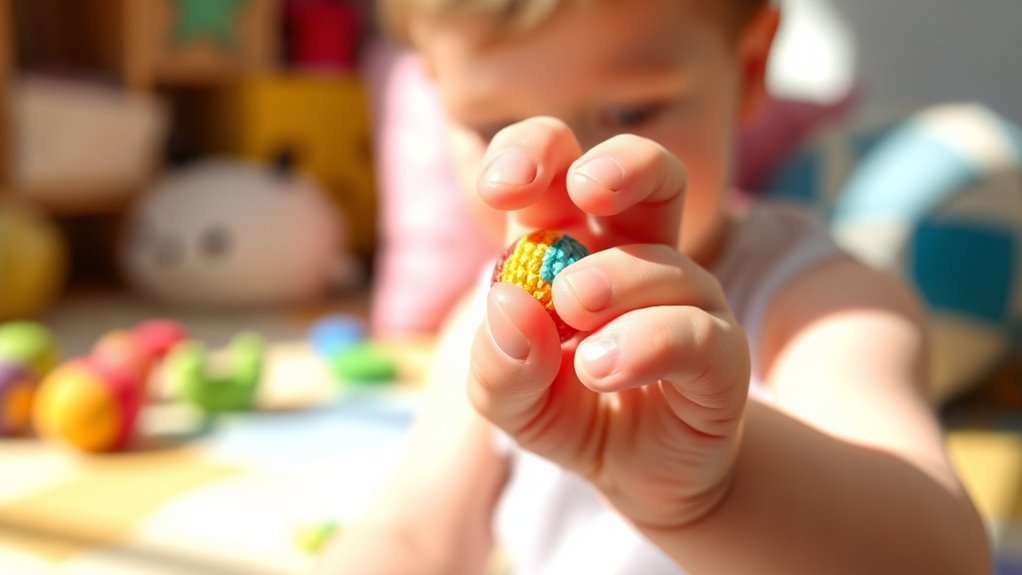

To help your child master the pincer grasp, encourage fun activities like pinching small objects such as cheerios or beads, which strengthen their fingers. Incorporate textured toys and tools like tongs or chopsticks to make grasping skills more engaging. Turn practice into games, and include daily routines for natural skill development. Keep exploring different ways together, and you’ll discover even more simple tricks to boost their fine motor skills.
Key Takeaways
- Incorporate small objects like cheerios or beads for pinching and transferring to strengthen finger muscles.
- Use play activities with tongs, chopsticks, or stacking cups to enhance grasping precision.
- Introduce textured toys and balls to improve tactile feedback and grip control during play.
- Practice daily routines with ergonomic tools like toilet grips to promote hand coordination and confidence.
- Turn fine motor tasks into fun games with gentle guidance to motivate consistent practice and skill development.

The pincer grasp is an essential milestone in your baby’s development, marking their growing ability to pick up small objects with precision. As your little one starts to develop this skill, you’ll notice their finger strength and hand coordination improving. Building these skills is crucial because they lay the foundation for more complex tasks like writing, tying shoelaces, and buttoning clothes. Encouraging your baby to practice the pincer grasp can be both fun and rewarding for both of you.
To help strengthen their fingers, introduce activities that require pinching, squeezing, and picking up tiny items. For example, give them small, safe objects like cheerios, pasta, or beads to pick up and transfer from one bowl to another. This not only boosts finger strength but also enhances hand-eye coordination. As your baby practices, they’ll learn to control their movements more precisely, which is vital for mastering the pincer grasp. Be patient; some babies grasp objects quickly, while others need more time to develop this skill.
Incorporate play into their daily routine by providing tools that encourage fine motor activity. For instance, offering tongs or chopsticks during playtime can make grasping objects more engaging. Playing with stacking cups or inserting small objects into containers also promotes hand coordination and finger dexterity. You can make these activities more appealing by turning them into a game—cheering when they succeed or offering gentle guidance. These small challenges help your baby refine their grip and develop confidence in their abilities.
Using textured toys and materials adds sensory stimulation that helps improve finger strength. Soft foam, rubbery grips, or textured balls can make grasping more interesting and beneficial. As your baby practices, they learn to adjust their grip pressure, which is important for controlling small objects without dropping or squeezing too tightly. Over time, these exercises help their small muscles become more precise, making everyday tasks easier and more manageable. Incorporating modern toilet fixtures that are designed with ergonomic grips can also support their developing hand strength.

Bright Starts Oball Easy Grasp Classic Ball BPA-Free Infant Toy in Red, Yellow, Green, Blue, Age Newborn and up, 4 Inches
- Engages Tiny Fingers for 25+ Years: Flexible design with large finger holes
- Promotes Crawling and Movement: Encourages chasing and gross motor skills
- Develops Fine Motor Skills: Easy-grasp design for little hands
As an affiliate, we earn on qualifying purchases.
As an affiliate, we earn on qualifying purchases.
Frequently Asked Questions
When Should a Child Typically Master the Pincer Grasp?
You might wonder when your child should master the pincer grasp. Typically, pincer grasp milestones happen around 9 to 12 months, marking a key point in fine motor development. During this phase, your little one starts picking up small objects with thumb and forefinger. Watching these milestones unfold is exciting, as they reflect your child’s growing coordination and dexterity, essential for future skills like feeding and writing.
Are There Signs of Delayed Fine Motor Skill Development?
You might suspect delayed fine motor skills if your child’s hand-eye coordination isn’t improving or if they struggle with tasks requiring sensory integration, like grasping small objects. While some variation is normal, persistent difficulty in these areas can signal delays. Keep an eye on their progress and consult a pediatrician if concerns arise, as early intervention helps support development and guarantees they build essential skills effectively.
How Can I Encourage Pincer Grasp in a Toddler With Autism?
You can encourage a toddler with autism to develop their pincer grasp by incorporating sensory integration activities like textured playdough or finger paints. Use assistive technology, such as adapted utensils or grip aids, to support their hand strength and coordination. Engage them in playful, repetitive tasks that stimulate fine motor skills, making learning fun. Patience and consistency are key to helping your child improve their pincer grasp effectively.
What Are Common Challenges Children Face When Developing This Skill?
Imagine trying to grab a tiny crumb while your hand and eye coordination are doing a wild dance! That’s the biggest challenge kids face when developing the pincer grasp. Sensory integration issues can make it feel like their fingers are stuck in a maze, preventing precise movements. These struggles can slow progress, making it seem like their hand-eye coordination is playing hide-and-seek, which can be frustrating but totally manageable with patience and targeted activities.
Can Certain Foods or Toys Help Improve Fine Motor Skills?
You can boost fine motor skills by offering nutrient-rich foods that support brain and muscle development, like fruits, vegetables, and healthy proteins. Incorporate sensory toys, such as textured balls or stacking blocks, to encourage grasping and coordination. These tools make practicing fun and engaging, helping your child develop the pincer grasp more effectively. Consistent, playful activities with the right foods and toys can make a noticeable difference in their fine motor progress.
Conclusion
By practicing these fun activities, you’ll see your child’s pincer grasp strengthen effortlessly. Some might worry it’s too early, but imagine the joy as they pick up tiny snacks or crayons with confidence. These small moments build big skills, opening doors to writing, drawing, and exploring. Keep encouraging, and watch your little one master their fine motor skills—turning everyday play into exciting progress they’ll be proud of. You’re guiding their growth every step of the way!